
Stephen And My Auntie

Some of my proudest moments in those early months came when I introduced Stephen to my friends and family.

He had mastered the art of conversation.

He seemed genuinely interested in everyone he met and had an extraordinary ability to find common ground with people who, on the surface, were very different from him.

My sons liked him. Although they didn’t necessarily have much in common, they all enjoyed a good debate, and Stephen could talk about almost anything.

My parents liked him too.

More importantly, they could see how happy I was.

This was one of the many things I loved about him.

My previous boyfriend had struggled socially, so there was something wonderful about being with a man I could confidently take anywhere. I never worried that Stephen wouldn’t know what to say or wouldn’t make an effort.

Quite the opposite.

I was immensely proud of him.

Eventually, the time came to introduce him to my aunt and uncle.

My aunt is my father’s sister, and I was particularly excited about this visit because I knew Stephen would love their home.

Their house has always been an emporium of curiosities.

For as long as I can remember, my aunt and uncle have been passionate collectors. They have unusual interests, fascinating objects and endless stories about the things they’ve accumulated over a lifetime.

One evening, Stephen and I visited them with my mum and dad.

After a lovely meal, my uncle offered to give Stephen a tour of the house.

Every room of their old Victorian semi-detached seemed to contain another collection. In some ways, it was like wandering through an antique shop. There was militaria, maps, crockery, silverware, paintings and countless other objects, each with its own history.

And then there was my uncle’s extraordinary lifetime collection of Rupert Bear memorabilia, reputed to be the largest in the UK.

Stephen was completely in his element.

He wanted to know about everything.

Where had this come from?

What was the story behind that?

How old was it?

My uncle was delighted.

There are few things a passionate collector enjoys more than meeting someone who is genuinely fascinated by their collection, and Stephen gave him an enthusiastic audience.

The tour must have lasted well over an hour.

Strangely, Stephen’s enthusiasm made me look at the house differently too. I’d grown up around many of these things and barely noticed them anymore. Watching him discover everything for the first time reminded me how extraordinary it all was.

I loved seeing the world through Stephen’s eyes.

Eventually, we joined everyone else in the garden.

It was getting late.

My aunt had been drinking and was already quite tipsy. She had been considered a great beauty when she was younger and, even at seventy, remained a very attractive woman.

Stephen began talking to her with his usual enthusiasm.

She told him about her new interest in singing and shared some of her fascinating stories about paranormal experiences. Stephen was intrigued and responded with stories of his own.

Initially, it was a group conversation.

My mum was involved.

My dad was there.

I was there.

But gradually, something changed.

The conversation narrowed until it seemed to exist almost entirely between Stephen and my aunt.

I watched his body language change.

He repositioned himself in his chair so that he was facing her directly, his posture open towards her. His attention became completely focused on her.

He stopped looking back at me.

He stopped including me in the conversation.

Then the subject matter changed too.

Stephen began telling increasingly risqué stories, including one about a job he’d once had that involved quality-testing adult products.

My aunt was fascinated.

And Stephen seemed to be enjoying her fascination.

What had begun as ordinary conversation was becoming something else.

Flirtatious.

My aunt was responding to it too.

She was tipsy, starry-eyed and completely absorbed in him.

Then Stephen began making suggestive comments about her sensuality.

I was sitting barely a foot away.

And suddenly I felt invisible.

What made it worse was that my parents were sitting there witnessing it too.

I tried subtly to steer the conversation somewhere else.

Stephen didn’t follow.

The innuendo continued.

Eventually, I’d had enough.

“We should go now,” I said.

Nothing.

Stephen carried on talking to my aunt as though I hadn’t spoken.

Their chairs were angled towards each other, their knees almost touching, their attention completely fixed on one another.

My mum and I stood up and walked towards the French doors leading back into the house.

“Come on, Stephen. It’s time to go.”

Still nothing.
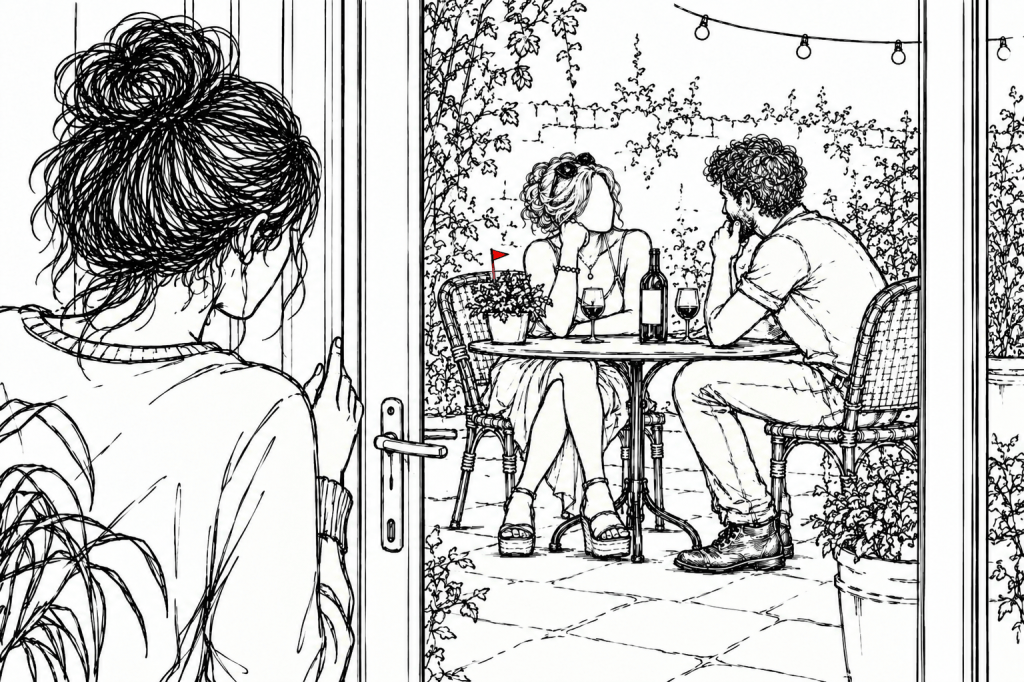
My mum, dad and I ended up standing in the doorway waiting.

And waiting.

For what felt like nearly ten minutes, the three of us simply watched Stephen and my aunt continue their conversation as though they were the only two people in the garden.

Eventually, we practically had to drag him away.

I was furious.

But beneath the anger was something more unsettling.

Alarm.

Until then, one of the things I’d admired about Stephen was his openness about finding beauty in different kinds of women. I’d interpreted it as a lack of superficial judgement.

But I’d never seen this side of him before.

Stephen was an enormous flirt.

And if he was capable of becoming so absorbed in another woman while I was sitting beside him — with my mother and father watching too — what was he like when I wasn’t there?

That question disturbed me.

Especially because the incident with his ex had happened only weeks earlier.

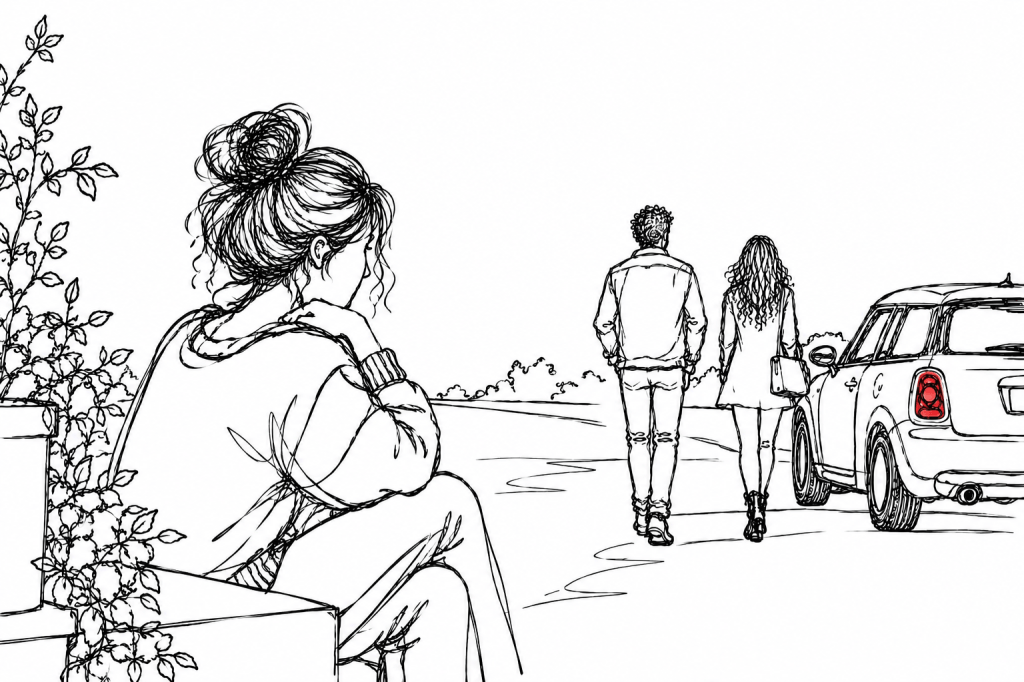
I drove us home frostily.

Stephen seemed slightly drunk and, more surprisingly, completely oblivious to why I was upset.

We made the short fifteen-minute journey back to my parents’ flat and, because it was so late, everyone went to bed.

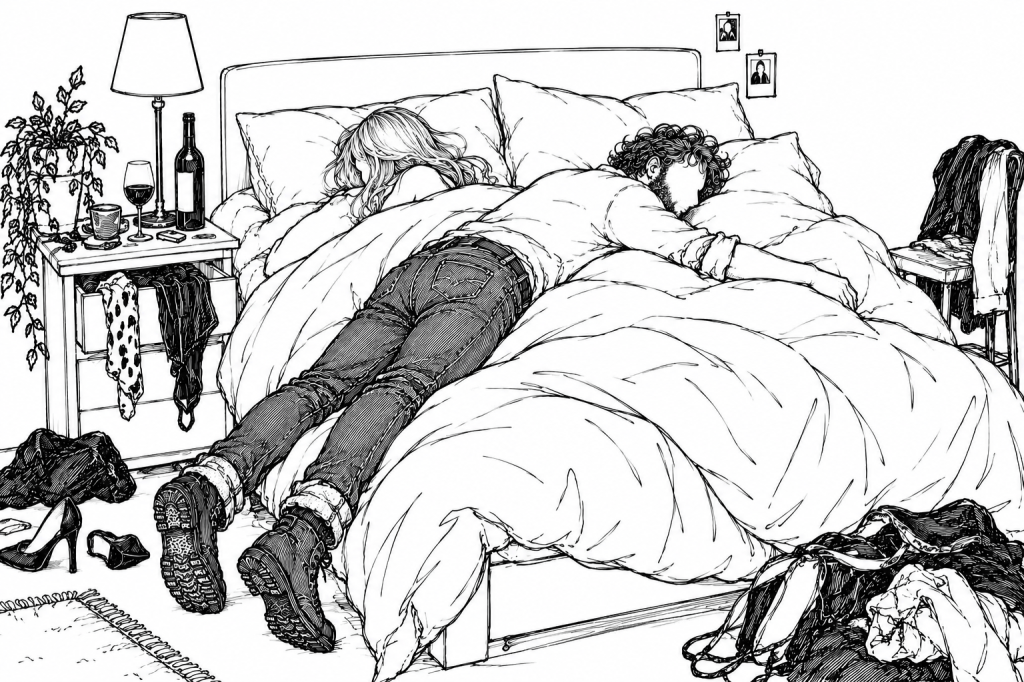
Stephen and I climbed into bed in my tiny childhood bedroom.

Then I confronted him.

We argued in whispers so my parents wouldn’t hear.

I told him how uncomfortable his behaviour with my aunt had made me.

Stephen didn’t understand.

Or said he didn’t.

He became defensive and denied that he’d been flirting at all.

He explained that because the tour of the house with my uncle had taken so long, he’d felt obliged to give my aunt his full attention afterwards. He’d spent all that time talking to my uncle, so now he was making an effort with her.

Then he said something that left me completely baffled.

“Besides, I don’t even know how to flirt.”

I couldn’t reconcile that statement with what I’d just witnessed.

Stephen also explained that he’d quickly drunk a couple of drinks to catch up with everyone else and that the alcohol had gone straight to his head.

He was clearly still tipsy.

He was also exhausted.

Before long, Stephen fell asleep.

I couldn’t.

I have never been good at sleeping after an argument.

So while Stephen snored beside me, I sat on the windowsill of my childhood bedroom, smoking cigarettes out of the third-floor window.

The rest of the flat was silent.

In the distance, I could see Greater London. Cars continued moving along the roads below as the darkness gradually began giving way to morning.

And I thought about what I’d witnessed.

My boyfriend has a way with women.

There seemed little point denying that.

But this was the same man who had presented himself to me as inexperienced with women.

The same man who now insisted he didn’t even know how to flirt.

And only weeks earlier, he’d disappeared while staying with his ex and subsequently admitted sharing her bed.

I found myself returning to that night.

Had everything happened exactly as Stephen had told me?

Was I joining together two completely unrelated incidents because I was frightened?

Or was I beginning to notice something about the man I was falling in love with that I hadn’t seen before?

I didn’t know.

Over the following days, Stephen and I talked extensively about flirting.

Strangely, the conversation gradually became less about what had happened with my aunt and more about what flirting actually was.

Stephen gave me the impression that he genuinely didn’t understand the distinction between being charming and being flirtatious.

So I tried to explain it.

To me, flirting involved verbal or non-verbal signals that introduced an element of romantic or sexual interest into an interaction, even if everything remained playful and ambiguous.

Charm was different.

Stephen was naturally charming.

That was one of the things I loved about him.

And I didn’t expect either of us to go through life never enjoying playful interactions with other people.

What mattered to me was context.

If you’re in a committed relationship, your partner shouldn’t be made to feel invisible while you direct sexual energy towards somebody else.

Their comfort should matter.

The relationship should still feel secure.

And loyalty should never be in question.

Stephen seemed receptive.

Part of me even enjoyed believing that perhaps I was teaching him something he genuinely hadn’t understood before.

I wasn’t considering ending the relationship over what had happened.

I loved him.

Most of our relationship was still extraordinarily happy, and this seemed like something we could resolve by communicating more clearly and establishing what was and wasn’t acceptable to us.

But something had shifted again.

After the night with his ex, I’d started wondering whether I could trust Stephen.

Now another question had joined it.

If this was how Stephen behaved with another woman while I was sitting right beside him, how did he behave when I wasn’t there to see it?
Stephen And The Red Flag (Part II)

I can’t remember the exact order of everything that happened next.

I’m fairly certain that I collected Stephen on the same day he finally contacted me and that he didn’t stay at his ex’s for another night.

He told me it was “hell there” and that he couldn’t wait to get away.

So I did what was already becoming instinctive whenever Stephen was distressed.

I went to rescue him.

I told him to gather as much of his belongings as he could and that I would come and collect him.

In a surprisingly short space of time, Stephen managed to assemble quite a lot of his things.

That bothered me.

If he could gather so much together now, why had it been impossible to do the previous day?

I understood that his ex had needed help clearing the house, but the original purpose of the visit had been to collect his belongings. The explanation still didn’t quite add up.

And neither did the explanation about the bed.

At some point — either that evening or very soon afterwards — Stephen and I had our first enormous argument.

It happened over the phone.

I told him the relationship was over.

As far as I was concerned, he had crossed a line.

It wasn’t simply that he had shared a bed with another woman. It was that we’d discussed this exact possibility beforehand. I had told him it was the one thing I was uncomfortable with, and he had repeatedly promised me it wouldn’t happen.

His first response stunned me.

“This is why I don’t make promises!”

Really?

It hadn’t been an impossible promise to keep.

From my perspective, all he’d had to do was sleep on the sofa.

Then his whole manner changed.

For the first time since meeting Stephen, I encountered a side of him I hadn’t seen before.

He became angry.

Defensive.

Dismissive.

He told me I was blowing everything out of proportion.

“I can share a bed with a woman and not do anything,” he argued. “I have self-control.”

But that wasn’t really the point.

I hadn’t accused him of being physically incapable of lying beside a woman without having sex with her.

I wanted to understand why he’d ended up in the bed at all when he’d specifically promised me that he wouldn’t.

And that was where the explanation became increasingly difficult for me to follow.

Stephen told me he’d been completely exhausted and needed to sleep in a proper bed.

But if he’d been that exhausted, I wondered, why hadn’t he simply collapsed on the sofa where he’d told me he was going to sleep?

He said his head was so “gone” that he hadn’t really registered his ex taking him upstairs.

But she hadn’t carried him.

He had walked.

He told me he couldn’t remember much about what had happened.

Yet he could remember that he had remained fully clothed.

And he was adamant that nothing sexual had happened between them.

I kept trying to make the pieces fit together.

They wouldn’t.

Every route through the conversation seemed to lead back to the same explanation: he had been exhausted, his head had gone, he had been barely aware of what was happening and therefore hadn’t consciously chosen to break his promise.

But I wasn’t only looking for an explanation.

I was looking for something much simpler.

Accountability.

I wanted him to say:

I promised you I wouldn’t do this. I did it anyway. I understand why you’re hurt. I’m sorry.

Instead, it felt as though most of his energy was going into proving why what happened wasn’t really his fault.

And that left me feeling increasingly unreasonable for being upset at all.

There was another part of his explanation that troubled me.

If Stephen genuinely became so mentally exhausted that he could be led somewhere without properly registering what was happening, make decisions he couldn’t later remember and lose awareness of promises he’d made only hours earlier, what did that mean for me?

What could I rely upon?

For three months, I had known Stephen as gentle, affectionate, attentive and extraordinarily loving.

During that argument, it felt as though that man had temporarily disappeared.

I tried another approach.

What if it had been the other way around?

I asked him to imagine that I’d gone to stay with an ex-boyfriend, promised Stephen I would sleep somewhere else, disappeared for the night and then admitted the following day that I’d shared my ex’s bed.

Stephen said he’d be okay with it.

I didn’t believe him.

From what I already knew of his sensitivity and jealousy, I found it almost impossible to imagine him calmly accepting the same situation from me.

Eventually, the argument began to lose its heat.

And Stephen changed again.

The anger and defensiveness faded.

He became tearful.

Confused.

Vulnerable.

He talked again about how awful it had been at the house, how exhausted he’d become and how overwhelmed he’d felt.

The explanation hadn’t really changed.

But Stephen had.

This was the man I recognised again.

The wounded, struggling Stephen I’d already become deeply protective of.

And that mattered.

His distress didn’t suddenly make me think he’d done nothing wrong. I was still angry and hurt.

But it softened me.

I began wondering whether I had been too harsh.

Perhaps I needed to take his mental health into account.

Perhaps his trauma and EUPD meant that situations affected him differently.

Perhaps loving Stephen was going to require me to understand things that I wouldn’t necessarily understand in another person.

Since meeting him, I’d already been learning to consider how his past might affect him.

For the first time, I began to wonder how it might affect me.

And whether being with him would sometimes require me to tolerate things I would ordinarily find unacceptable.

There was something else I needed to understand.

Why hadn’t he tried harder to contact me?

Even if everything he’d told me about the bed was completely true, he knew I was worried about the visit. He knew what I’d asked of him.

Why hadn’t he thought about how his silence might affect me?

Stephen shrugged.

“Out of sight, out of mind.”

The words landed strangely.

I didn’t like them.

There was something unsettling about the idea that simply because I wasn’t physically present, I could somehow disappear from his emotional awareness too.

I couldn’t know then how many times I would remember those four words during the years ahead.

For now, though, I wanted reassurance.

I asked Stephen never to leave me in the dark like that again.

And I asked him never again to share a bed with another woman.

He agreed.

We decided to stay together.

And remarkably quickly, things returned to normal.

Stephen became the kind, gentle and attentive man I’d fallen for again.

We laughed.

We talked.

He was affectionate.

I felt loved and cherished.

The intensity of the argument faded, and the warmth between us returned.

But something hadn’t returned with it.

My complete sense of trust.

Before that visit, I had been relatively relaxed in the relationship.

Now there was a question sitting quietly in the background.

Can I trust him?

The incident resurfaced occasionally in the weeks and months that followed.

Sometimes it seemed as though Stephen’s understanding of what had happened would shift. Just when I thought we’d reached some kind of resolution, he would become defensive about it again.

On one occasion, while I was at work, he said something to me over the phone that I found particularly destabilising.

“Maybe you’re not ready, or don’t know how to really love someone.”

I couldn’t understand how we’d arrived there.

He had broken a promise.

I had been hurt by it.

And somehow the conversation had moved towards whether I understood how to love properly.

It made me question whether the remorse and understanding I’d thought we’d reached had ever really existed.

But I loved Stephen.

The relationship was still new, passionate and overwhelmingly good most of the time. I had also begun to understand him as someone carrying significant wounds of his own.

So I chose to believe that this was something we could learn from.

I believed the boundary had now been made unmistakably clear.

I believed he understood how deeply the incident had affected me.

And I believed that because he loved me, he wouldn’t put me through something like that again.

I didn’t know then whether the night with his ex was an unfortunate mistake, a warning, or something more significant.

I only knew that for the first time since falling in love with Stephen, love no longer felt quite enough on its own.

Trust had entered the conversation.

And once I had started wondering whether I could trust him, I could never entirely stop.

Stephen And The Red Flag (Part I)

To understand why what happened next affected me so profoundly, you have to understand what the previous three months had been like.

Stephen and I had been in almost constant contact.

There hadn’t been a single day when we didn’t check in with each other. We knew what the other was doing, where we were going, what had happened during our day. If something amused us, we shared it. If something upset us, we talked about it.

Every evening ended in much the same way — a loving conversation, a goodnight and more excited talk about our future.

Stephen had become part of the rhythm of my day.

And I had become part of his.

So when his ex collected him from the bedsit at around three o’clock that afternoon, I naturally expected to hear from him when he arrived.

I didn’t.

A couple of hours passed.

Still nothing.

I sent a message.

No reply.

As afternoon became evening, the silence started to feel increasingly strange.

Eventually, we made contact.

But even then, something didn’t feel right.

Stephen seemed distracted and difficult to engage. He tried to explain that he hadn’t been able to collect his belongings because his ex needed his help clearing up the house before some kind of inspection the following day.

He couldn’t talk for long because they were about to order some food.

Before we ended the call, I reminded him of the one thing I had asked of him.

The promise.

“Yeah, I’ve got a bed here on the sofa,” he reassured me. “I’ll call you later.”

I relaxed a little.

He had remembered.

Everything was fine.

Except he never called.

Later that evening, I tried his phone.

The call immediately clicked off.

I tried again.

The same thing happened.

I told myself that his battery had probably died.

That was the obvious explanation.

But then another thought appeared.

Surely there’s a charger in the house he could borrow?

I tried not to let my imagination run away with me.

For three months, Stephen and I had never gone to sleep without speaking to each other. He had never simply disappeared for an entire evening without explanation.

And it was happening on the one night I had already admitted feeling uncomfortable about.

Lying in bed, my mind began filling the silence with possibilities.

What if something had happened between them?

What if he’d deliberately turned his phone off because he didn’t want me interrupting?

What if the reason I couldn’t reach him was exactly the reason I was frightened of?

Then the rational part of me would intervene.

You’re catastrophising.

His phone has probably died.

Wait until you speak to him.

I moved between suspicion and reason for most of the night.

Eventually, exhaustion won and I fell asleep.

The following morning, I woke groggy and distressed.

The first thing I did was reach for my phone.

Nothing.

No missed call.

No message.

No explanation.

My heart sank.

I went to work, but my attention was somewhere else entirely.

This was completely out of character.

All morning, I kept checking my phone. I tried calling Stephen again, but his phone remained unreachable.

I sent messages.

Probably too many.

As the hours passed, my anxiety escalated. Concern became frustration, frustration became accusation, and then another possibility entered my head.

What if something had actually happened to him?

Now I didn’t know whether I was angry or frightened.

It wasn’t until sometime after lunch that my phone finally rang.

Stephen.

I answered immediately.

I couldn’t disguise how concerned I’d been, but he quickly apologised and explained that there had been a problem with his phone.

Apparently, it was working again now.

I wasn’t entirely convinced.

But there was something much more important I needed to know.

“Where did you sleep, Stephen?”

Because despite everything he’d told me, I still had the uncomfortable feeling that the silence and that promise were somehow connected.

There was a pause.

Then he told me.

He had shared the bed with his ex.

I was furious.

The very thing I had spent the night worrying about had happened.

More importantly, it was the one thing I had specifically asked him not to do.

He hadn’t merely known that sharing a bed with her would make me uncomfortable.

He had promised me he wouldn’t.

More than once.

And only hours earlier, he had reassured me that he had somewhere to sleep on the sofa.

Now Stephen tried to explain.

He told me that they’d spent the entire day and evening clearing up a very messy house in preparation for some kind of education inspection the following day.

By the end of it, he said, he was completely exhausted.

His head had gone.

According to Stephen, his ex had taken him upstairs and laid him down on her bed.

And somehow, that was where he had stayed.

I had so many questions I barely knew which one to ask first.

Why hadn’t he slept on the sofa?

Why had he specifically told me that he would?

Why hadn’t he contacted me?

What had happened to his phone?

Why had his ex taken him upstairs and put him in her bed?

And, most importantly:

Had anything happened between them?

His explanation didn’t sit comfortably with me.

But there was something else making the situation even more confusing.

Stephen had told me the truth.

Or at least, he’d told me that he’d shared the bed with her.

If he had something terrible to hide, why admit that?

Surely it would have been easier simply to tell me he’d slept on the sofa.

And suddenly I found myself caught between two completely different interpretations of the same man.

Was Stephen fundamentally honest, but chaotic and unreliable?

Or was I only being told the parts of the truth he wanted me to know?

I didn’t know.

Only hours earlier, my biggest concern had been whether Stephen would keep one simple promise.

Now I was questioning something much bigger.

Whether I could trust him at all.

We agreed to talk properly later.

I put my phone away and carried on working.

But something had changed.

For the first time since meeting Stephen, I wasn’t simply wondering where our relationship was going.

I was wondering whether the man I was falling in love with was telling me the truth.

To be continued…

​