
The months rolled on.
June marked my first anniversary in the new job.
When I had started, I had told both myself and Stephen that I would give it a year.
By the time that year arrived, however, something unexpected had happened.
I had become good at it. I was enjoying it.
I had adjusted to the uncompromising demands and grown considerably more confident. I was also given a generous pay rise of almost £5,000 a year more.
Leaving suddenly seemed less sensible.
Stephen had stopped attending martial arts by then. But he had now sought legal advice about the inherited house with his brother because a year of correspondence with him had proved fruitless. He wasn’t spending much time in the spaces he had once asked me to create for him, and during the year he failed his driving test twice. He stopped trying after that.
But he was busy working with the stone specialist and travelling to Scotland.
And the conversations about other women, sex and alternative relationships seemed to have quietened down.
Life became predictable again.
For me, predictability felt reassuring.
In July we took another holiday.
This time we tried a shepherd’s hut.
Part of our thinking was that we could experiment with different kinds of small living and discover what might suit us best.
We learned very quickly that a shepherd’s hut probably wasn’t it.
It was tiny.
There was almost nowhere to spend time except the veranda or the bed. Fortunately, the weather was beautiful, so we could sit outside, but I missed the experience I’d loved at the cabin — pottering around, cooking, clearing up and pretending for a few days that this little place was our home.
On our first evening, we walked over to an event at the vineyard opposite the lake. There was a band playing, food to try and wine from the vineyard. Locals wandered around talking to one another.
We met an older couple and spent several hours chatting with them.
Stephen sat mostly with the woman while I talked to the man. There was some harmless flirting on all sides, but I felt completely comfortable.
This felt different.
It felt shared.
It reminded me much more of the kind of openness I had tried to describe to Stephen years earlier — being sociable, playful and interested in other people without anything threatening the relationship underneath it.
I liked us that way.
During the holiday we also took an extraordinarily long walk to the next coastal town, and towards the end of the trip we visited my son’s girlfriend’s parents, who lived nearby.
We spent a beautiful day with them. They showed Stephen around Mersea Island and the four of us got on easily as couples.
Again, I took comfort from it.
Stephen was increasingly woven into my family and my wider life.
Near the end of the holiday, however, we had another argument about sex.
I can no longer remember exactly what started it.
I remember only the frustration.
There seemed to be increasing confusion between us about what we each wanted and what we expected from the other.
That saddened me.
Affection and intimacy had already become less frequent in everyday life, largely because our lives were so busy. Holidays should have been the opportunity to rediscover that side of ourselves.
Instead, twice on holiday, we had ended up arguing about it.
Still, life carried on.
Another of Stephen’s birthdays arrived, and I surprised him with a dance performance telling the story of Ip Man and the growth in popularity of Wing Chun, the martial art Stephen loved.
He had introduced me to the Ip Man films and I had really enjoyed them, so I was enormously pleased with myself for finding another birthday surprise that genuinely impressed him.
These were the rhythms of that year.
Work.
Home.
Saving.
Stephen’s jobs.
Scotland.
Occasional holidays.
Plans.
Birthdays.
Arguments that came and went.
There was nothing that felt catastrophic.
Nothing that made me think our relationship was approaching some kind of crisis.
But as the year moved towards autumn, I did begin to recognise that something between us had become flatter.
Our chemistry wasn’t quite what it had been.
Neither was our intimacy.
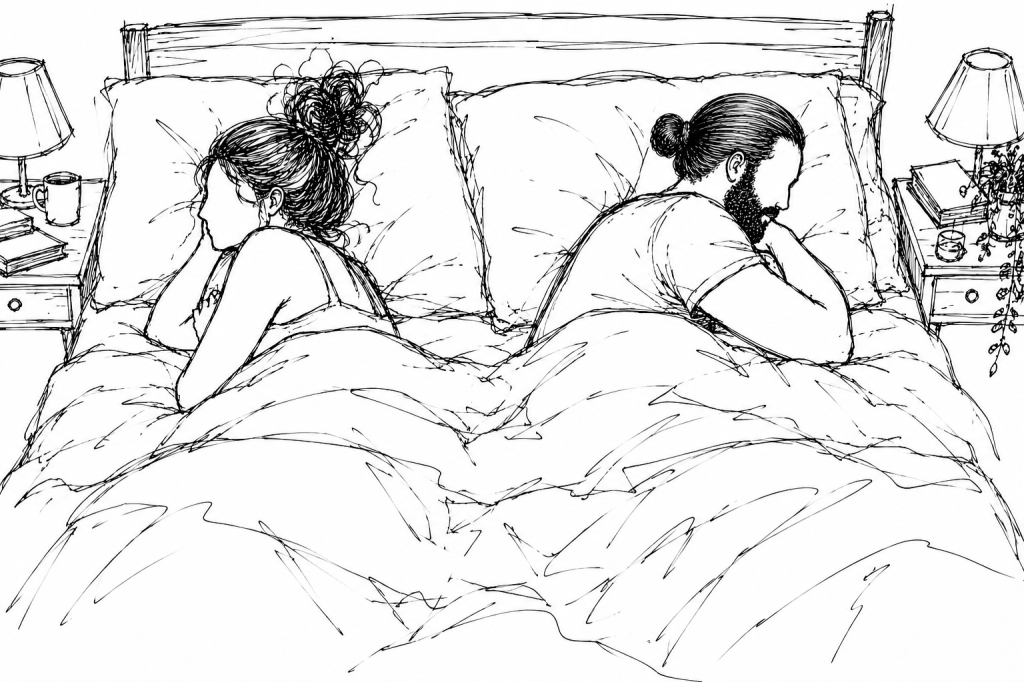
I had gained weight and felt increasingly unhappy with my appearance. My confidence had suffered.
And I began wondering whether the job I had taken partly to improve our future was actually costing us too much in the present.
I had saved a respectable amount of money, but a surprising amount of my increased salary disappeared into petrol and maintaining a lifestyle made less healthy by the fact that I had so little time.
The job itself remained extremely difficult.
My employers were demanding and often unreasonable. I worked hard to meet their expectations, but increasingly felt I was fighting a losing battle. There was little willingness to work with me, and they could be dismissive and rude, showing scant regard for their staff or any real respect for the boundaries of our working hours.
I had tried incredibly hard to adapt.
After more than a year, I finally began accepting that perhaps I couldn’t.
Then one day in October, after an especially difficult day at work, an accident on the M25 turned my journey home into four miserable hours.
By the time I walked through the front door, I was angry, exhausted and completely depleted.
The following morning I woke up feeling really unwell and very tired so called in sick, which was rare.
And somewhere during that day, something in me simply decided:
Enough.
I wrote an email to my manager explaining that I had tried my very best but could no longer make the job work. It was costing too much in my health and my relationships. I barely saw my friends or family anymore.
The moment I sent it, I felt lighter.
I still had two months of my contract to work, but there was now an end point.
I believed Stephen would be delighted.
Almost immediately, I contacted several agencies.
This time my priorities were different.
The managerial jobs all seemed to come with the same long hours and pressures, so I was prepared to accept less money for an ordinary housekeeping role if I could find a genuinely nice family.
I wanted my life back.
And, inevitably, part of wanting my life back meant wanting more of our life back too.
I didn’t want to return to the kind of relationship Stephen and I had once had, where I became too involved in managing his life. He had made considerable progress since attending the programme and I wanted that independence to continue.
But I missed us.
I missed having enough left at the end of the day to give to the person I lived with and whom I loved very much.
I thought that if our working lives became more compatible again, some of what had quietly disappeared between us might naturally return.
Around the same time, another change arrived.
To be continued…
Reflection
Looking back, there was still nothing about this period that felt like the beginning of an ending. If anything, the absence of drama reassured me. The conversations about other women and alternative relationships had quietened down. Stephen was working. I was succeeding in a job I had once thought I couldn’t survive. We took holidays, celebrated birthdays, spent time with family and continued talking about the future. Our relationship had become less intense, but after everything we had been through, perhaps less intensity was what a settled relationship was supposed to feel like.
There were things that had quietly slipped away. Some of Stephen’s early momentum had gone. The driving stopped. So did the martial arts. The rooms and projects that had once represented his new beginning weren’t being used in quite the way we had imagined. Our physical relationship had changed too. Sex had once been one of the easiest parts of us, and now even holidays could contain arguments about it. But none of these things seemed large enough on their own to frighten me. They looked like the ordinary compromises and disappointments of two people living a busy life together.
What I could see very clearly was what my job had done to me. I was exhausted. I had gained weight, lost confidence in my appearance and become disconnected from friends, family and much of the life I had previously enjoyed. Ironically, I had taken the job partly because I believed it would help us build a better future, yet increasingly I wondered whether I was sacrificing too much of the present to reach it. When I finally resigned, it felt less like giving something up than correcting the balance.
I also believed it might correct something between Stephen and me. I didn’t expect leaving the job to solve every problem, but there was an obvious logic to what had happened. I had become less available, less energetic, less interested in sex and less present in our everyday life. If I found work that left more of me intact, perhaps there would simply be more of me available for us again. That explanation was comforting because it located the problem somewhere tangible. Jobs could be changed. Hours could be reduced. Energy could return.
What I didn’t want was to go backwards. I wasn’t trying to become responsible for Stephen again or recreate the intensity of our earlier relationship. I still believed the programme had helped him become more independent, and I was proud of the progress he had made. I wanted something much simpler: two people with lives of their own who still had enough time and energy left to enjoy the life they shared.
So when I handed in my notice, I felt hopeful rather than defeated. I thought I had recognised something that wasn’t working and done something about it before it could damage us further. The distance between Stephen and me didn’t yet seem mysterious. I believed I knew what had caused it. And because I believed I knew the cause, I also believed I knew how to bring us closer again.


