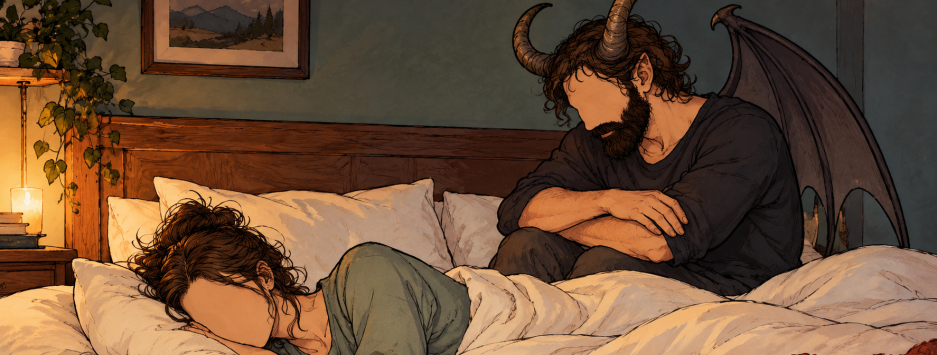
The first few days of blocking Stephen were surprisingly easy.
I was so angry, disappointed and frightened by everything I had discovered that those feelings carried me through.
I called the ward and asked them to remove me as Stephen’s next of kin. The kind woman I had met there sounded surprised and concerned and asked me why.
I told her I had recently discovered more lies.
Lies on top of lies.
I also began reaching back towards people I had lost touch with during the years I had been consumed by Stephen and, more recently, by the slow disintegration of our relationship.
I spoke to my oldest and dearest friend.
I had maybe only met her once since the visit Stephen and I had made shortly after he revealed that he had been suspended from work. We had barely been in contact for nearly five years.
She was angry for me.
At one point she joked that Stephen would probably try to sleep with one of the other patients.
She didn’t realise it was an all-male ward, but I knew exactly what she was getting at.
I spoke to my therapist too.
One of the things bothering me was Stephen’s paintings.
There were seven enormous, expensive paintings still hanging on the walls of my house. I never wanted anything to do with him again, but I had promised that I would look after them until he was ready to take them.
I felt guilty at the thought of doing anything else.
Other women might have sold them, burned them or simply given them away.
I couldn’t do that.
My therapist told me they were no longer my problem. Whatever needed to happen to get them out of my house was part of releasing myself from Stephen and moving on.
The first weekend after we stopped speaking, my son and his girlfriend were moving into the home they had just bought.
They had hired a removal van.
I saw my opportunity.
I asked my son whether we could use it afterwards to take all of Stephen’s paintings to his flat. He was almost certainly still in hospital, so I knew I could do it without having to see him.
Once the kids had finished their move, my son’s girlfriend and I carefully removed the seven huge paintings from my walls and loaded them into the van.
Even then, after everything Stephen had done to me, I was meticulous with them.
I didn’t want a single one damaged.
That was simply who I was.
When we reached the flat, we carried them inside just as carefully and stood them against the walls.
The place was cramped. There was stuff everywhere.
I knew it would be the last time I went there, so there were two things of mine I wanted to find before I left: my designer suitcase and my grandmother’s wooden sewing box.
The sewing box had its own little history.
When Stephen first moved in with me, he had started dismantling it because he wanted to strip away the paint and return it to its original wooden finish.
He never finished it.
In truth, he had barely started.
He had eventually taken it to the flat because he still intended to restore it. Seven months later, all he had managed to do was begin sanding it.
Five years after he first promised to restore my grandmother’s sewing box, it remained in a state of disrepair.
Another unfinished project.
Another promise never quite fulfilled.
Another of Stephen’s good intentions that had made something once beautiful, now broken and ugly.
Then I looked for my suitcase.
I had asked Stephen for it a few months earlier and he had told me it would take too long to locate.
It took me less than five minutes.
I checked inside.
Thankfully, there were no stranger’s knickers in there.
We locked the flat and left.
I felt relieved that the paintings were finally out of my house, although part of me still felt guilty that nearly £20,000 worth of art was now sitting uninsured, in a vacant flat in an unsavoury part of town.
The more recent £10,000 art purchases were already there, still in their unopened boxes.
Even while trying to disentangle myself from Stephen, I was still worrying about the consequences of his choices.
Later that day, I returned his keys to his father.
Standing briefly on his doorstep, I told him about the extent of the lying and cheating I had discovered.
He said he was sorry. He didn’t know why Stephen was like this.
I also told Mum and Dad about Stephen’s recent admission to hospital.
Dad was delighted to hear that the paintings had finally gone.
A few weeks later, the situation inspired him to write a poem about Stephen and me. It captured something about the inevitability of our demise — some of it caused by the things Stephen had done, and some by events that had been beyond either of our control.
On the surface, I was doing everything I needed to do.
I had blocked Stephen.
I had removed myself as his next of kin.
I had spoken to my therapist.
I had reconnected with friends.
I had returned his possessions.
I had given his keys back.
I had begun removing him, physically and practically, from my life.
I had made a decision.
Then, after about two weeks, something changed.
I couldn’t stop thinking about him.
There were days when I physically ached inside. I struggled to concentrate at work. My thoughts kept returning to Stephen no matter what I did.
It felt remarkably like craving a drug.
And, just as with a craving, my mind began searching for reasons why giving in might actually be reasonable.
I began constructing an argument that would allow me to contact him again.
I felt compassion that he had so few people supporting him.
Perhaps I could still care about him without wanting him back.
Perhaps I could still be part of his life without hoping he would choose me.
Perhaps, for the first time, I could have some kind of relationship with Stephen while fully accepting that the romantic possibility between us was dead.
That felt safe.
So I unblocked him.
And I reached out.
Stephen was pleased to hear from me, although he said he had never expected to hear from me again.
In some ways, he told me, he had been moving on with his life.
Perhaps that was something I should have paid more attention to.
Whenever I withdrew from Stephen, he seemed able simply to continue with his life.
He never went out of his way to find a route back to me.
I was the one who withdrew.
And I was the one who returned.
It made me wonder whether what I was experiencing was love at all, or whether I had developed some strange psychological dependency on him.
He told me that the hospital had allowed him out for a day to spend time with the volunteers from the arts centre. They had gone river swimming and he had had a fantastic day.
I was glad he had enjoyed himself.
Maybe Stephen wasn’t lacking in support to the extent I allowed myself to believe.
But I also wondered whether he ever experienced anything resembling the pain I had felt while we weren’t speaking.
It made me wonder which of us had the greater problem with attachment.
He was only days away from being discharged by then.
There was a care plan being discussed: visits, appointments and support that would be in place once he returned to the flat.
He still hadn’t been back there and therefore hadn’t seen the paintings filling his hallway, although his father had told him they were there.
A while after his release, I went to visit him.
He was clearly better.
Some of the paintings were already on the walls.
He showed me a schedule he had made while he was in hospital — a structured timetable for sleeping, eating and working.
It struck me that the hospital team had been encouraging him to do many of the things I had spent years trying to help him do.
There had also been a woman visiting the ward whose role involved helping patients to give up smoking.
Her name was A.
She had told Stephen she could help him, and he had embraced that support. But he also told me that they had remained in contact since he left the hospital.
They had been on a couple of walks together.
Something about that immediately made me uncomfortable.
I wondered about the professional boundaries involved and what exactly was developing between them.
Stephen reassured me that they were simply supportive friends.
He told me that A was a former prostitute and addict that was turning her life around, and volunteering at the hospital was her way of paying it forward. She was vulnerable herself.
That word registered.
Vulnerable.
I had heard variations of this story before.
In the middle of May, Stephen and I met for brunch.
He was on good form, although I noticed him staring at the waitress.
I wanted to be his friend.
I still wanted to support him.
He told me he was worried about hurting me.
I told him that this was my choice and that it was up to me to decide how much I could handle.
At the time, that felt like strength.
I’m not sure it was.
We were having such a nice time that I asked whether he wanted to come back to mine and watch a comedy programme.
I made the boundary explicit.
There would be no intimacy.
Since discovering the truth about U, I simply didn’t want that.
We had a lovely evening.
We binge-watched about eight hours of comedy, sitting at opposite ends of the sofa.
And I hated resisting the urge to be more than friends.
When it finished, it would have been easy to let him stay.
I didn’t.
I was determined to maintain the boundary I had set, so I insisted on driving him home.
When we arrived at his flat, he got out of the car with barely a goodbye.
No hug.
I drove away wondering what it meant.
Over the following days, I began to feel depressed.
I had spent a lovely day and evening with someone I still loved while forcing myself to behave as though I no longer wanted what I desperately wanted.
It had taken its toll.
I was beginning to realise that I didn’t like pretending to be Stephen’s friend.
Perhaps I couldn’t do it.
I had been feeling low since we had met up, and then the depression was compounded by a strange physical illness. I became quieter. Stephen understood that I wasn’t feeling well, emotionally or physically and we talked less.
In the middle of all this came Eurovision.
I had grown up watching Eurovision with my family and loving it, although I had lost interest as an adult.
Stephen was a huge fan.
Since meeting him, we had watched it together every year, and through him I had rediscovered some of the enjoyment I’d had as a child.
We had spent some lovely evenings together over the years watching it.
Part of me hoped he might suggest that we watch it together again this year.
He didn’t.
So I watched it alone.
I wondered what he was doing.
And I felt incredibly sad.
During those days I began seriously questioning whether this idea of friendship was sensible.
Watching Stephen continue with his life while I tried to occupy some smaller, safer place within it seemed to hurt almost as much as losing him.
I decided I needed to see him and tell him that we should stop contact.
We had discussed an idea before: perhaps we could separate completely for a year, but agree on a date and time in the future when we could meet again, if we were both ready and still wanted contact.
It seemed like a mature solution.
A clean boundary.
Something definite.
It supported a necessary separation but allowed hope that we might still find each other in the future.
Before I could propose it again, I asked him how he had spent Eurovision night.
A had come over.
They had danced to the songs together and had fun.
I felt gutted.
I had been sitting at home alone, watching something that had belonged to our relationship and wishing we were together.
He had been watching it with somebody else.
I asked whether they had become intimate.
They had.
Why was I not surprised?
He had described her to me as vulnerable.
And he had slept with her.
My best friend’s throwaway joke that Stephen would probably end up trying to sleep with another patient suddenly didn’t seem quite so far from the truth.
Then I discovered there was more.
During the same two weeks in which I had been becoming increasingly depressed and physically unwell, Stephen had also slept with K.
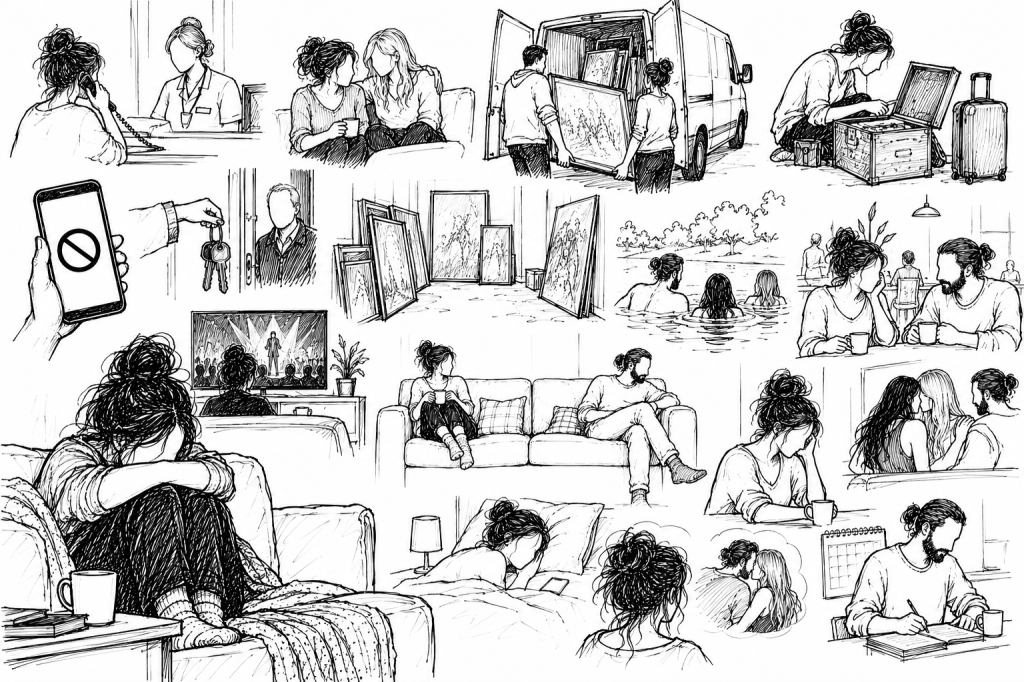
Although Stephen had always reassured me there was nothing between the two of them, it came as no surprise to me that he had finally been intimate with her.
Two women in two weeks.
I asked whether K knew about A. I couldn’t imagine she would be happy about it.
Stephen said she knew and was okay with it.
It appeared that the kind of sexual freedom Stephen had talked about wanting was becoming his reality.
By then, he had been intimate with at least six other women during the five and a half years I had known him.
As many women as he had slept with in his entire life before meeting me.
And throughout all of it, he had never simply told me that he didn’t love me or didn’t want a future with me.
I began to feel less and less significant in the story of his life.
More like a passing phase in it.
I had believed he was the man I would grow old with.
Now I was just a name sandwiched between twelve women.
Stephen told me these recent encounters hadn’t been particularly good experiences. He was still having difficulties performing, although he thought that might be connected to his medication.
And then something happened inside me that I find much harder to explain.
I went to see Stephen intending to tell him that we needed to stop contact.
I had already reached the sensible conclusion.
I knew friendship was hurting me.
I knew continuing to expose myself to his relationships with other women was destabilising me.
I knew this wasn’t the life I wanted.
I knew what my values were.
And still, while I sat there listening to him, my certainty began to dissolve.
Was it jealousy?
Was it the knowledge that these encounters weren’t going particularly well?
Did some part of me hear that he couldn’t perform with these women and turn it into evidence that perhaps they were mistakes? That perhaps none of this meant what I feared it meant?
I don’t know.
What I do know is that I was no longer behaving like myself.
My emotions were becoming increasingly difficult to regulate. My convictions could feel absolute one day and collapse under the weight of a conversation with Stephen the next.
I could make a decision when I was away from him, understand exactly why I had made it, explain it perfectly rationally — and then find myself questioning the whole thing once I was sitting in front of him.
Even my choices no longer seemed entirely connected to what I actually wanted.
I would decide to remove him from my life and then ache to bring him back.
I would decide we could be friends and then be devastated when he behaved like a single man.
I would decide that intimacy was over and then struggle with the distance between us on the sofa.
I would decide we needed a year apart and then find myself searching his latest sexual encounters for some reason not to leave.
There were moments when I felt like the victim of my own life and others when I seemed to be standing outside it, observing myself making choices I didn’t understand.
And which version of me appeared seemed increasingly dependent on whatever Stephen had just told me.
That frightened me.
Because my emotional intelligence had always been one of the things I trusted about myself.
I thought I understood people.
I thought I understood myself.
I had values I believed were important. I had boundaries. I had convictions about fidelity, honesty, dignity and what I would and wouldn’t accept from a partner.
None of those values had actually changed.
But my ability to act in accordance with them was beginning to fail.
I could see the contradiction and still participate in it.
I could recognise the danger and still move towards it.
I could know something was hurting me and still experience separation from it as even more painful.
And now I found myself contemplating something that would once have been completely incompatible with who I was.
If I chose to have any kind of romantic relationship with Stephen, I would have to accept that I was simply one of several women in his life.
I didn’t want that.
I had never wanted that.
I wanted to be his only woman.
Yet I was actually considering surrendering something so fundamental to me simply so I didn’t have to lose him altogether.
I was beginning to bargain away pieces of myself for a piece of Stephen.
Reflection
For a little while, I believed I was finally finding my way out. I had blocked Stephen, removed his possessions from my home, reconnected with old friends and begun reclaiming the life that had gradually become consumed by him. There was something reassuring about taking practical steps. Each one seemed to confirm that I was capable of leaving. But once the anger subsided, I discovered that removing Stephen from my surroundings was very different from removing him from my emotional life. I missed him with an intensity that frightened me. The very person I needed to recover from was the person I most wanted to reach for.
I told myself that friendship might offer a way forward. Perhaps I could keep the companionship, the laughter and the familiarity without the expectations that had caused me so much pain. But I was asking myself to accept a version of Stephen that bore little resemblance to the man I still wanted him to be. Sitting at opposite ends of the sofa, watching programmes we loved, I was painfully aware of everything I was denying myself. And when I watched Eurovision alone while he enjoyed it with another woman, I began to understand how cruel this arrangement was becoming. I wasn’t learning to be his friend. I was trying to find a way of loving him that might hurt less than losing him.
What troubled me most was the growing disconnect between my judgement and my behaviour. Away from Stephen, I could think clearly. I knew what I wanted from a relationship, understood why ours had become so damaging and could make perfectly rational decisions about ending contact. Yet the moment we were together, those convictions became strangely fragile. A conversation, an explanation or the smallest suggestion that I might still matter to him could unravel everything I had resolved. I was beginning to distrust my own responses. I could recognise what was happening while seeming almost powerless to prevent myself from participating in it.
There was something deeply unsettling about watching Stephen pursue other women while I struggled so desperately to detach from him. I wondered whether he experienced anything resembling the grief and longing that occupied so much of my life. Each new woman seemed to diminish my place in his story, yet rather than making it easier to leave, the knowledge sometimes made me cling more tightly to what remained. I had always believed that love should exist alongside dignity, honesty and mutual commitment. Now I was contemplating accepting something that contradicted all three. My values hadn’t changed, but my fear of losing Stephen was beginning to outweigh my ability to honour them.
Perhaps the saddest part was that I could see myself disappearing. I wasn’t unaware of the contradictions or inventing excuses without recognising them. I knew that friendship was hurting me, that intimacy without commitment would hurt me, and that accepting other women would require me to surrender something fundamental about myself. Yet I was beginning to negotiate with my own needs as though they were unreasonable demands rather than ordinary expectations of love. I had spent so long trying to find a place in Stephen’s life that I was beginning to accept almost any place he might offer me. And the more I compromised to avoid losing him, the further I seemed to drift from myself.


