A few days later, I told Stephen about the night I had gone into town looking for him.
He said it sounded obsessive.
I couldn’t disagree.
Then he told me he wanted to try the rehabilitation plan again. This time, though, he wouldn’t see K. He wouldn’t see any other women.
I asked him a very simple question.
Would he rather live with me and not have sex, or have sex with K and not live with me?
He said he would rather live with me.
He believed being with me gave him his best chance of getting better and, potentially, of us finding our way back to each other. I think he still imagined the rehabilitation as a kind of prologue to the future we had once thought we would share.
There was something else Stephen had told me that made me wonder whether he was finally beginning to understand himself.
During his time in hospital, he had experienced what seemed to be a small but significant revelation about his own dishonesty.
He told me that a member of staff had asked whether he had anything prohibited on him.
He had said no.
But he was lying.
He did have something concealed on his person, which he eventually handed over.
Afterwards, he assured the member of staff that he genuinely had nothing else hidden.
Then, almost as he said it, something occurred to him.
“But how can you believe me when I’ve already lied?”
For the first time, he seemed to recognise the problem from the other person’s perspective.
He had told a lie, been caught out, and then expected to be believed simply because he was now telling the truth.
He admitted to me that perhaps he wasn’t the good guy he had always believed himself to be.
He knew how to lie.
And he was beginning to understand that once someone had been deceived, telling the truth afterwards didn’t automatically restore their trust.
I found that admission strangely significant.
For years, I had tried to explain to Stephen why his dishonesty made it so difficult for me to believe his reassurances. He had often seemed unable to understand why I continued questioning him after he had offered an explanation.
Now, through something that had happened in hospital, he appeared to have arrived at that understanding himself.
Perhaps this was genuine progress.
Perhaps he was finally beginning to see something I had been trying to show him for years.
But he was also unusually frank about what he was asking of me.
Accepting my offer would be selfish, he admitted. Living with me would give him almost everything he needed to recover, but other than promising to be loyal while we tried, he couldn’t give me any assurances about what would happen between us.
Still, the commitment felt greater than it had before. More importantly, the immediate threat of other women had been removed.
So I agreed to try one more time.
The timing seemed almost perfect.
I was about to spend ten days dog-sitting at work, and Stephen could come with me. It would get him away from his flat, but also away from my house and all the memories attached to it.
We would have beautiful surroundings, space, dogs and long local walks.
If anywhere could provide the conditions for healing, this seemed like it.
And for those ten days, things were good.
Stephen travelled to the arts centre while I stayed behind and worked. We took the dogs for long walks. I cooked nice meals every day. We relaxed in the evenings. We enjoyed each other’s company. There was affection between us. Intimacy could still feel lovely, although sex remained difficult for both of us.
Afterwards, we returned to my house.
One evening, I asked Stephen whether he missed K.
He said he did.
I could understand that. He had been spending a lot of time with her and had become fond of her.
Then I asked whether he wanted to have sex with her again.
I knew what I wanted him to say.
No. I’m committed to you now. I want to make this work.
Instead, he said yes.
He would like to have sex with her again.
“It’s nice.”
“Oh,” I said. “So it’s working now then?”
“Yeah.”
He told me she was enthusiastic, which he found a turn-on.
“Is it better than with me?”
He said it was different.
I could understand different.
But then, without me asking him to elaborate, he did.
He told me he was hornier with her. She was small. She was fit.
And I wasn’t as fit as I used to be.
That hurt in a way I hadn’t expected.
This was the man who, when we first met, had told me he was interested in me, not merely the shell of a person. The man who had previously loved women much bigger than me. The man who, on our first date, had described me as small and fit.
“I thought you didn’t care about looks.”
“I thought that too,” he said. “But maybe it matters more to me than I thought.”
In nearly five years together, I had never believed Stephen had a problem with the way I looked.
I had certainly had periods when I lacked confidence in my appearance, but those insecurities had never really come from him. Whatever else had happened between us, I had never spent our relationship believing that my body was something he found inadequate.
I had lost around twenty pounds since he had first walked out of my house the previous year.
I wasn’t even sure he had noticed.
Now, suddenly, my body seemed to have entered the evidence against us.
For the best part of a year, Stephen had lived almost entirely on fast food, and his body was beginning to show the effects of it. He had developed a noticeably rounded stomach, but it made no difference to how I felt about him.
I had always imagined us growing old together, our bodies changing with the years, our faces gathering wrinkles. Loving him had never depended on him looking the same as the day we met.
And there was more.
He didn’t know whether our spark was still there.
He didn’t know whether he was still in love with me.
He didn’t know whether he was attracted to me anymore.
Perhaps, he said, these were the reasons he no longer enjoyed sex with me.
But he did know that he wanted to live with me while he got better.
Then together, we concluded what, in an ideal world, we thought Stephen preferred our future to look like.
I would be his main partner.
The woman he lived with.
The person he shared his life with.
But he would have sexual freedom with other women.
If I couldn’t accept that, he said, then he would try to get better and possibly rebuild a conventional relationship with me instead.
I could hardly believe I was hearing it.
More ambiguity.
More uncertainty.
More versions of a future in which I was expected to remain beside him while he decided what he actually wanted.
For years, our chemistry had been one of the things I had held onto. Whatever else was wrong, that had always seemed undeniable.
But chemistry isn’t compatibility.
Now he was telling me he wasn’t even sure we had that anymore.
And yet he still wanted to live with me.
I struggled to understand the reasoning.
Unless the explanation was the one he had already given me himself.
It was selfish.
We went to bed early because Stephen needed to catch a morning train to London to work with the stone specialist. I had offered to drive him to a station closer to London, which would give him another half an hour in bed.
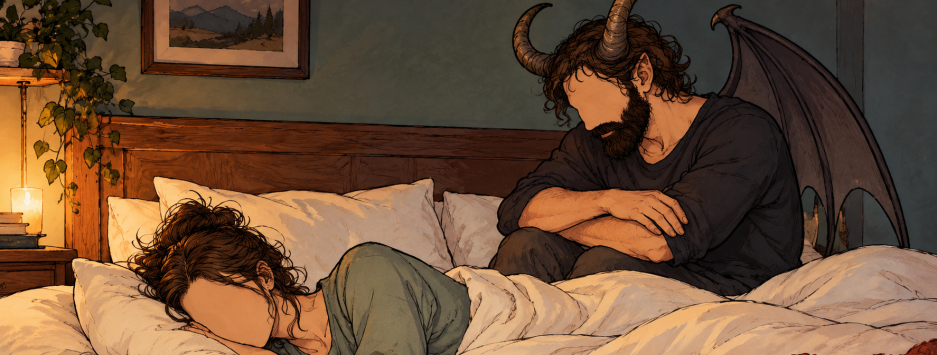
But I didn’t sleep.
I lay beside him going over everything he had said.
And slowly, something became very clear.
There was nothing left for me to fight for.
I loved Stephen. I wanted him to get better. But taking care of him now could only be described as a selfless, sacrificial act, and that had never been why I was doing it.
There had always been something I was working towards.
Us.
I had been trying to help him become well enough for us to finally have the relationship I still believed was waiting underneath all the chaos.
If he no longer knew whether he loved me, wanted me, was attracted to me or even felt chemistry with me, then what exactly was I sacrificing myself for?
I got out of bed and went downstairs to the living room.
For the first time, I seriously contemplated leaving him in a different way.
Not storming away.
Not blocking him in anger.
Not leaving while some part of me waited for the next conversation, the next explanation or the next reason to go back.
Actually leaving.
And moving on.
Every other time I had left Stephen, I had thought almost entirely about the leaving.
I had never really thought about what happened afterwards.
This time, I did.
If I was going to leave him, I needed to imagine the after.
I needed to plan for it.
That night, I rented Wild, starring Reese Witherspoon. It is based on the story of a woman whose life has unravelled through grief, drugs and infidelity and who sets out alone to walk more than a thousand miles of the Pacific Crest Trail.
I wasn’t going to walk a thousand miles.
But I understood the impulse.
I needed something difficult enough to mark the distance between the life I had been living and whatever came next.
More than anything, I wanted to watch somebody survive the aftermath of their own life falling apart.
When the film finished, I still didn’t sleep.
I watched the clock until it was time to wake Stephen and drive him towards London.
The journey was quiet between us.
At some point, I told him that the things he had said to me the night before had been incredibly difficult to hear.
“Well, you did ask me,” he said. “And I’m not going to lie.”
That response confused me.
Because I wasn’t asking him to lie.
There was an enormous distance between dishonesty and telling the woman who had loved you for nearly six years that another woman was smaller, fitter and made you hornier.
Truth did not require comparison.
Honesty did not require humiliation.
He could have told me that his feelings had changed. He could have told me that sex felt different with somebody else. He could have admitted that physical attraction mattered more to him than he had previously understood.
All of those things would have hurt.
But they could have been said with tenderness. With tact. With some recognition that the person sitting beside him was someone who had loved him, cared for him, championed him and repeatedly tried to help him through the most difficult periods of his life.
What shocked me wasn’t simply what Stephen thought.
It was how little instinct he seemed to have to protect my dignity while telling me.
I dropped him at the station and told him I would speak to him later.
But as I drove away, I was already beginning to formulate a plan to leave him for good.
I went to my parents’ house for the weekend.
And strangely, I felt serene.
I wasn’t depressed.
I wasn’t suicidal.
I wasn’t thinking about Stephen in all the familiar ways.
I was thinking about leaving him.
And, more importantly, I was thinking about what would happen if I didn’t go back.
The longest I had ever managed without speaking to Stephen was around two weeks.
I knew those first two weeks.
I knew the debilitating emotional pain. The grief. The cravings. The almost physical compulsion to make contact and make the pain stop.
But this time I was expecting them.
I was ready to let them come.
I would allow myself to feel whatever I needed to feel and stay away from Stephen long enough to discover what existed on the other side of it.
Perhaps I would document it.
Perhaps journalling would help me understand what was happening to me as I went through it.
For the first time, I wasn’t expecting leaving to make me feel better.
I was accepting that it would probably make me feel considerably worse.
I just wanted to stay gone long enough to find out what came after worse.
I felt peaceful.
But I was apprehensive too.
I knew something painful was coming.
On Monday morning, Stephen messaged me while I was in the shower.
Before I had even had a chance to read it, he called, worried that I wasn’t receiving his messages.
He talked about returning to me later.
I told him I didn’t think that was going to happen.
Then I said the words I had spent the weekend preparing myself to say.
“It’s time for me to move on.”
I told him I couldn’t come back from the things he had said to me that night.
He seemed accepting, although something in his voice suggested he hadn’t expected this.
There was no argument.
No bargaining.
No dramatic ending.
I told him I would bring the things he had left at my house to his flat later that day.
And I told him I wanted to say goodbye properly.
In all the times I had left Stephen before, there had never really been a goodbye.
There had been anger. Blocking. Silence. Separation.
But never a goodbye.
The fact that I was willing to stand in front of him and say one now felt different.
Monumental, even.
Because perhaps, for the first time, I wasn’t leaving in the hope that something would bring us back together.
I was preparing to leave without expecting to return.
Later that day, I left work and began the journey towards Stephen’s flat.
On the way, he messaged to say he was still at the arts centre, waiting for a delivery.
I told him I would come there instead.
I wondered whether that caught him off guard. Perhaps he had imagined we would rearrange, or that I would wait until he was back at the flat.
But I didn’t want to rearrange.
I didn’t want another evening of talking, another opportunity for my resolve to weaken, another conversation that might somehow lead us back to where we had been so many times before.
I wanted to get on with leaving.
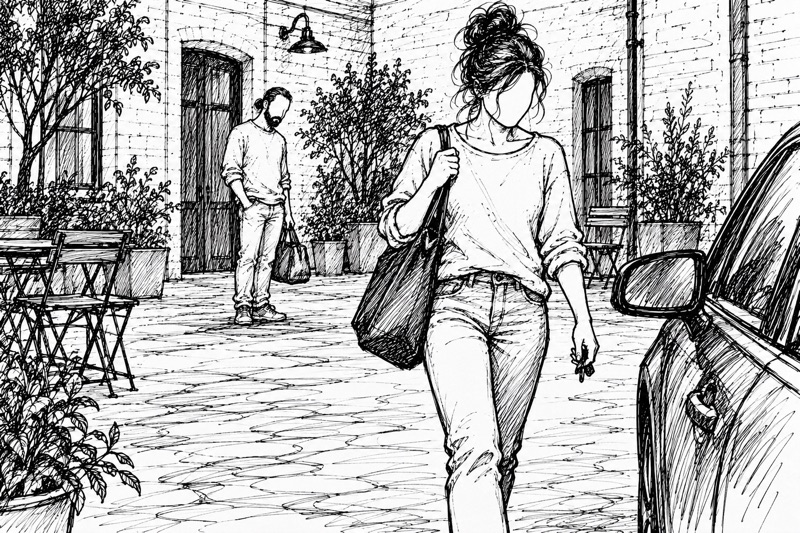
When I arrived at the arts centre, I found Stephen in the courtyard, working on something.
He looked nervous.
Almost apprehensive.
He sat down at one of the patio tables and invited me to join him.
I declined.
I wanted to remain standing.
I didn’t want to settle in, make myself comfortable or give the conversation room to wander. I knew how easily that could happen between us. How a conversation intended to bring something to an end could become another attempt to understand it, another exchange of explanations, another reason to stay.
I wanted this to be brief.
I wanted to leave before I could change my mind.
Stephen seemed surprised.
He said he had thought we were going to talk.
But I was done talking.
We had talked for years.
We had analysed, questioned, explained, argued, forgiven and tried again. I had listened to more explanations than I could count. I had spent countless hours trying to understand Stephen, and just as many trying to help him understand himself.
I had nothing left to ask.
Almost nothing.
I told him again how deeply the things he had said about my body, his attraction to K and his uncertainty about loving me had hurt.
Then I asked him one final question.
Was there anything else he wanted to say to me?
I think that was my last offering.
Some small part of me was still leaving a space for something profound. Something meaningful. Perhaps an acknowledgement of what we had shared, or what we had lost. Something that might honour the nearly six years we had spent together.
I don’t think I was looking for a reason to stay anymore.
But I would have liked something to carry away with me.
It didn’t come.
So I told him this was goodbye.
I wished him well.
And I offered him a hug.
Then I began making my way back towards the car.
But Stephen started talking again.
About work.
About things that had happened that day. About the delivery he was still waiting for.
Ordinary, inconsequential details that had nothing to do with us or the enormity of what was happening.
I wondered whether he was doing it without realising. Whether some part of him was trying to keep me there, to delay the moment when I would actually leave.
Or perhaps he simply didn’t know what else to say.
I stood listening for a little while.
And then, rather unexpectedly, I found myself thinking something almost comical.
Well, at least I won’t have to listen to these boring conversation fillers anymore.
After everything we had been through, after all the heartbreak and the extraordinary emotional upheaval of the previous year, it seemed a ridiculous thing to be thinking.
But there it was.
A small, strangely ordinary irritation in the middle of a moment I knew would change my life.
Perhaps that was significant in its own way.
For so long, I had been so consumed by the fear of losing Stephen that I had almost forgotten there were things about being with him I wouldn’t miss.
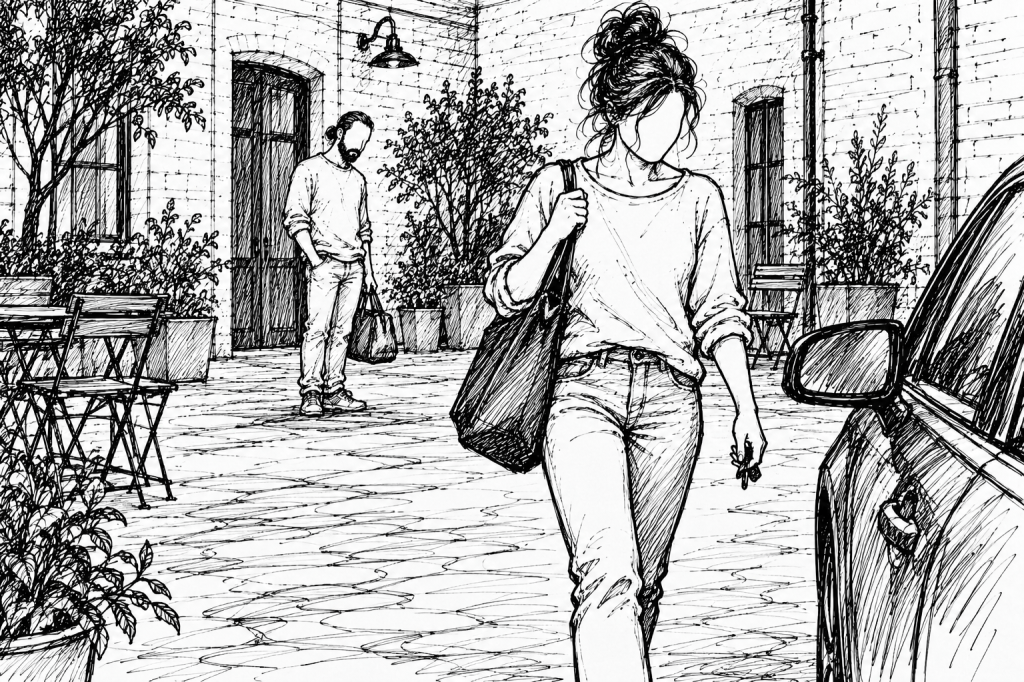
I said goodbye one last time.
Then I turned my back and walked towards my car.
I didn’t look back.
I wonder whether Stephen understood what was happening.
Whether he recognised that something was different this time.
Or whether, after so many separations and reconciliations, he had simply grown accustomed to my inevitable return.
Perhaps he thought that, given enough time, I would miss him too much.
That I would find another reason to reach out.
That the silence would become unbearable and I would come back, as I always had.
I couldn’t know what he was thinking.
But I knew what I was thinking.
I had spent almost six years trying to understand Stephen, trying to love him through his difficulties, trying to help him become the man I believed he could be.
And somewhere along the way, I had lost sight of the life I had wanted for myself.
I had loved him.
I still loved him.
But I could no longer keep sacrificing myself for the possibility of a future he wasn’t even sure he wanted.
I got into my car and headed home.
I knew the grief would come.
I knew I would miss him.
I knew there would be days when every part of me would want to undo what I had just done.
But this time, I wasn’t leaving because I had stopped loving Stephen.
I was leaving because I had finally decided that loving him could no longer be the reason I kept abandoning myself.
For the first time, leaving wasn’t the part I needed to learn how to do.
It was staying gone.
Reflection
For almost six years, I had believed that somewhere beneath Stephen’s difficulties was the relationship we were supposed to have. Every reconciliation, every attempt to understand him and every effort to help him had been sustained by that belief. I wasn’t simply trying to save Stephen. I was trying to save us. Even when the evidence suggested otherwise, I held on to the possibility that if he could become well enough, honest enough or emotionally settled enough, we might finally have the life we had once imagined. Letting go of Stephen meant letting go of that future too, and I think that was one of the hardest things I had ever been asked to do.
What finally changed wasn’t that I stopped loving him. It was the realisation that I was being asked to give everything while being promised almost nothing. I could accept that Stephen was struggling. I could accept that his feelings were confused and that he couldn’t guarantee what the future held. But I could no longer understand why I should continue sacrificing my own happiness for a relationship he wasn’t even sure he wanted. His comments about my appearance hurt deeply, not simply because they made me feel inadequate, but because they exposed how differently we had come to understand love. I had imagined us growing old together, our bodies changing without diminishing what we meant to each other. Now I was being compared with another woman, as though the years of love, loyalty and shared experience counted for less than the excitement of someone new.
Perhaps the most significant change happened during that sleepless night. For the first time, I stopped concentrating on how to leave Stephen and began thinking about how to live without him. I knew the grief would be terrible. I knew how powerful the longing could become and how easily I had mistaken relief from that longing for a reason to return. But I was beginning to understand that the pain of separation wasn’t necessarily evidence that leaving was wrong. Perhaps it was simply something I would have to endure to reach a life that no longer revolved around Stephen. I didn’t know what that life would look like, and the uncertainty frightened me. But for the first time, I was prepared to find out.
Our goodbye was quieter than I might once have imagined. There was no great confrontation, no extraordinary revelation and no final declaration that made sense of everything we had been through. I had spent years waiting for Stephen to say something that would resolve the confusion, restore my faith or make the suffering worthwhile. Even at the very end, some small part of me hoped he might find words that honoured what we had shared. But he didn’t, and I realised that I could leave without them. I didn’t need his understanding, his agreement or even his regret to make a decision about my own life. Standing there in the courtyard, I was finally allowing something to end without asking Stephen to explain it to me.
I drove away still loving him, still grieving the future I had wanted and knowing that the hardest part was probably yet to come. I wasn’t suddenly stronger, wiser or free of the attachment that had kept drawing me back. But something fundamental had shifted. For so long, I had measured hope by the possibility of Stephen changing, choosing me or finding his way back to the man I believed he could be. Now, for the first time, I was beginning to place that hope in myself. I didn’t know whether I could bear the loneliness, the longing or the uncertainty of a life without him. I only knew that I could no longer keep abandoning myself to avoid finding out. I hadn’t stopped loving Stephen. I had simply begun to believe that my own life was worth saving too.