
Since Stephen had left, things really did seem to have improved. We had spent the previous few months doing things together, making memories and enjoying each other without the intensity of living together. There had been plenty to distract us, but it wasn’t simply distraction. There was nothing obvious happening beneath the surface that was setting off alarm bells.
I was beginning to believe that perhaps Stephen really had learned his lesson.
There were, however, a couple of moments that unsettled me.
One came when Stephen was invited to another party at the art gallery. I wasn’t particularly interested in going, so I suggested that he go alone. In some ways, I saw it as an opportunity.
I wanted to see whether he could manage himself without me there.
After everything that had happened, I knew that we couldn’t build a healthy relationship if the only way to keep Stephen within our boundaries was for me to physically be beside him. I couldn’t become his chaperone, his conscience or the person responsible for making sure he behaved appropriately. That would eventually become an unbearable burden for me, and it wouldn’t really be trust anyway.
If our relationship was going to survive, Stephen needed to learn to make good decisions when I wasn’t there.
So I encouraged him to go.
I was at home that evening and told him I was available if he needed me. He went to the gathering, and initially everything seemed fine. There was food and drink, people were mixing and talking, and Stephen sent me occasional updates about how the evening was going.
I was happy for him.
I genuinely wanted him to develop an identity of his own and to be able to go out, have a good time and come home having respected the boundaries we had agreed. His ability to do that would reassure me far more than anything he could say to me.
Towards the end of the evening, I expected a message telling me that the gathering was finishing and he was heading back to his dad’s.
Instead, the messages became less frequent.
I tried not to read anything into it. I assumed he was simply relaxing into the evening and enjoying himself.
Then, sometime after 10pm, he messaged to say that he was going to a cocktail bar with the gallery manager for one drink.
My anxiety immediately stirred.
It wasn’t that going for a drink was inherently wrong. It was the change of plan. The evening had been one thing, and now it was becoming something else. I had no desire to tell him what he could and couldn’t do, because that wasn’t the kind of relationship I wanted.
I wanted to see what he would choose to do when nobody was watching.
So I tried to let him make his own decision.
An hour passed and I still hadn’t heard from him. I began to suspect that the promised one drink had become something more. When I tried calling, he didn’t answer immediately.
Eventually I got through.
He told me the gallery manager had left, but that he had met some other new people and was enjoying himself. He would let me know when he was leaving.
By then, my anxiety was growing. I knew he was drinking, and I could hear the shape of the evening changing. The more alcohol he consumed and the later it became, the less predictable the night felt.
I kept reminding myself that this was exactly what I had wanted: for Stephen to have the opportunity to demonstrate that he could make sensible choices without me.
But there was a difficult contradiction in that.
I wanted to trust him.
I also wanted evidence that he was trustworthy.
And those are not quite the same thing.
Sometime before midnight, I saw an incoming call from Stephen. I answered, only to realise that it was accidental. For around ten minutes I could hear him talking to people in the background.
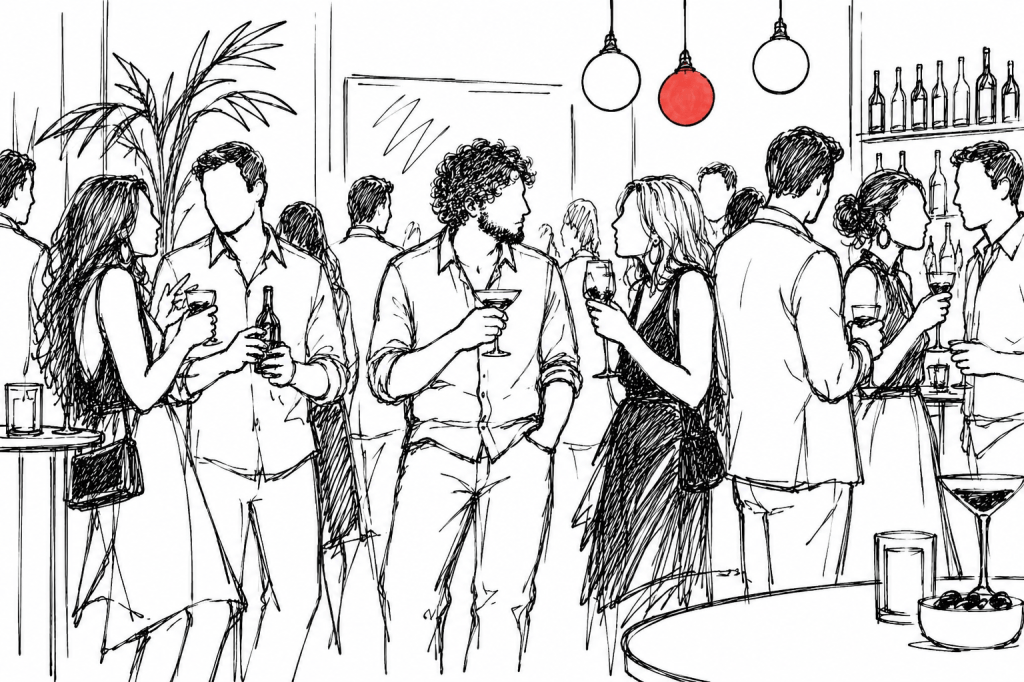
I sat there listening to the man I loved enjoying himself, drinking and chatting to strangers, while I had no real idea when he was going to go home.
It was surprisingly painful.
Not because I thought he shouldn’t be allowed to enjoy himself, but because I felt as though I had been left alone with all the uncertainty. I cared deeply about what we were trying to rebuild, and yet he seemed able to disappear into the evening without the same awareness of how his choices might affect me.
I couldn’t sleep.
My mind began filling in the gaps.
I knew from his past that nights like this could continue into the early hours. Numbers could be exchanged. Another bar could be suggested. People could end up back at someone’s house. None of those things had necessarily happened, but that was precisely the problem.
There was enough uncertainty for my imagination to take over.
And I couldn’t understand how the man who told me he loved me could so easily put himself into situations that left me at home worrying about what might happen.
Perhaps I should have left him to it.
Perhaps I should simply have waited to see what he did and allowed his behaviour to tell me whether the progress I believed we had made was real.
But by then I was emotionally invested in the progress we had made. I wanted it to work. I wanted to preserve what we had been rebuilding, and I couldn’t simply sit quietly while I felt it slipping out of my control.
Sometime after midnight, I managed to speak to him. By then I couldn’t contain my frustration. I told him how angry and upset I was that he still seemed to have no intention of ending the night.
I think that conversation finally prompted him to leave.
He sounded very drunk by then.
This wouldn’t be the first time during our relationship that Stephen would go alone to pubs or bars, stay out late and begin conversations with numerous strangers. I hated it, and I told him that I hated it, but it happened again and again.
What troubled me wasn’t simply the drinking or the fact that he was out without me. It was what those nights represented.
Stephen often seemed to put himself into situations where there was too much left to my imagination.
Alcohol. Late nights. New people. Women. Unplanned changes of direction. Situations where I wasn’t present and where the only information I had afterwards was whatever Stephen chose to tell me. It wasn’t like he was out with friends or colleagues who might hold him to account. He was out on his own to make new connections unobserved.
That created a strange kind of ambiguity.
I knew enough about his past and his difficulties with boundaries and restraint to know that my fears weren’t completely irrational. At the same time, I rarely had enough information to know whether my fears reflected reality or anxiety.
So there were these blank spaces in our relationship.
And my mind would fill them.
I think this is one of the things I understand much more clearly now. Trust isn’t created simply by being told that someone loves you. It is built through the accumulation of choices that make the other person feel safe.
Stephen could be incredibly loving when he was with me. He could make me feel adored, wanted and important. But when he repeatedly placed himself in situations that created uncertainty, those loving moments didn’t completely erase what happened when he was away from me.
The two things existed alongside each other.
And that created a kind of haunting.
Even in the tender moments, there could be ghosts from the occasions I hadn’t witnessed.
There was another small episode around this time that exposed a different kind of insecurity in me.
Stephen told me about a website called SuicideGirls he use to like. I looked it up and discovered that it was a site featuring tattooed and pierced alternative women, with chat rooms and sexually suggestive content. On its own, it was probably harmless.
But by then, harmless wasn’t always how things felt to me.
I was already becoming increasingly conscious of Stephen’s attraction to women who seemed very different from me. Looking at these women triggered something in me that was deeper than simple jealousy.
I began comparing myself with an imagined version of the women Stephen might be attracted to.
They seemed edgy, confident, sexual and completely removed from who I was. I started wondering whether, as Stephen became more confident and secure in himself, he would eventually decide that these were the kind of women he really wanted.
The fear wasn’t really about a website.
It was about whether I was enough.
And when I found myself caught between my growing self-doubt and my desire to trust Stephen, I sometimes shut down completely.
There were times when I would literally curl up in a foetal position on my bed and become almost silent and unreachable. It was as though my mind couldn’t find a way to resolve the conflict, so my body simply withdrew from it.
Stephen didn’t like seeing me like that.
He would tell me that one of the most important things in a relationship was being able to talk about difficult feelings rather than shutting down.
And intellectually, I knew he was right.
But emotionally, it frustrated me.
Because I felt as though I was being asked to work on my response to the uncertainty while the things creating that uncertainty were still happening.
I was expected to communicate better, trust more and strengthen the relationship.
Yet in my mind, strengthening a relationship also meant making choices that protected it.
That was the contradiction I couldn’t resolve.
I was trying to learn how to trust Stephen while simultaneously watching him create situations that made trust difficult.
And somewhere in between those two things, my anxiety began to take on a life of its own.
I didn’t yet understand that the problem wasn’t simply that I was too anxious, too jealous or too sensitive.
Nor did I understand that my attempts to manage my anxiety by monitoring, questioning and imagining possible outcomes could eventually become exhausting for both of us.
At the time, I simply knew that I loved him, that I wanted us to work, and that I desperately wanted to believe the worst was behind us.
For the moment, I still believed it was.
And perhaps that was why these incidents unsettled me so much.
They weren’t enough to destroy the trust I was rebuilding.
But they were enough to remind me that it wasn’t quite as secure as I wanted it to be.
To be continued…


