Several new plans we had made, started with a trip to an IMAX cinema to watch a Led Zeppelin documentary. It was incredible. The recordings of the band live during they heyday were so cinematic, it felt like we were there at the time. Stephen was a big fan of 60s and 70s rock and since meeting him, I became appreciative of it too.
In April, we took Stephen’s youngest son to Blackpool Pleasure Beach.
We had loved our trip to Alton Towers the year before, and I felt as though Blackpool was another theme park they both needed to experience.
The April showers were at their absolute worst and the B&B we had booked was filthy, but somehow neither managed to spoil the trip. We had a fantastic time.
Then, in May, Stephen and I went away again.
This time we were staying in a stargazing pod in Devon. It was a great little building and came close to matching the frontier cabin we had loved so much, although it didn’t quite beat it. The large glazed entrance looked straight out towards the sky, though, and when the clouds cleared at night we could sit there and look at the stars.
We spent time wandering around the picturesque town of Totnes, and Stephen treated us to a clay-pigeon shooting experience. I enjoyed it as much as I did at the gun show.
We were having a wonderful time.
One day, on a whim, we decided to visit the coastal town of Brixham.
Almost as soon as we left the car park, we began noticing pirates.
Lots of pirates.
Men, women and children were walking around dressed in surprisingly authentic-looking costumes. These weren’t the cheap fancy-dress outfits you might buy for a party. There were elaborate coats, boots, hats, swords and replica pistols.
We looked at each other, wondering what on earth was going on.
Then it became apparent that, completely by accident, we had arrived in the middle of the annual Brixham Pirate Festival.
It was everything Stephen loved in one place.
Costumes. Replica weapons. Boats. Cannons. Beer.
It looked like so much fun that after a while we actually felt slightly embarrassed walking around in our ordinary civilian clothes.
There and then, we made a deal.
We would come back the following year — and next time, we would come as pirates.
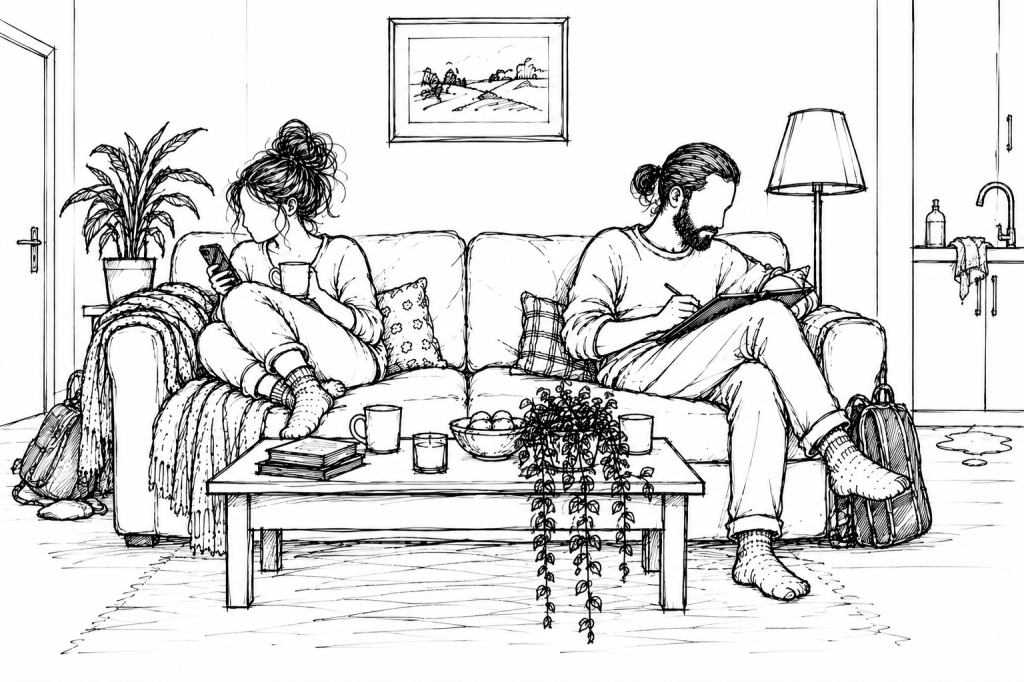
There was one day during the holiday when my phone game suddenly became particularly busy. By now I was part of an alliance, and something significant was happening within the game. I told Stephen I was going to play for a little while.
A little while turned into several hours.
It was exciting and involving, and I became completely absorbed in it. I knew we were on holiday together, but I also thought: it was my holiday too. If this was what I happened to want to spend an unplanned afternoon doing, why shouldn’t I?
Stephen seemed okay about it at the time. I thought he could see how much enjoyment I was getting from it.
But later on, the amount of time I was spending on the game was beginning to irritate him.
He felt I was spending too much time on my phone and not enough time with him.
I tried to explain why the game had become important to me. Since leaving my previous managerial role, there were parts of myself I no longer had an outlet for. Now that I was involved in the management of the alliance, I had responsibilities again. People relied on me. I was organising things, solving problems and making decisions.
In a funny little way, it had filled a gap I hadn’t realised had been left behind.
So I suggested what seemed like the perfect solution.
Why didn’t Stephen download the game and join my alliance too?
He had enjoyed similar games before. If he joined me, I could carry on doing something I genuinely loved without it feeling as though it was taking me away from him. Perhaps it could become another part of our life that we shared.
At the time, it seemed like such a small solution to such a small problem.
I had no idea how significant that little game would eventually become in both our lives.
When we returned from Devon, there was disappointing news waiting for Stephen.
He had missed the opportunity to buy the bunker land in Scotland.
He was devastated.
I was, if I was completely truthful, a little relieved.
I suggested again that perhaps he should look for something closer to home. Somewhere he could still create the kind of space he wanted, but somewhere we could easily drive to and from rather than having it hundreds of miles away in Scotland. It was woodland he had always dreamed of owning and the bunker never quite matched that description.
Eventually he found somewhere with potential, and we went to see it.
To me, it seemed ideal.
It was a good-sized plot of a few acres and only around thirty minutes from where he was working. Once we were standing there, walking around it together, I think Stephen began to see the possibilities too. I imagined he could spend time there in an environment that he enjoyed and inspired him, and I could have more precious time to myself, respite from the stress that Stephen’s every day anxieties imposed on me.
Then, one otherwise completely ordinary morning, everything changed.
We woke up and Stephen checked his phone.
A six-figure sum of money was sitting in his bank account.
There had been no warning.
After all the years of dispute over the property he owned with his brother, half of its value had simply appeared in his account.
We were ecstatic.
This was something Stephen had been talking about, fighting over and waiting for since the day I met him. Suddenly, there it was.
The money was his.
And with very little hesitation, he put in an offer on the woodland.
It was accepted.
Once again, it felt as though everything was beginning to come together.
As though, after all the false starts and setbacks, life was finally moving in our direction.
It almost felt as though the universe was rooting for us.
But around the same time, something else happened.
Stephen had been asked to unload and store dozens of hay bales for the horses on the estate. That evening, he told me he thought he might have pulled something in his shoulder.
By the following morning, he was in excruciating pain.
There were tears in his eyes and ordinary painkillers weren’t touching it. He took the day off work, but we were due to travel to my parents’ later because we had a music festival near them on the Friday.
I booked him a last minute physiotherapy appointment before we left, hoping there might be something they could do to ease the pain.
The session was useful, but there was only so much that could be achieved in one appointment. He would need a course of treatment.
The day became chaotic and, when we eventually departed for my parents’, we left the flat in a mess.
The washing-up hadn’t been done. The rubbish hadn’t been taken out. Things had simply been left where they were.
I knew it wasn’t how I would normally leave somewhere, but getting Stephen comfortable and getting ourselves out of the door had seemed more important.
Once we reached Mum and Dad’s, we went to a pharmacy to see if we could get stronger pain relief and a sling.
We came very close to abandoning the festival altogether. Stephen was in so much pain that I couldn’t imagine how he would manage an entire day there.
But he wanted to try.
If the painkillers and sling helped enough, he thought he could get through it.
The following morning was a beautiful spring day and we headed to the festival.
As long as the co-codamol was working, Stephen said he could almost forget about the pain for a while. But whenever it began to wear off, the pain returned with a vengeance.
Despite that, we had a great day.
We had VIP tickets, which meant decent toilets and a quieter chill-out area filled with enormous beanbags where Stephen could rest. We saw several bands we liked and finally got to see one Stephen particularly loved.
I enjoyed myself.
But I also noticed something in myself.
I wasn’t quite my usual self.
The depression had made me quieter. Less engaged. Less interested in the people around me.
Stephen, meanwhile, was Stephen.
He struck up conversations everywhere he went. When he spotted members of the band he loved standing in the crowd watching another act, he simply went over and introduced himself.
I watched him doing it and became aware, perhaps for the first time quite so clearly, of how different we were in that respect.
He wanted to engage with everybody.
I didn’t feel like talking to anybody.
And for some reason, that made me sad.
I had this outgoing, sociable boyfriend who seemed able to find people and conversation wherever he went, while I increasingly wanted to retreat into myself.
When we returned from the festival, and left my parents home the following day, Stephen was in so much pain again, I drove him straight to A&E. He wanted the injury investigated, stronger pain medication and perhaps a note from the doctor to say he couldn’t work.
However, as soon as we returned to the estate, Stephen was called in to speak to his employers.
They fired him then and there.
They told him they didn’t feel the working relationship was working out.
They were both very physically active, former athletes and seemed sceptical about the extent of Stephen’s injury. They didn’t believe his pain could be as bad as he was describing it or that he needed more time off from work, especially when he could still go to a music festival. There was so much judgement within their criticism.
Then we discovered something else.
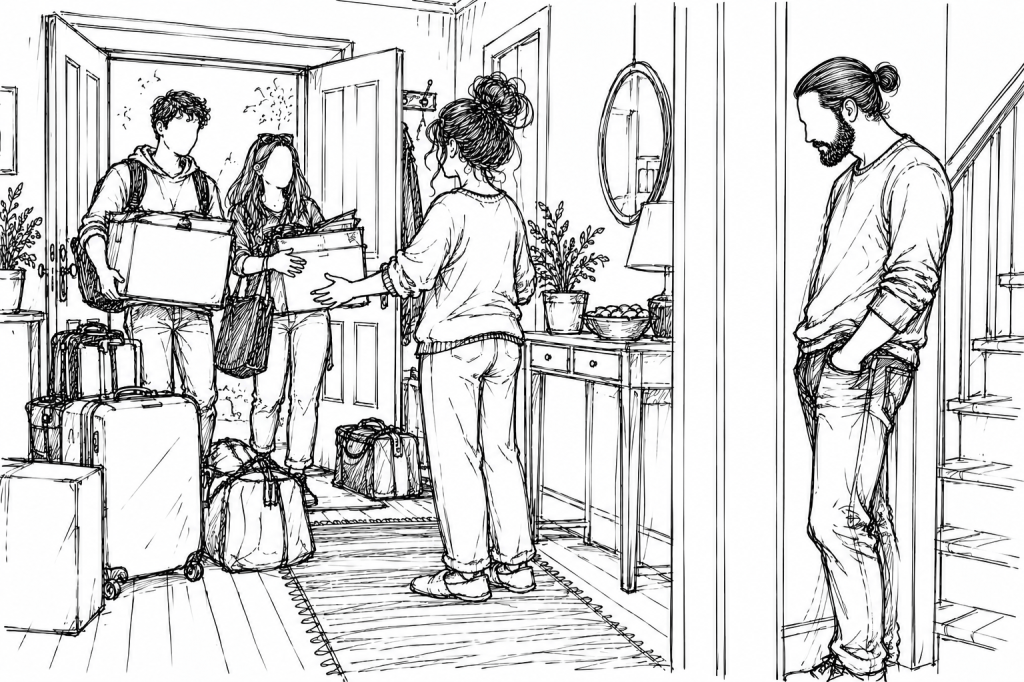
While we had been away, they had entered the flat.
And they were horrified by the state we had left it in.
I was mortified.
I already knew we hadn’t left it as I would normally leave a home. There were dirty dishes and rubbish that should have been taken out. But it was superficial mess. We hadn’t damaged anything. We hadn’t wrecked the place. And it had been handed to us in a much filthier state which I had since cleaned.
Still, knowing they had walked around it and judged what they saw left me feeling deeply embarrassed.
I was also angry.
I didn’t feel they should have entered the flat without warning us. It felt intrusive — almost as though they had been snooping.
They said water marks had appeared on the ceiling, which is likely correct, and their justification for going inside. Stephen said he had reported the problem several times and nothing had been done about it.
His boss dismissed that.
Stephen began to cry.
Rather than responding sympathetically, his boss effectively told him to stop crying and man up.
Stephen came back to me broken and confused.
I felt desperately sorry for him because I had watched him genuinely try to make the job work. I believed then, and still believe, that with different employers he might have thrived in that role.
And yet another part of me wasn’t entirely surprised.
I had sensed something wasn’t right almost from the first week. I had never quite had the feeling that his employers were happy with him, and somewhere in the background I had been waiting for something to happen.
I didn’t judge Stephen for losing the job.
But I couldn’t hide my disappointment either.
And because I was already depressed, my disappointment probably looked colder from the outside than it felt inside me.
There was embarrassment mixed into it too.
Although it hadn’t been my job, somehow I felt judged alongside him.
He was my boyfriend. His employers knew my former employers. They had now seen the state we had left their flat in. As someone who had spent most of her working life looking after other people’s homes to an extremely high standard, that stung more deeply than I wanted to admit.
By then, though, I simply wanted to leave.
I wanted to go home.
The whole thing had looked so promising, but it hadn’t worked out.
That wasn’t the end of the world.
Perhaps going home would give us a chance to stop, regroup and work out what came next.
Perhaps Stephen and I might find each other again.
Perhaps my depression would lift.
On his last day, I dropped Stephen off in the nearest town to collect his new prescription authorised from the hospital.
That evening, we packed everything into the car, and I insisted that we clean the flat from top to bottom before we left.
I think I needed to make amends.
More than that, perhaps I needed to prove something.
I didn’t want them remembering us as the filthy people who had left their flat in that state. I wouldn’t allow us to leave until every room and every corner had been cleaned to the standards I had spent my working life holding myself to.
Then we packed the last of our things into the car.
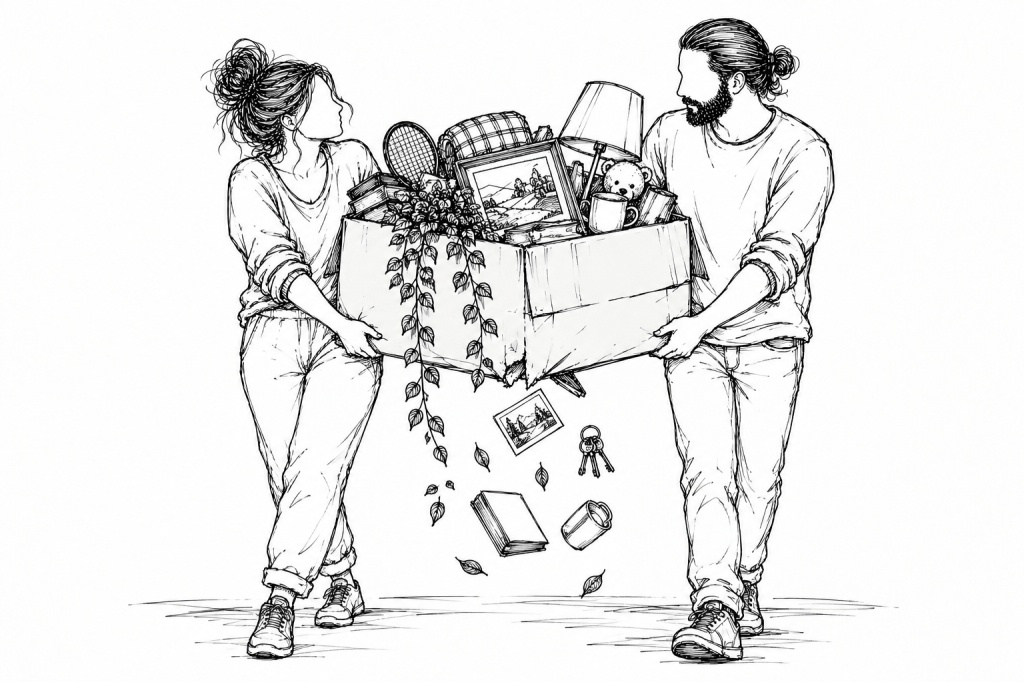
We waited until it was dark before driving away, hoping to leave without attracting any attention.
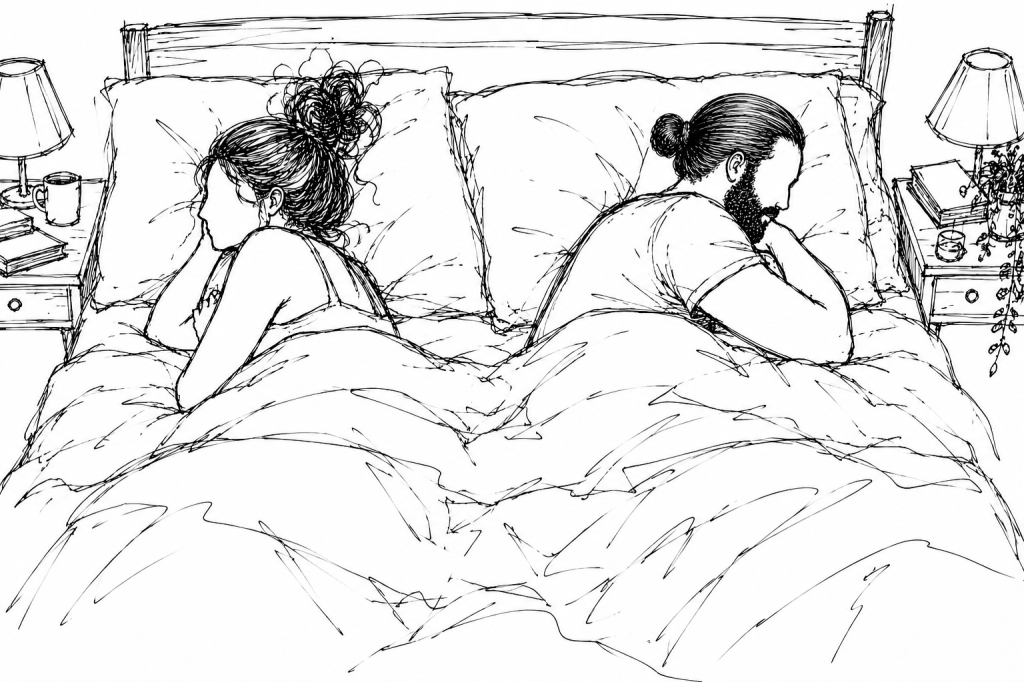
There was a heaviness between us as we pulled away.
Stephen was still in physical pain and emotionally crushed. I was depressed, disappointed and desperate to get home.
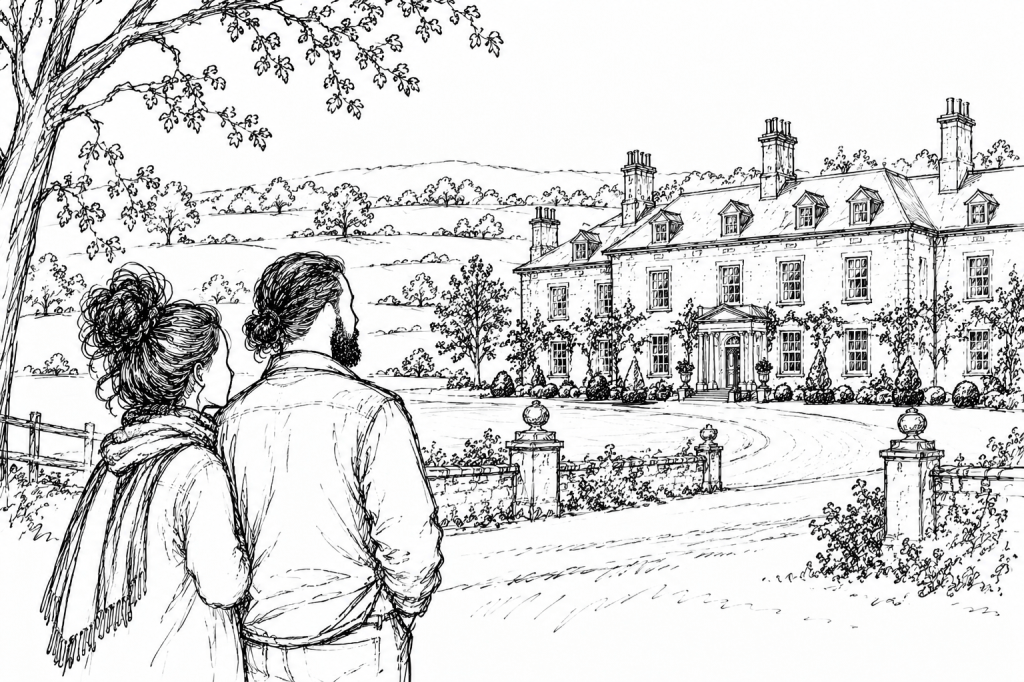
Only a short time earlier, we had been standing together in a piece of woodland, imagining what it might become.
Now we were driving away from another future that hadn’t quite worked out.
And for once, there wasn’t very much either of us could say.
Reflection
It is strange to remember how much happiness still existed during this period. We went to concerts and festivals, laughed our way through a rain-soaked Blackpool and accidentally discovered a pirate festival we immediately planned to return to. Devon was another genuinely lovely holiday. Even while something between us was becoming increasingly difficult, Stephen and I could still step outside ordinary life and find the version of ourselves that had always travelled well together. Those moments weren’t pretence. I was still capable of looking at him beside me and feeling enormously lucky.
At the same time, I was beginning to need more space from Stephen than I had before. The game gave me somewhere to disappear, but it also returned something I hadn’t realised I missed: responsibility, purpose and a sense of competence that belonged entirely to me. The woodland seemed capable of providing something similar in the real world. Stephen could have the space and project he had always wanted, while I could have periods of solitude without either of us having to explain why we needed them. I didn’t see that as us growing apart. I saw it as finding a healthier way of being together.
When the money arrived and Stephen bought the woodland, it felt almost ridiculously fortunate. After years of waiting, suddenly he had financial security and something tangible that belonged entirely to him. We had spent so long imagining the circumstances that might finally allow our lives to settle that each new development seemed to suggest we were getting closer. Even while I was depressed and our relationship was struggling, I could still look ahead and see possibilities. There was always another version of our life just beyond the difficult one we were currently living.
Losing the job punctured some of that optimism. I had watched Stephen try, and I genuinely believed the wrong combination of personalities had contributed to his failure there. But I had also sensed almost from the beginning that something wasn’t working, so the dismissal was both shocking and strangely unsurprising. My reaction was complicated by my own state of mind. I felt compassion for Stephen, disappointment for both of us and a humiliation that wasn’t entirely rational but felt intensely personal. Cleaning that flat before we left became my way of reclaiming something. Whatever his employers thought of us, I needed to leave knowing that I had restored the standards by which I recognised myself.
Driving away should perhaps have felt frightening, but mostly I wanted to go home. Another future had failed to materialise, but I still didn’t think that meant we had failed. Home represented somewhere to recover, regroup and decide what came next. That had always been our pattern: when one version of the future collapsed, we created another. I still believed Stephen and I would do that again. What I hadn’t yet understood was how tired I had become of continually needing to.