
When October 2022 arrived, something huge was happening in my own life.
My two sons and my eldest son’s girlfriend were moving into an apartment together. For the first time in years, I was going to have the entire house to myself.
It should have felt like perfect timing.
Privacy and freedom at home were things Stephen had always said were important to his happiness. Sharing a house seemed to cause him a great deal of stress. I had assumed that, after the isolation of living with his dad, he would enjoy being surrounded by people again, but the opposite appeared to be true. He seemed to find communal living difficult.
And now, finally, the circumstances had changed.
The irony was that Stephen wasn’t there to share it with me.
Around the time of the move, I travelled with my son and his girlfriend to stay with her parents on the east coast of England. I really enjoyed the trip, but my mind was slightly elsewhere. Stephen and I were back in contact. He had completed the programme and, quietly and without my family knowing, we had begun moving towards each other again.
At night, once I had made my excuses and gone to bed, I looked forward to being able to talk to him.
When I returned home, Stephen and I met at a coffee house in my local precinct to discuss what will happen next.
He wanted me to tell my family that we were back together.
I agreed that eventually I would have to, but I also told him it needed to be handled carefully. My family had watched everything that had happened between us. I couldn’t simply announce that Stephen and I were together again and expect them not to have concerns.
I needed time to work out how to tell them.
Stephen became impatient with me.
In some ways, I understood why. One of the messages he had taken from the programme was a new sense of urgency: life was short; stop procrastinating; be honest; make decisions; take action.
Ironically, one of the things I had always said to Stephen was that if you were authentically honest with people, there was very little they could argue with. People might not like what you told them, but they were often more accepting when you simply stood behind your choices.
Now Stephen threw my own philosophy back at me.
If that was what I believed, why wasn’t I yet prepared to tell my children that we were planning a future together?
He had a point.
From his perspective, I probably did appear to be contradicting myself. But it wasn’t that I had no intention of telling them. I just needed time to ready myself, find the right moment and decide how I was going to explain it.
Stephen wanted action now.
I became upset.
There was something different about him. This wasn’t quite the Stephen I was accustomed to. He seemed more demanding, more confident and much more unwavering in what he wanted.
It caught me off guard.
And yet I hardly felt I could criticise him for it. This was one of the reasons I had encouraged him to do the programme in the first place. I wanted him to discover what he wanted from his life. I wanted him to stop feeling so helpless and victimised by his circumstances and start taking control of them.
Now he was doing exactly that.
I just hadn’t anticipated what it would feel like when some of that newfound certainty was directed at me.
I couldn’t cope with the conversation, so I did what I had always tended to do when I felt overwhelmed.
I ran away from him, but this time, literally.
He tried following me but I hid from his view.
He eventually found me but by then I had emotionally shut down and become silent, overwhelmed by the pressure.
Returning home on my own, I could calm down and try to think about what was actually troubling me.
Stephen had completed the programme and certainly sounded more positive, but not enough time had passed for me to know whether those changes would translate into his everyday life. Words were one thing. I needed to see what happened next.
At the same time, I understood why he didn’t want our relationship to remain a secret.
Neither did I.
The secrecy was eating me up. It felt as though I was living two separate lives.
Eventually, I worked out what I needed.
I told Stephen that before I could publicly declare that we were together again, I needed to see him begin taking control of his own life.
More importantly, he needed to build a life that existed independently of me.
I didn’t want to be in a co-dependent relationship anymore.
One of the biggest difficulties in our relationship had been Stephen’s tendency to seek attention elsewhere whenever I wasn’t physically or emotionally available to him. I believed that if he could shape his own daily existence and fill it with purpose, interests and other people, we would be standing on more equal ground. He would have a life of his own rather than relying so heavily on my presence and attention.
I also asked him to tell me whenever he felt particularly attracted or drawn to another woman in a way he might feel tempted to act upon. I wasn’t asking him never to notice anyone else; attraction was human. What mattered to me was what happened next. I hoped that if he could bring those feelings into the open rather than acting on them privately, we could talk about them together before they had the chance to become something more.
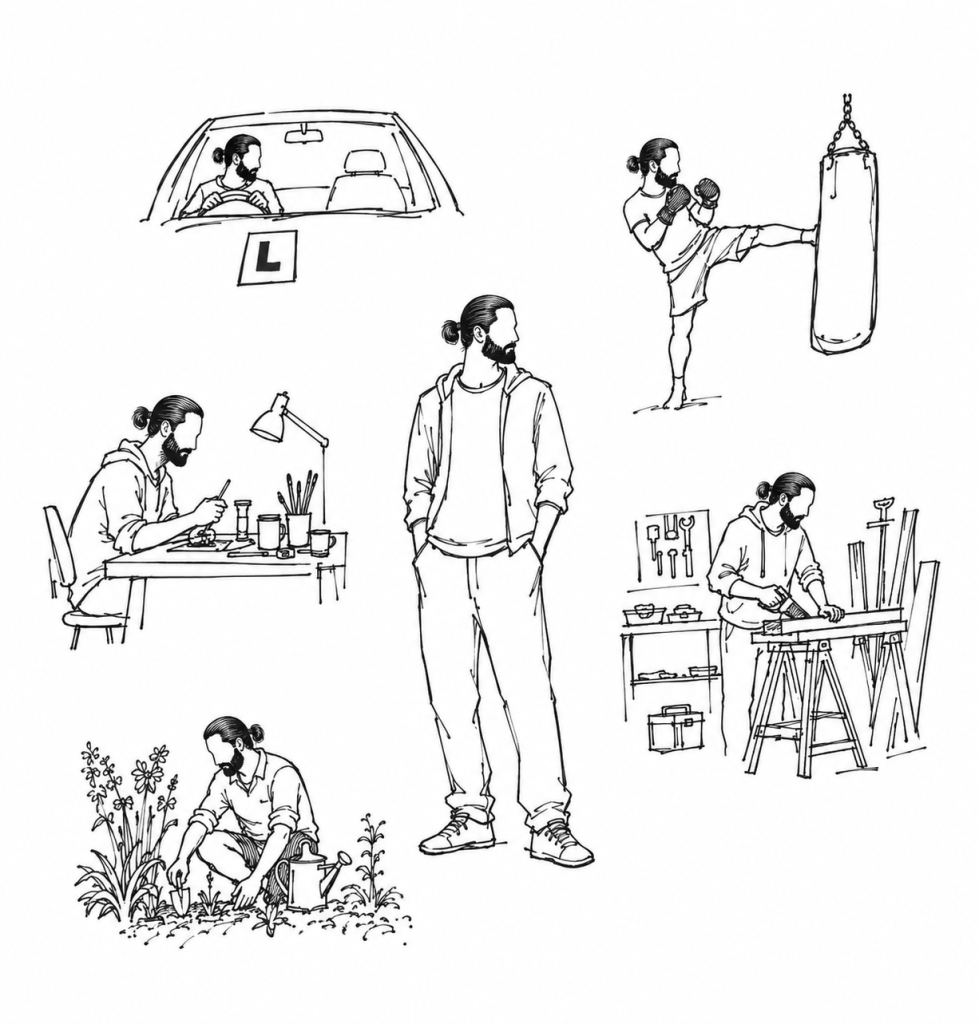
I suggested he learn to drive so that more job opportunities would become available to him. He could exercise again, perhaps return to martial arts. He could reconnect with old friends or make new ones. He could continue helping his dad clear the enormous amount of clutter from the house.
And instead of repeatedly complaining about the situation with his brother and the inherited property, he could do something about it.
These were things I had wanted to say for a long time. I had tried before, but they rarely seemed to land.
Now, after the programme, it felt as though there might finally be an opportunity for him to hear them differently.
If Stephen could prove his love through consistent actions instead of merely telling me he loved me and describing the future he wanted, that would mean far more. Then I would tell my children that we were back together.
Stephen agreed.
And then something remarkable happened.
He started doing them.
In the new year of 2023, I celebrated my fiftieth birthday. Stephen took me out and treated me to a hotel stay. That evening, after a few drinks, we were talking when he said something unexpected.
He told me that, in another life, if he hadn’t been abused, perhaps he would have been bisexual.
I wasn’t entirely sure what he meant. Stephen had previously said that he could develop crushes on men in much the same way he could on women. I asked whether he ever thought about having sex with men.
He said no.
That left me unsure what to make of what he had told me. I could understand that he might experience attraction, admiration or emotional intensity towards men without necessarily wanting a sexual relationship with them. Still, I wondered why he was telling me this now, and the conversation stayed somewhere in the back of my mind.
Elsewhere, though, I was seeing exactly the kind of change I had hoped for.
Stephen signed up for driving lessons.
He bumped into an old friend from his carpentry course who also enjoyed martial arts, so they began attending classes together.
He helped his dad take loads of unwanted belongings to the tip.
He wrote a letter to his brother to discuss what could be done to settle the dispute over the inherited house.
This was the most dynamic I had ever seen him.
For years, I had watched Stephen talk about the things he wanted to change while somehow remaining stuck in the same circumstances. Now there was movement.
Finally, he seemed to have found some of the fearlessness I had hoped the programme would ignite in him.
And that gave me more evidence.
When I would tell my family that Stephen and I were back together, I didn’t have to tell them simply that things were going to be different this time.
I could tell them what he had actually done.
He had completed the programme. He was learning to drive. He had returned to martial arts. He was helping his dad. He had written to his brother.
He wasn’t just talking about changing his life.
He appeared to be changing it.
It was also here that I began to construct a narrative I would carry with me from this point onwards. Stephen was not a conniving, manipulative deceiver who chased women and knowingly betrayed me. He was confused and misguided, certainly, but inherently a good man — someone whose behaviour needed understanding rather than condemnation. Whatever mistakes he had made, I convinced myself they were not deliberate. He would never knowingly cheat on me.
It was an explanation that allowed me to keep believing in the man I loved, even when his behaviour would begin to tell a more complicated story.
So I told my family about us becoming reunited.
I don’t think anyone was particularly thrilled, but they accepted my decision.
It was a relief to be transparent again. I knew they would soon see what I was seeing, and their faith would be restored too.
It felt like further evidence that the programme had worked for us.
There was still one thing troubling Stephen, though.
We weren’t living together.
He continued to become sad and frustrated about it, and I began to feel that perhaps this was the final thing standing between us and the relationship we both wanted.
So I asked him a question.
What was missing in his life?
What did he actually need in order to feel happy?
Stephen’s answer was surprisingly specific.
He wanted somewhere he could be creative.
He wanted a garden.
He wanted a workshop.
And he wanted to be self-employed.
For the first time, those things were potentially within reach.
My sons had moved out. My eldest son’s bedroom was empty. I had a garden. I had a large garage.
Perhaps we didn’t have to return to the old arrangement at all.
Perhaps we could create something different.
I began thinking about how it might work.
Stephen could register as self-employed and start looking for work. If he moved in, he could divide his weekdays between his dad’s house and mine. He could spend a couple of days helping his dad tackle the hoarding and then spend several days at mine working on the new spaces.
My son’s old bedroom could become a creative room — somewhere Stephen could make things, think and be inspired.
There was the garden for him to work on.
And the garage could become his workshop.
While he was staying with me, he could sometimes do the shopping, cook meals and help with the housework.
I would still be the main breadwinner, but if Stephen was building his business, helping his dad and contributing to our home, perhaps it wouldn’t feel as though everything rested on me.
Most importantly, he would have structure.
He would have projects.
He would have things that belonged to him.
I believed that if his days were fuller and his life had a greater sense of purpose, some of the old problems might become less likely too. He wouldn’t be sitting around waiting for my attention whenever I was at work, tired or occupied with something else.
To me, it felt like a genuine compromise.
Stephen loved the idea.
He became enthusiastic about everything we could create.
And gradually, I became excited too.
By spring, I told him he could move back in.
For the first time, we would have the house to ourselves. Stephen would have the privacy he had always wanted, the creative space he said he needed, a garden to work in and a garage he could turn into a workshop. He would be building his own working life while contributing to ours.
After everything that had happened, it seemed as though we had finally found a way of putting the pieces back together differently.
It felt like something really amazing was about to happen.
Reflection
Looking back, I can see how carefully I tried to make this decision. Letting Stephen move back in wasn’t simply a surrender to love or loneliness. I had conditions. I wanted evidence. I wanted him to build a life that didn’t depend entirely on me, and for several months I watched him do many of the things I had asked of him. He learned to drive. He returned to martial arts. He confronted problems he had previously avoided. For the first time, I wasn’t just listening to Stephen tell me that things would be different. I could actually see him doing things differently.
That mattered because I had begun to understand our earlier relationship as a problem we might be able to solve. Stephen had struggled without enough purpose, independence or structure. He had found communal living difficult. He had relied too heavily on me for companionship and reassurance. If those things had contributed to what went wrong between us, then perhaps changing the circumstances could change the outcome. An empty bedroom, a garden and a garage weren’t simply spaces in my house. In my mind, they represented independence, creativity, work and purpose. I wasn’t trying to recreate our old life. I thought we were designing a better one.
I was also constructing an understanding of Stephen that made trying again possible. I didn’t believe I was dealing with a man who consciously set out to deceive or betray me. I believed I was dealing with someone damaged and confused, whose behaviour sometimes became destructive when he was overwhelmed. That distinction mattered enormously. If the problem was character, there was very little I could do with it. If the problem was behaviour arising from things Stephen could learn to recognise and manage, then change remained possible. The programme, and everything I saw him doing afterwards, appeared to support the version I desperately wanted to believe.
What I couldn’t see was how much responsibility I was still quietly carrying. I wanted Stephen to have a life of his own, but I was helping design it. I identified the driving, the exercise, the friendships, the work, the relationship with his father and the problem with his brother. Later I found the physical spaces in which his new life could happen. None of this felt controlling or sacrificial to me. It felt loving and practical. I was trying to create the conditions in which both of us might thrive.
And perhaps that is what making space for Stephen really meant. I wasn’t merely clearing a bedroom or sharing my home again. I was making space for the possibility that everything we had been through could become useful rather than simply painful. I thought we had understood what had gone wrong. I thought Stephen had begun changing the things that needed to change. And I thought I had learned enough not to lose myself in the process. By the time I invited him back, it didn’t feel like returning to the past. It felt like we were finally doing the future properly.


