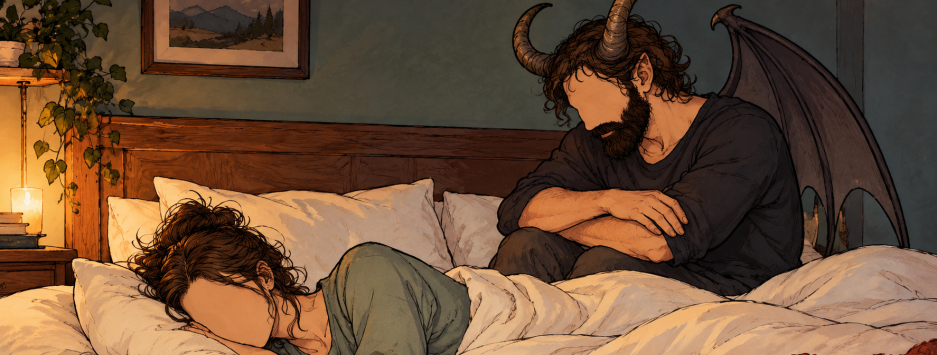
The first couple of weeks after we returned home were covered by a cloud of sadness.
Whatever hope I had felt that things might begin to improve seemed to be diminishing rather than growing.
Stephen was still in considerable pain from his shoulder injury. He talked more openly than ever about the despair he felt over the estrangement from his eldest son. His initial upset about losing his job was also beginning to turn into anger, and he started talking about taking legal action against the people who had fired him.
Even the house felt different.
It didn’t really feel like home anymore.
Intimacy had become difficult too. Stephen was injured and in pain, while my own sexual health was deteriorating. Everything that had once happened naturally between us suddenly seemed to require effort.
Stephen had brought up the subject of the menopause over a year ago and now I reached a decision myself that I should visit a doctor about the increasing discomfort I was suffering from. I booked an appointment to see a private female doctor who specialised in women’s health.
While I was at work, Stephen appeared to be doing very little.
My son’s girlfriend told me that he often didn’t come out of our bedroom until around three in the afternoon. Then, shortly before I was due home, he would suddenly become active.
I was depressed myself, with no sign yet that it was beginning to lift.
I remember saying to Stephen after a couple of weeks of living like this,
“Is this as good as it gets? Is this our life now?”
Looking back, I think that was the depression talking. Depression has a way of making the present feel permanent. When you’re inside it, it’s difficult to imagine ever feeling differently again.
But even then, I didn’t think our relationship was ending.
It hadn’t even entered my mind.
I didn’t want it to end either. I simply couldn’t see how we were going to turn things around.
Then, only a few weeks after Stephen had been fired and we had returned home, he sat me down and told me there was something he needed to tell me.
He asked me if I remembered the day I had dropped him into town to collect his new pain medication.
Of course I did.
It had been only a day or two after he lost his job.
He reminded me of a high-street art gallery in the town near his workplace. It wasn’t particularly different from the gallery in our own town where he had bought so much art before. I knew exactly which one he meant because he had noticed it when I had driven him to physiotherapy shortly after injuring his shoulder.
After I dropped him off that day to collect his prescription, he told me, he had gone inside.
And he had bought some art.
Several pieces, including sculptures.
Then he told me how much he had spent.
£10,000.
The same amount I worked my arse off for eighteen months to save.
It had come from the money he received from the inherited house.
I was stunned.
Ten thousand pounds.
Only days after losing his job.
And he would often proudly claim that he was very good with money.
There was nowhere to hang these. Every one of my walls was filled.
And, once again, my first question was the one I always seemed to ask Stephen.
“Why?”
He told me he had been in immense pain, heavily affected by the medication, and that the salespeople in the gallery had taken advantage of him.
I sighed and looked downwards. I didn’t even bother challenging it.
By then I was weary of explanations that always seemed to locate responsibility somewhere outside himself.
Instead, I told him I thought he might be unwell.
I wondered aloud whether buying the art was some kind of retail therapy. He didn’t disagree.
We talked about what happened to him when he walked into places like those galleries: the attention from the staff, the enthusiastic conversations about art, people showing an interest in his opinions and taste.
I suggested that perhaps it made him feel something.
Important.
Interesting.
Special.
Attended to.
He seemed to recognise something in that.
I was shocked. I was disappointed.
But more than anything, I was very tired.
After everything we had been through, it felt as though he had learned nothing.
And then the conversation changed.
Stephen said that what disturbed him wasn’t only that he had spent the money. It was that he had concealed it from me for several weeks and was afraid to tell me.
He said that had made him realise something.
He wasn’t good for me.
He wasn’t good enough for me.
He wasn’t good enough for a relationship.
For once, I couldn’t really disagree with him.
Given everything he had just told me, what could I say?
But then he carried on.
And what came next was something I hadn’t prepared myself for at all.
Stephen told me that because of all of this, he no longer knew whether he wanted a future with me.
I don’t think I fully understood what I was hearing at first.
In almost five years together, Stephen had never said anything like that to me.
We had questioned plenty of things.
We had argued.
We had separated temporarily.
We had survived betrayals and enormous upheavals.
But the future itself had always existed.
Even when everything else was uncertain, there had always been an us somewhere ahead.
And now, suddenly, Stephen was telling me he didn’t know whether he wanted it anymore.
I didn’t argue.
I didn’t try to persuade him.
I think I was simply too shocked and too depressed to fight for an answer.
Then came another revelation.
He had withdrawn from the purchase of the woodland.
The woodland we had been planning for.
The future we had been imagining.
Instead, he wanted to buy a flat.
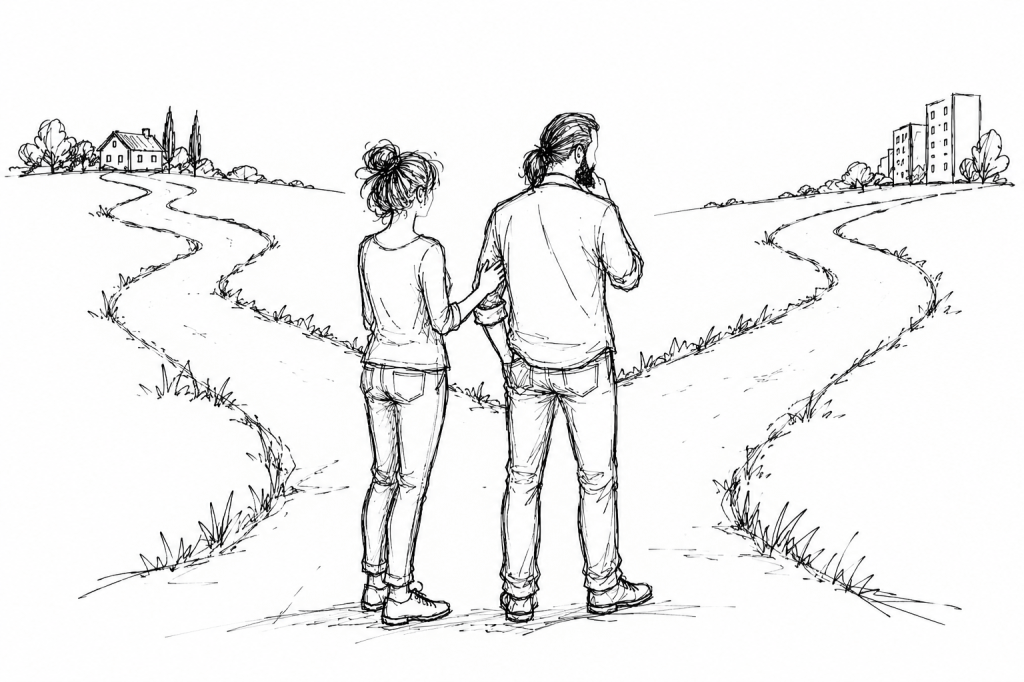
He wanted somewhere of his own where he could experience living alone and work out what he wanted from his life.
Including whether or not he still wanted a future with me.
I was completely blindsided.
Only a couple of weeks earlier, as far as I understood it, we had still been building towards something together.
Now the woodland was gone.
Stephen wanted a flat.
And the man I had spent nearly five years imagining a future with was telling me he needed to live without me in order to decide whether he wanted that future at all.
I hadn’t seen any of it coming.
That was perhaps the most bewildering part.
All of this had apparently been happening quietly inside him while I had been standing beside him believing we were simply going through an extraordinarily difficult period.
I asked him why he hadn’t told me that he was becoming unhappy with us.
He said that he had.
He had told me about the pain.
He had told me what the estrangement from his son was doing to his mental health.
He had expressed how unhappy he was sharing our home with my son and his girlfriend.
I reminded him that my son and his girlfriend had just bought their own house. They would be leaving in just a matter of months. It didn’t make a difference. I wondered if the excuses were a red herring.
He said he had been trying to hold the relationship together for a very long time.
Perhaps he was referring partly to the period when I had been consumed by my demanding job.
But I had left that job six months earlier.
Whatever Stephen believed he had been telling me, I hadn’t understood it to mean this.
Playing those conversations back in my mind, they felt more like hints of dissatisfaction with himself than an honest expression of dissatisfaction with our relationship.
And Stephen had always complained when he was unhappy with his circumstances. There had been jobs, money, houses, family, other people, disappointments, frustrations.
His unhappiness wasn’t new.
What was new was us being included in it.
Somewhere amongst all the other things Stephen had been telling me were wrong with his life, I had apparently missed that he had begun questioning whether he wanted his life with me.
I felt profoundly rejected.
And yet I was almost too numb to react.
I may have tried to probe what his uncertainty actually meant for me.
What did I don’t know if I want a future with you mean?
What did it mean for us now?
Were we together?
Were we ending?
Was I supposed to wait while he decided?
He couldn’t give me an answer.
He just needed time to work out what he wanted.
But apparently we didn’t have to be over.
We could carry on for now.
I remember being bemused by that.
Because he hadn’t actually ended our relationship.
He hadn’t said he didn’t want me.
But he hadn’t chosen me either.
He couldn’t tell me he wanted a future with me.
He couldn’t tell me he didn’t.
He told me he still loved me.
He told me I was the best woman he had ever known.
He just didn’t know what he wanted anymore.
And somehow I was left standing inside the space between those two possibilities.
I think, in that first conversation, I simply accepted it.
Nothing had sunk in yet.
I may even have told him I would support him.
That was still my instinct. Even while the life I thought we were building was disappearing in front of me, part of me was still thinking about how I could help him through whatever was happening to him.
But something in me had already changed.
I told him I thought we should stop being intimate.
My body didn’t want to be intimate with someone who no longer knew whether he wanted me.
I said we could continue sharing the bed. There could still be comfort and closeness between us.
Just not sex.
I remember that, on one of those first nights afterwards, Stephen said it was impossible to lie beside me without wanting to touch me. He said he was still insanely attracted to me.
So I let him.
But I felt empty.
I had gone from believing we were two people struggling through an awful period together to discovering that one of us was no longer even certain there was an us to struggle for.
There was no ending I could grieve.
No decision I could respond to.
No future I could rely upon.
There was only Stephen’s uncertainty.
And suddenly, it had become my life too.
I couldn’t see what came next.
I couldn’t even see much further than surviving the next twenty-four hours.
Reflection
Looking back, I think this was the moment the ground really shifted beneath me. Stephen and I had survived extraordinary things, but throughout all of them I had believed in one constant: somewhere beyond the immediate difficulty there was still a future we were trying to reach together. Even when we separated, argued or disappointed one another, that future had remained strangely intact. I had never seriously considered that Stephen might simply stop wanting it.
The £10,000 shocked me, but perhaps what disturbed me more was how familiar the conversation around it felt. Once again, I was asking why, and once again there was an explanation involving circumstances outside Stephen himself — pain, medication, persuasive salespeople. I was too tired even to challenge it properly. For years I had believed that greater self-awareness would eventually help Stephen make different choices. Hearing that he had hidden the purchase from me for weeks made me wonder whether anything fundamental had changed at all.
But nothing prepared me for what followed. Stephen wasn’t telling me our relationship was over. In some ways, that might have been easier to understand. He loved me. He was attracted to me. I was the best woman he had ever known. We could continue living together. He simply couldn’t tell me whether he wanted a future with me. I had spent years trying to understand Stephen’s contradictions, but now I was being asked to live inside one.
What confused me most was that I hadn’t known we were approaching this point. I knew Stephen was unhappy. I knew our intimacy had deteriorated and that both of us were struggling. But I had understood those things as problems happening to us, not evidence that Stephen was questioning us. Even my exhausted question — Is this as good as it gets? — had been about wanting our life together to become better. It had never occurred to me that the answer might be for us not to have that life together at all.
That was the beginning of a different kind of uncertainty. There was no clean rejection to respond to and no relationship I could properly grieve. Stephen hadn’t left, but neither had he chosen to stay in any meaningful sense. And because I still loved him, my instinct was somehow to help him work out what he wanted, even though I was the person most likely to be hurt by the answer. For almost five years, whenever something went wrong, I had tried to understand Stephen so that we could find our way back to each other. Now I was being asked to wait while Stephen decided whether there was somewhere for us to find our way back to at all.


