Stephen And An Ordinary Year (Part II)

The months rolled on.

June marked my first anniversary in the new job.

When I had started, I had told both myself and Stephen that I would give it a year.

By the time that year arrived, however, something unexpected had happened.

I had become good at it. I was enjoying it.

I had adjusted to the uncompromising demands and grown considerably more confident. I was also given a generous pay rise of almost £5,000 a year more.

Leaving suddenly seemed less sensible.

Stephen had stopped attending martial arts by then. But he had now sought legal advice about the inherited house with his brother because a year of correspondence with him had proved fruitless. He wasn’t spending much time in the spaces he had once asked me to create for him, and during the year he failed his driving test twice. He stopped trying after that.

But he was busy working with the stone specialist and travelling to Scotland.

And the conversations about other women, sex and alternative relationships seemed to have quietened down.

Life became predictable again.

For me, predictability felt reassuring.

In July we took another holiday.

This time we tried a shepherd’s hut.

Part of our thinking was that we could experiment with different kinds of small living and discover what might suit us best.

We learned very quickly that a shepherd’s hut probably wasn’t it.

It was tiny.

There was almost nowhere to spend time except the veranda or the bed. Fortunately, the weather was beautiful, so we could sit outside, but I missed the experience I’d loved at the cabin — pottering around, cooking, clearing up and pretending for a few days that this little place was our home.

On our first evening, we walked over to an event at the vineyard opposite the lake. There was a band playing, food to try and wine from the vineyard. Locals wandered around talking to one another.

We met an older couple and spent several hours chatting with them.

Stephen sat mostly with the woman while I talked to the man. There was some harmless flirting on all sides, but I felt completely comfortable.

This felt different.

It felt shared.

It reminded me much more of the kind of openness I had tried to describe to Stephen years earlier — being sociable, playful and interested in other people without anything threatening the relationship underneath it.

I liked us that way.

During the holiday we also took an extraordinarily long walk to the next coastal town, and towards the end of the trip we visited my son’s girlfriend’s parents, who lived nearby.

We spent a beautiful day with them. They showed Stephen around Mersea Island and the four of us got on easily as couples.

Again, I took comfort from it.

Stephen was increasingly woven into my family and my wider life.

Near the end of the holiday, however, we had another argument about sex.

I can no longer remember exactly what started it.

I remember only the frustration.

There seemed to be increasing confusion between us about what we each wanted and what we expected from the other.

That saddened me.

Affection and intimacy had already become less frequent in everyday life, largely because our lives were so busy. Holidays should have been the opportunity to rediscover that side of ourselves.

Instead, twice on holiday, we had ended up arguing about it.

Still, life carried on.

Another of Stephen’s birthdays arrived, and I surprised him with a dance performance telling the story of Ip Man and the growth in popularity of Wing Chun, the martial art Stephen loved.

He had introduced me to the Ip Man films and I had really enjoyed them, so I was enormously pleased with myself for finding another birthday surprise that genuinely impressed him.

These were the rhythms of that year.

Work.

Home.

Saving.

Stephen’s jobs.

Scotland.

Occasional holidays.

Plans.

Birthdays.

Arguments that came and went.

There was nothing that felt catastrophic.

Nothing that made me think our relationship was approaching some kind of crisis.

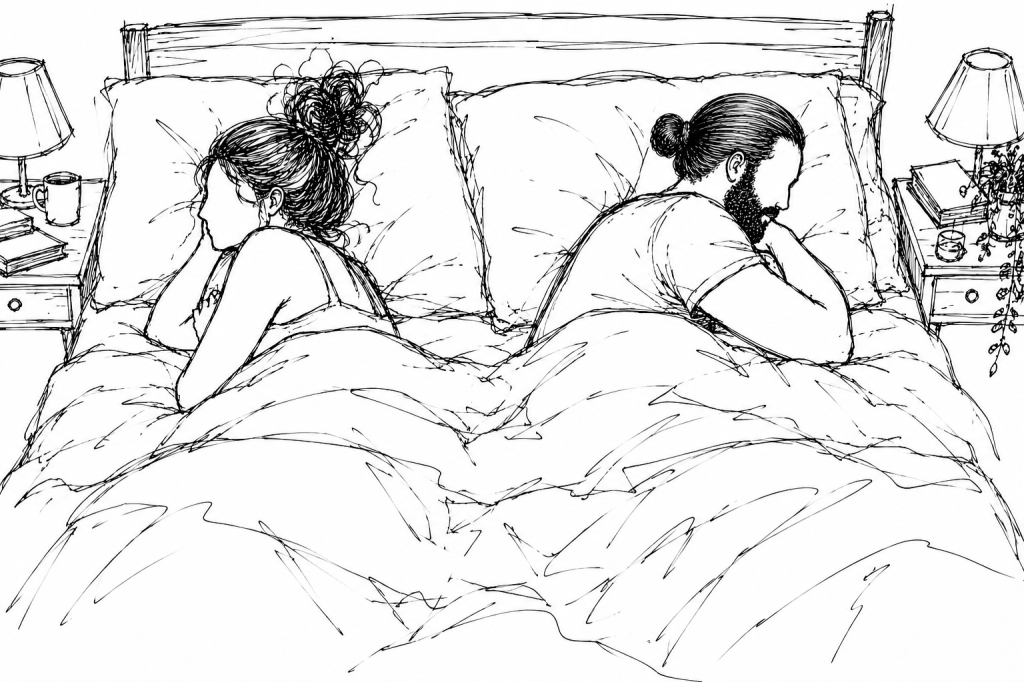
But as the year moved towards autumn, I did begin to recognise that something between us had become flatter.

Our chemistry wasn’t quite what it had been.

Neither was our intimacy.
I had gained weight and felt increasingly unhappy with my appearance. My confidence had suffered.

And I began wondering whether the job I had taken partly to improve our future was actually costing us too much in the present.

I had saved a respectable amount of money, but a surprising amount of my increased salary disappeared into petrol and maintaining a lifestyle made less healthy by the fact that I had so little time.

The job itself remained extremely difficult.

My employers were demanding and often unreasonable. I worked hard to meet their expectations, but increasingly felt I was fighting a losing battle. There was little willingness to work with me, and they could be dismissive and rude, showing scant regard for their staff or any real respect for the boundaries of our working hours.

I had tried incredibly hard to adapt.

After more than a year, I finally began accepting that perhaps I couldn’t.

Then one day in October, after an especially difficult day at work, an accident on the M25 turned my journey home into four miserable hours.

By the time I walked through the front door, I was angry, exhausted and completely depleted.

The following morning I woke up feeling really unwell and very tired so called in sick, which was rare. 

And somewhere during that day, something in me simply decided:

Enough.

I wrote an email to my manager explaining that I had tried my very best but could no longer make the job work. It was costing too much in my health and my relationships. I barely saw my friends or family anymore.

The moment I sent it, I felt lighter.

I still had two months of my contract to work, but there was now an end point.

I believed Stephen would be delighted.

Almost immediately, I contacted several agencies.

This time my priorities were different.

The managerial jobs all seemed to come with the same long hours and pressures, so I was prepared to accept less money for an ordinary housekeeping role if I could find a genuinely nice family.

I wanted my life back.

And, inevitably, part of wanting my life back meant wanting more of our life back too.

I didn’t want to return to the kind of relationship Stephen and I had once had, where I became too involved in managing his life. He had made considerable progress since attending the programme and I wanted that independence to continue.

But I missed us.

I missed having enough left at the end of the day to give to the person I lived with and whom I loved very much.

I thought that if our working lives became more compatible again, some of what had quietly disappeared between us might naturally return.

Around the same time, another change arrived.

To be continued…

Reflection

Looking back, there was still nothing about this period that felt like the beginning of an ending. If anything, the absence of drama reassured me. The conversations about other women and alternative relationships had quietened down. Stephen was working. I was succeeding in a job I had once thought I couldn’t survive. We took holidays, celebrated birthdays, spent time with family and continued talking about the future. Our relationship had become less intense, but after everything we had been through, perhaps less intensity was what a settled relationship was supposed to feel like.

There were things that had quietly slipped away. Some of Stephen’s early momentum had gone. The driving stopped. So did the martial arts. The rooms and projects that had once represented his new beginning weren’t being used in quite the way we had imagined. Our physical relationship had changed too. Sex had once been one of the easiest parts of us, and now even holidays could contain arguments about it. But none of these things seemed large enough on their own to frighten me. They looked like the ordinary compromises and disappointments of two people living a busy life together.

What I could see very clearly was what my job had done to me. I was exhausted. I had gained weight, lost confidence in my appearance and become disconnected from friends, family and much of the life I had previously enjoyed. Ironically, I had taken the job partly because I believed it would help us build a better future, yet increasingly I wondered whether I was sacrificing too much of the present to reach it. When I finally resigned, it felt less like giving something up than correcting the balance.

I also believed it might correct something between Stephen and me. I didn’t expect leaving the job to solve every problem, but there was an obvious logic to what had happened. I had become less available, less energetic, less interested in sex and less present in our everyday life. If I found work that left more of me intact, perhaps there would simply be more of me available for us again. That explanation was comforting because it located the problem somewhere tangible. Jobs could be changed. Hours could be reduced. Energy could return.

What I didn’t want was to go backwards. I wasn’t trying to become responsible for Stephen again or recreate the intensity of our earlier relationship. I still believed the programme had helped him become more independent, and I was proud of the progress he had made. I wanted something much simpler: two people with lives of their own who still had enough time and energy left to enjoy the life they shared.

So when I handed in my notice, I felt hopeful rather than defeated. I thought I had recognised something that wasn’t working and done something about it before it could damage us further. The distance between Stephen and me didn’t yet seem mysterious. I believed I knew what had caused it. And because I believed I knew the cause, I also believed I knew how to bring us closer again.
Stephen And An Ordinary Year (Part 1)

​The year of 2024 seemed, for the most part, to be a continuation of the one before it.

Stephen continued building his self-employment, taking work with the stone specialist and travelling periodically to Scotland, while I continued trying to find my feet in my demanding new job.

Life became very routine.

We worked. We came home. We ate. We slept. Then we got up and did it all again.

We still had his youngest son with us every other weekend and that continued to involve tennis practice. However, we had not heard from his eldest son since Christmas and he wasn’t responding to text messages. It was clearly starting to worry Stephen.

I was managing to save around £500 a month, which pleased me because saving had always been part of the reason I had taken the job. In my mind, every month I endured was putting us a little closer to whatever came next.

But earning more money also seemed to have created a more expensive life. Petrol swallowed a ridiculous amount of it. Vapes kept me sane through difficult working days. And far too often, when neither of us had the energy to cook, we resorted to fast food.

My diet deteriorated. I developed a dependance on fizzy cola that was readily available at work. I gained weight. My energy disappeared. 

The house wasn’t kept in the way I liked it anymore. On my days off, instead of catching up with everything, I increasingly wanted to stay in bed or do very little at the weekends.

I wasn’t particularly happy about any of that, but I saw it as temporary.

There was still a purpose underneath it.

We were working. We were saving. Stephen was gaining experience through self-employment. I was gaining experience working in another household. Scotland remained somewhere in the distance.

I never lost sight of where I thought we were going.

Earlier in the year, however, there was another difficult conversation between Stephen and me.

He was due to return to Scotland, and shortly before he left we had a huge argument.

It followed a conversation in which Stephen told me how much it bothered him that he had missed out on those younger years when many people date different people, experiment and have casual relationships.

He explained that because of what had happened during his childhood, by the time he was fifteen he had become angry and difficult. He smoked marijuana, struggled to make and maintain friendships and lacked confidence with women.

That continued at university, where he eventually met the woman who became his wife. Before her, I think he had only slept with one other person — the girl he had lost his virginity to.

Now, in middle age, he seemed to be wondering whether he had missed some important stage of growing up.

I didn’t dismiss that completely.

Perhaps he had.

But I tried to explain that the reality of sleeping around wasn’t necessarily as exciting or fulfilling as he imagined. Novelty could be exciting for a while, but for many people it quickly lost its appeal. There was also something much deeper to be found in knowing another person intimately, feeling secure with them and building a life together.

Coming so soon after our earlier conversations about polyamory, though, his curiosity unsettled me.

Why was he thinking about this now?

Once again, I found myself wondering whether I was enough for Stephen.

My attempts to reassure him didn’t appear to extinguish his curiosity, and when I became frightened I sometimes tried to protect myself by pushing the decision back towards him.

“If I’m not what you want, then tell me. Go and try that life.”

It wasn’t really what I wanted.

It was closer to saying: Please decide that you don’t want it.

But I didn’t react with fear to these conversations like I would have in the past. Since the programme, I was reassured that Stephen was simply being honest and authentic with me now. If he had realised something had changed in him, he would tell me before betraying me.

Stephen left for Scotland leaving a bad atmosphere between us.

I remember us arguing on the telephone while he was there too. Eventually, I think I told him to enjoy the rest of his trip, think about what he wanted while he was there and tell me what he had decided when he came home.

There was still some awkwardness between us when he returned.

It didn’t stop me leaving work at six o’clock and driving in the dark to Gatwick to collect him.

It was a long round trip at the end of an already long working day, but I loved him. I hated the thought that his entire trip had been tainted by the argument between us.

When our eyes met in the airport car park, we both had tears in them.

For a moment it reminded me of that morning beside the lake in Denmark, when our eyes had met after he had disappeared with my cousin.

Once we were home and talking properly again, Stephen told me how different the hostel had been with tourists staying there. It was hard to stay focused on the maintenance.

He had met lots of new people and had enjoyed some interesting conversations, particularly with a German woman. But he had also reached a conclusion about the transient lifestyle of hostels.

He didn’t like it.

He didn’t like meeting people, becoming interested in them and then watching them disappear from his life.

I took considerable comfort from that.

Perhaps he had discovered for himself something similar to what I had been trying to explain. Novelty and new people could be exciting, but perhaps what Stephen really wanted was permanence.

Something familiar.

Something that stayed.

So although he had gone to Scotland with doubts hanging between us, I felt he returned more certain.

Around the same time, Stephen went away for a couple of nights with the stone specialist for another job.

When he came home, he told me about an interesting woman I’ll call E. She had been travelling alone, and Stephen, his employer and E had eaten together in the hotel restaurant. Stephen said it had generated some good conversation and made dinner considerably more interesting than two male colleagues sitting together every evening.

I thought nothing of it.

In fact, I found it reassuring when Stephen told me about women he met when I wasn’t there.

It felt like openness.

After everything we had been through, openness mattered enormously to me.

In February, Stephen and I took what would become one of my favourite holidays of our entire relationship.

We rented a log cabin near the Black Mountains in Wales, close to the beautiful town of Hay-on-Wye.

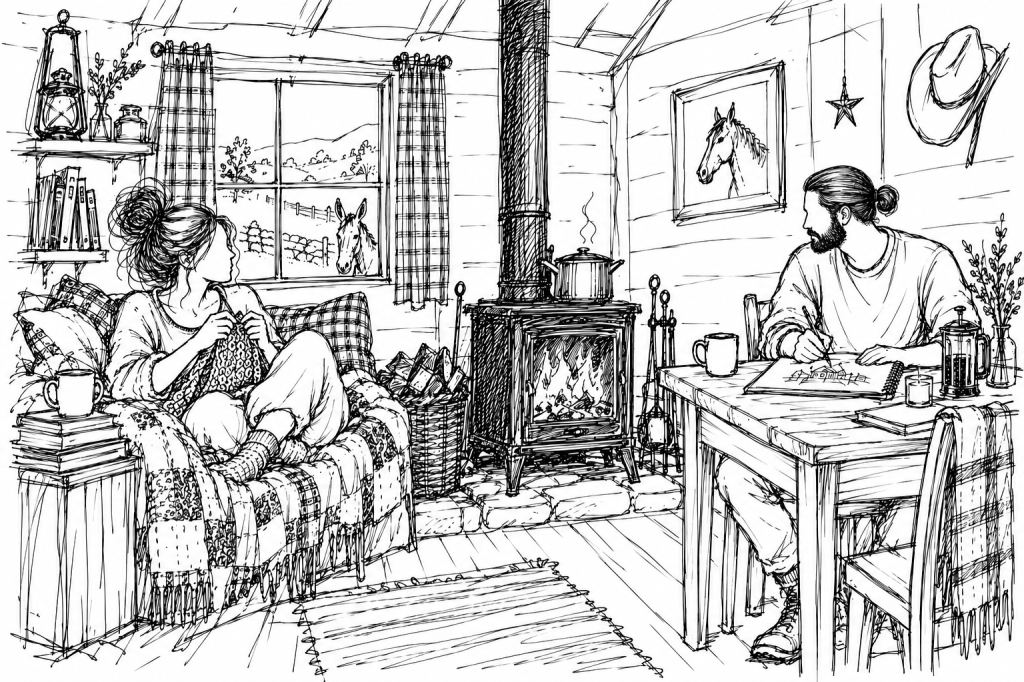
From the outside, the cabin looked slightly like an oversized shed. Inside, though, it was gorgeous.

There was a double bedroom, a shower room and a small main living space with a dining area, a basic kitchen and a large stove for heating and cooking. Tucked away to one side was a cosy nook with a sofa, armchair and television.

It was decorated with gingham and patchwork fabrics, pictures of horses and bits of cowboy paraphernalia.

We were miles from almost everything.

The owners lived in the large house nearby and had donkeys, horses, chickens, geese and dogs wandering around the property.

There wasn’t actually very much to do.

And I loved it.

Some days I crocheted for hours. Other days I read.

Before we arrived, I had announced to Stephen that I was going to use the holiday time to reorganise my life. Since starting my new job, the housekeeping at home had deteriorated, my diet had become terrible and I spent far too much of my spare time lying in bed recovering.

I intended to make lists and plans and somehow return home as a completely reorganised woman.

I never really got around to it.

Stephen remained annoyed with me for a long time that I hadn’t fulfilled the promise. 

But I was enjoying myself too much. 

Instead, I crocheted, read and cooked.

I particularly loved making our meals. The nearest little shop was around twenty-five minutes away, so I took enormous pleasure in creating comforting dinners from whatever we could find, using only a handful of utensils and the stove.

There was something immensely satisfying about feeding the two of us in that tiny kitchen.

Every evening we settled down and watched a film on the DVD player.

It reinforced something I had suspected for years.

I didn’t need a huge house or an impressive lifestyle to be happy.

Give me somewhere cosy, some books, my crochet, a kitchen, a fire and someone I loved, and I could imagine being perfectly content.

It made the future Stephen and I had talked about feel almost tangible.

Stephen seemed to enjoy it too, although I noticed that when I disappeared into a book or my crochet, he sometimes seemed at a loose end.

He didn’t settle into inactivity in quite the same way I did.

For a moment, it concerned me.

If we really did create a quieter life somewhere one day, would Stephen actually be happy living it?

He reassured me that it would be different if the place belonged to us. There would always be jobs to do, things to repair, projects to build and land or a property to maintain.

That made sense.

My concern disappeared almost as quickly as it had arrived.

There was another moment during the holiday that was harder to dismiss.

During our recent conversations about sex and relationships, Stephen had told me that he wished I would sometimes simply take charge and initiate things.

I was surprised because I had always thought I did my fair share of initiating intimacy. Earlier in our relationship I had sometimes deliberately created occasions where I was completely in charge.

Perhaps I had done less of that since starting the new job.

That I could believe.

Most evenings I barely had enough physical or mental energy left for myself, let alone anything else.

So one evening at the cabin, I decided to make the effort.

I set everything up beside the fire and took the initiative.

Almost immediately, something felt different.

Stephen wasn’t responding with his usual enthusiasm and eventually he couldn’t perform.

What followed became our first major argument during — and about — sex.

That upset me almost as much as the problem itself.

Sex had always been one of the places where Stephen and I communicated beautifully. The conversations afterwards could sometimes feel almost as intimate and important as the sex itself.

Now we were abandoning the whole thing and arguing.

I felt rejected.

He had asked me to initiate more. I had taken what felt like a small emotional risk by doing exactly that, only to find myself wondering why he didn’t seem to want me when I did.

It left a black mark on an otherwise wonderful holiday, but it didn’t define it.

And there was something else that reassured me.

Stephen began making notes about the cabin. He drew little plans and thought about how he might design something similar for us one day.

Whatever difficulties existed between us, I looked at those drawings and saw evidence that he hadn’t lost sight of our future either.

To be continued…

Reflection

Looking back, I think this was one of the periods when it was easiest to believe that Stephen and I had finally become an ordinary couple. There were no enormous crises. We worked, worried about money, got tired, argued occasionally and looked forward to holidays. After everything we had already survived, there was something reassuring about the mundanity of it. I didn’t need our relationship to be extraordinary anymore. I wanted it to be dependable.

There were difficult conversations, but even those seemed to demonstrate progress. Stephen was telling me things I might once have feared he would keep to himself: his curiosity about other sexual experiences, the women he met while he was away, the thoughts that unsettled him. Because we had placed so much importance on honesty after the programme, I interpreted disclosure as safety. I believed that if Stephen could tell me something uncomfortable, I didn’t need to fear what he wasn’t telling me. His honesty became one of the reasons I trusted him.

What I didn’t fully appreciate was how much energy I was spending turning uncertainty into reassurance. Stephen wondered whether he had missed out sexually, but returned from Scotland talking about the emptiness of transient connections. He met interesting women, but told me about them. He seemed restless at the cabin, but explained that a home of our own would be different. We struggled sexually, but he was simultaneously drawing plans for our future. Whenever something unsettled me, there seemed to be something else nearby that allowed me to settle again.

The cabin probably revealed more about me than I realised at the time. Stripped of work, commuting, money and all the complications of ordinary life, what I wanted was remarkably simple. Somewhere warm. Something to cook. Books and crochet. A person I loved beside me. I had spent years imagining a future with Stephen, but sitting in that tiny cabin I could almost touch it. His drawings seemed to tell me he could see it too.

Perhaps that was why the argument about sex hurt so much. It wasn’t simply that Stephen couldn’t perform. I had responded to something he said he needed from me and made myself vulnerable, only to feel rejected when I did. After his questions about other women, other experiences and other ways of having relationships, it inevitably touched the insecurity that had already begun growing in me. For the first time, something that had always made me feel particularly connected to Stephen became another place where I could wonder whether I was enough.

And yet I came home remembering that holiday as one of our happiest. I think that’s important. The difficult moments weren’t hidden from me; they simply existed alongside genuine happiness. There was always enough love, companionship and evidence of a shared future to prevent any single concern from becoming the whole story. Our life didn’t feel as though it was falling apart. It felt ordinary. I hadn’t yet understood how much uncertainty can live inside an ordinary life without disturbing its surface.

Stephen And The Goodbye That Wouldn’t Hold

​In the weeks after Denmark, Stephen and I seemed to be constantly moving towards and away from each other.

One moment, I was certain it had to end.

The next, we were talking again.

Sometimes we were discussing practicalities: money, belongings, how we would begin separating the lives that had become so intertwined.

At other times, we were talking about love.

About loss.

About what had happened.

About whether there might ever be a way through it.

It was during one of those conversations that I told Stephen I didn’t want to lose him completely.

“I don’t want to lose you. By that I mean contact.”

And then I said something that probably described the weeks that followed better than I could have known at the time.

“I’ll always keep the door ajar.”

I wasn’t offering to resume our relationship.

I didn’t know whether I could ever trust him again.

But despite everything that had happened in Denmark, I couldn’t imagine simply removing Stephen from my life.

I still loved him.

And now I had another reason not to close the door completely.

I had suggested the personal-development programme I had attended many years earlier.

Stephen had been receptive almost immediately. He had looked into it, asked questions and seemed genuinely interested in what it might offer him.

That mattered to me.

I had spent so much time trying to understand Stephen myself. Perhaps this was something he needed to do without me.

But suggesting the programme didn’t suddenly make everything between us easier.

We were still raw.

Still grieving.

Still capable of hurting each other almost effortlessly.

I had begun trying to separate our lives.

There was enough of Stephen in my house to fill my car. Clothes. Possessions. The ordinary accumulation of a relationship that had gradually spread itself through drawers, cupboards and rooms.

Among it was his birthday present.

For the second year in a row, his birthday had become tangled up with betrayal.

I made arrangements to return everything to his dad’s.

I wanted the reminders gone.

At one point, I told Stephen I needed to eradicate the things that kept the wound open.

I deleted the photographs of us from my phone.

There had been hundreds.

Trips.

Christmases.

Walks.

Concerts.

Ordinary evenings.

Pictures of a relationship that, until Denmark, I had largely thought of as extraordinarily happy.

Deleting them felt brutal.

Stephen would remember that act for a very long time.

So would I.

There were other reminders that life was beginning to continue without him.

Only days after returning from Denmark, I attended a family celebration without Stephen.

I had been looking forward to going with him. Instead, I sat there alone, surrounded by people celebrating something wonderful, trying to participate while feeling as though part of me was somewhere else entirely.

Later, my sons and their girlfriends invited me out for drinks.

We went to a cocktail bar that Stephen frequented. The same one he stayed out late at, striking up conversations with strangers.

I knew what they were doing.

They were trying to look after me.

Trying to get me out of the house.

Trying, perhaps, to remind me that there was still a life around me that had nothing to do with Stephen.

I was grateful.

But I wasn’t free of him.

Part of me wondered whether he might walk through the door.

Even now, knowing everything that had happened, some part of my attention remained tuned to the possibility of Stephen appearing.

And Stephen and I were still talking.

That evening, another conversation began to unravel.

The exact argument is difficult to reconstruct because some of it happened by telephone, and Stephen and I subsequently disagreed about what had actually been said.

What I remember—and what my messages afterwards make very clear—is how I experienced it.

Stephen wanted to continue talking about something that felt urgent to him.

I was with my sons.

I felt that he was asking me to put his emotional needs above the people I was actually with and, once again, M became part of the conversation.

On the telephone, I understood Stephen to be telling me that the conversation couldn’t wait.

That if I wasn’t prepared to deal with it then, perhaps we needed to cut ties.

I was devastated.

I blocked him.

My sons, who had taken me out to try to cheer me up, ended up consoling me while I cried and panicked.

Hours later, Stephen and I were arguing about the argument.

He insisted I had misunderstood him.

He said he had known I needed to spend time with my boys. He had intended to continue writing down his thoughts while he waited for me to become available.

That wasn’t how I remembered the phone call.

“You said you couldn’t wait and hung up,” I told him.

Stephen said that wasn’t what he had meant.

I wished aloud that I had a recording of the conversation.

There was something painfully familiar in that.

Once again, Stephen and I weren’t only disagreeing about what should happen between us.

We were disagreeing about what had happened between us.

I told him I took him at his word.

If someone told me something, I believed that was what they meant.

Stephen believed there had been a misunderstanding.

Neither of us seemed capable of persuading the other.

And eventually I told him I didn’t want to speak to him.

That is where the surviving WhatsApp record from this period ends.

Perhaps that is appropriate.

Because there was no clean conclusion.

No final message in which we calmly accepted that the relationship was finished.

No dramatic declaration that we were going to try again.

Just another rupture.

Another attempt to close a door I had already admitted I wanted to leave ajar.

What happened between us over the following weeks is much less clearly preserved.

Without the messages, I don’t want to pretend I can reconstruct every conversation or place every moment precisely.

What I remember is the strange in-between state of it.

Stephen was no longer my partner.

But he wasn’t quite absent either.

I was trying to build a life that didn’t include him while still carrying the emotional weight of one that had.

And somewhere in the background was the programme.

The idea had been planted.

But Stephen wouldn’t actually attend until the end of September.

There were more than two months between me suggesting it and him finally walking through the doors.

During that time, life continued.

We weren’t speaking to each other much.

Then, in September, Queen Elizabeth II died.

Stephen told me he was going to London to see her lying in state.

There were queues stretching for miles, with people waiting through the night for the opportunity to walk through Westminster Hall and pay their respects.

It was such a Stephen thing to do.

The event was broadcast continuously, and as Stephen slowly made his way through the queue, I knew roughly when he was getting close.

I opened the live broadcast on my laptop at work.

And I waited.

For almost two hours, I watched the endless procession of strangers filing through Westminster Hall, searching for one familiar face.

Then suddenly, there he was.

Stephen.

His hair had grown long enough to pull into a tiny ponytail.

He looked solemn.

Almost painfully so.

I hadn’t felt particularly emotional about the Queen’s death myself, but there was something strange about seeing him there.

This man who had hurt me so profoundly only weeks earlier was walking quietly through Westminster Hall, looking humble, respectful and deeply moved.

Again, there were those two versions of him.

The man whose behaviour I sometimes found impossible to reconcile with love.

And the man I knew could be thoughtful, curious, sentimental and deeply affected by the world around him.

I captured several stills as he passed the coffin and lowered his head.

Within moments, he had disappeared from the screen.

I sent him what I had captured.

He was incredibly touched.

And once again, kindness found its way back between us.

That was the difficulty.

Love didn’t disappear simply because trust had been damaged.

Affection didn’t vanish because I was angry.

Stephen could hurt me profoundly and still be the person whose face I searched for amongst thousands of strangers.

I could decide that our relationship was over and still want to give him something I knew would matter to him.

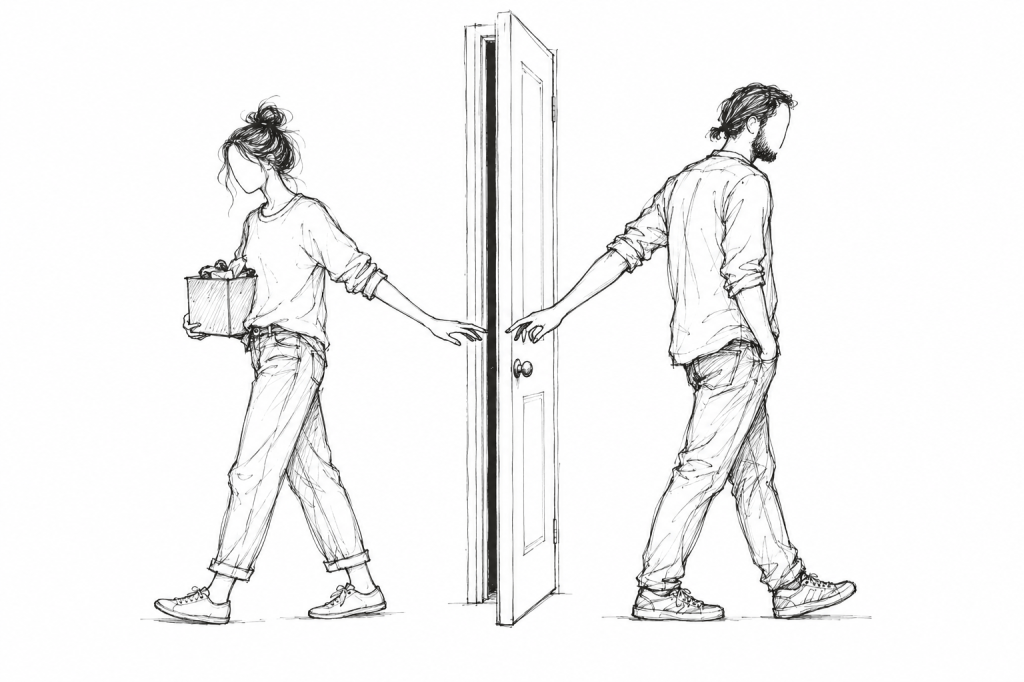
The door moved constantly.

Sometimes I pushed it almost shut.

Sometimes Stephen did.

Then one of us would reach through the gap.

By late September, however, something was finally approaching that felt different.

Not another argument.

Not another explanation.

Not another promise between Stephen and me.

On 29 September, more than two months after I had first suggested it, Stephen was due to begin the programme.

I had no idea what would come from it.

I didn’t know whether it would change him.

I joked that once he found out who he really was, he might not actually want me. But at least I’d have my answer. 

I didn’t know whether it would change anything between us.

I didn’t even know whether change would bring us closer together or finally make it clear that we needed to let each other go.

Reflection

Looking back, I don’t think I was indecisive about what Denmark meant. I knew something fundamental had been broken. I was returning Stephen’s belongings, deleting photographs and beginning to imagine a life without him. Those were real attempts to separate. But ending a relationship practically and detaching from someone emotionally turned out to be very different things.

I had imagined that once something sufficiently terrible happened, love would somehow fall into line with reason. It didn’t. I could be furious with Stephen and still worry about him. I could believe we shouldn’t be together and still want to hear his voice. I could remove hundreds of photographs from my phone and then spend two hours staring at a screen filled with strangers because somewhere among them was a face I knew intimately. None of those things cancelled the others out.

The arguments made the separation even harder. Stephen and I were still trying to establish what had happened, what had been meant and whose understanding of a conversation was correct. I wanted certainty at precisely the point when everything felt uncertain. Perhaps that was part of why I kept engaging. It is difficult to put something down when you still feel you haven’t completely understood it.

Seeing Stephen in Westminster Hall captured the contradiction particularly clearly. There was no crisis for me to solve and no argument to untangle. I simply saw someone I loved doing something I knew mattered deeply to him, and my instinct was to give him something that would matter too. Capturing those photographs wasn’t a decision to take him back. It was an act of affection. I was beginning to learn that affection could survive even when a relationship perhaps shouldn’t.

That was what I meant when I said I would always keep the door ajar. At the time, I thought I was describing contact. With hindsight, I think I was also describing my emotional position. I was trying to leave without completely letting go. The programme gave that open door somewhere to lead. I didn’t know whether Stephen would change, whether we would find our way back to each other, or whether understanding himself might take him further away from me. I only knew that I wasn’t yet ready to close the door and stop wondering.

Trying To Understand Stephen

​For a few seconds after waking, there was nothing.

Then I remembered.

It hadn’t all been some awful dream. It was real.

And now Stephen and I had to make the long journey back to England with the unspoken knowledge that our relationship was over.

My aunt had already left for work. We had been asked to lock up behind us and meet her in the town centre to hand over the keys and say goodbye.

Stephen and I dragged our suitcases through the streets to the nearest bus stop. We stood there waiting, barely uttering a word to each other.

When the bus arrived, we found some seats and I stared out of the window.

The streets of Denmark passed by — a country that had always meant so much to me, filled with childhood memories and family and belonging. Just days earlier, I had been standing in these same streets believing I was here with the man I loved, surrounded by the people I loved.

Now I could barely comprehend what had happened.

Tears filled my eyes.

Stephen remained silent.

About half an hour later, the bus pulled into the terminal and there was my aunt waiting for us. She smiled when she saw me, but I could read the sympathy all over her face.

I hugged her and thanked her. I probably apologised too, although I can’t remember exactly what I said. Everything felt embarrassing somehow, even though I had done nothing wrong. I hated that something so private and devastating had unfolded in front of my family.

We went into the station and waited for the train to the airport. It was the same station I had been standing in twenty-four hours earlier, frantically trying to understand what Stephen and M might be doing.

Now there was nothing left to chase.

On the train, I stared numbly through the window as Denmark’s flat, beautiful landscape rushed past.

Stephen still said almost nothing.

At the airport we boarded our plane and took our seats beside one another. Those cramped airline seats suddenly felt unbearably intimate. I could feel Stephen’s shoulder and arm against mine, but I couldn’t bring myself to look at him.

I tried to imagine that the man sitting beside me was a stranger.

Ironically, that was almost exactly how he felt.

Somewhere during that flight, the numbness began to wear off.

The reality of what had happened started pushing its way through, and I began to cry. I tried desperately to hide it, turning my head away and keeping as quiet as I could, but eventually I was sobbing silently and couldn’t stop.

Stephen knew.

He did nothing that was helpful.

I don’t remember much about landing in England. We retrieved my car and began the journey home. We must have spoken at some point, but I can’t remember a single thing we said.

I probably told him I was taking him back to his dad’s.

He didn’t argue.

I can’t even remember leaving him there.

Nor can I clearly remember arriving back at my own house.

There are pieces of that journey that seem to have disappeared completely from my memory. I only remember the feeling of it: an enormous emptiness, as though something that had occupied so much space inside me had suddenly been ripped out.

That evening, I told my sons the whole nightmarish story.

I expected them to be horrified.

Instead, they reacted almost as though they had been expecting something like this all along.

They had never trusted Stephen.

They were angry on my behalf and far less charitable about him than I had ever been. To them, he was a low-life. Someone who didn’t know who he was. A parasite who attached himself to other people’s energy.

It was difficult to hear.

Partly because I understood where they were coming from.

But also because their version of Stephen didn’t contain the man I knew.

They hadn’t experienced all the other parts of him. The funny, curious, affectionate, enthusiastic man who could make ordinary things exciting. The man I could talk to for hours. The man who had become woven through almost every part of my life.

Both versions seemed to exist.

And I still didn’t know what to do with that.

But understanding Stephen did not mean that everything between us suddenly became calmer.

If anything, those first few days after Denmark were extraordinarily volatile.

The following day, Stephen suddenly became intensely worried about M.

My parents and other members of my family were still in Denmark, and M was due to be around some of them. Stephen wanted to know exactly what I had told them about what had happened.

He was frightened that somebody might confront her or say something that would destabilise her.

At first, I could understand the concern. M was vulnerable. Whatever responsibility she might or might not have had for what happened between them, I didn’t want her harmed either.

But then Stephen’s messages escalated.

He told me that if anyone said anything that caused M to have a meltdown, he would “set off a ‘bomb’ in that family they will never recover from.”

I was stunned.

Only days earlier, Stephen had left me alone in my aunt’s house to follow M through the streets of Denmark.

He had refused my pleas to come back.

He had stayed at her flat.

Our relationship had ended because of what had happened between them.

And now, while I was still trying to understand the wreckage of it all, he was threatening some kind of retaliation against my family in order to protect her.

Something in me snapped.

“You are not welcome at my house or my place of work,” I told him. That morning I had told him his job was still there for him if he wanted it.

I said I would return all his belongings the following weekend and block him at midnight.

“Your choices are horrendous. I don’t want it anymore in my life.”

When he told me he was panicking and didn’t want anyone else hurt, I answered:

“You’re damaging me and it stops now.”

Stephen quickly retreated from what he had said.

He told me he would never actually do anything. Becoming threatening, he said, had been a protective reaction. He had panicked.

But by then I had had enough.

“I’ve given everything I had to give,” I told him.

“The buck stops here.”

What strikes me now is how quickly I could move between compassion and absolute certainty.

I could believe Stephen was unwell.

I could believe he was overwhelmed.

I could desperately want to understand what was happening inside him.

And I could still reach a point where I thought: No. This is unacceptable.

That evening, I meant it.

I told him I couldn’t keep living inside ambiguity, never knowing which things he said were real and which things I was somehow expected to understand he hadn’t meant.

I told him that life was a sequence of choices and hoped his next one would be to get help.

Stephen acknowledged that something was seriously wrong. He described himself as going through a major relapse and, significantly, told me that it wasn’t mine to fix.

It sounded like an ending.

Except endings between Stephen and me were rarely clean.

By the following day, we were talking again.

Stephen told me he had been tempted to check whether M had replied to a goodbye message he had sent her, but instead he had gone outside for a cigarette.

I encouraged him not to reopen contact. M had family and friends around her. She had support. Whatever had happened between them, Stephen did not need to be the person who rescued her.

Then Stephen became overwhelmed.

He told me he wished he could hold me.

A little later he said he had finally broken down completely.

Sobbing.

Wailing.

For all my anger the previous evening, hearing his pain still affected me.

“I’m here,” I told him.

“I’ve got so much love for you.”

That contradiction is difficult to explain unless you understand what those days were actually like.

I wasn’t simply forgiving Stephen.

I wasn’t simply leaving him either.

I was moving between grief, anger, love, self-protection and a relentless need to understand what had happened.

By that evening, I told him something that probably captured my position better than anything else could have.

“I don’t want to lose you. By that I mean contact.”

The following morning I was still overwhelmed by sadness and disbelief. I admitted that I worried about how badly Stephen coped with being alone — whether loneliness or boredom would send him searching for connection again, perhaps even back towards M. According to Stephen, M had begged him to return to Denmark.

He told me he had been tempted to contact her, but hadn’t.

He was trying.

And perhaps that was what kept catching me.

Whenever I reached the point of believing I had to walk away completely, I would see some small indication that Stephen understood there was a problem and wanted to do something differently.

Later that morning, an idea occurred to me.

“Would you ever consider attending the the programme I did ?”

“I would consider anything that may help,” he replied.

Around twenty years earlier, I had attended the programme myself.

For me, it had been transformative.

It centred around ideas such as integrity, authenticity, forgiveness and personal responsibility. I had carried parts of what I learned there with me ever since.

Stephen became interested almost immediately.

He asked questions. He looked at the course. He investigated the cost and accommodation and wanted to understand how it worked.

“If it helps me to get better at Life…… price doesn’t matter!” he told me.

Then, having compared it with things he had previously learned in therapeutic community, he described it as potentially the perfect “top-up” for what he had learned and forgotten.

Something about that gave me hope.

Not because I suddenly believed Denmark was forgiven.

It wasn’t.

Not because we had decided to get back together.

We hadn’t.

And Stephen wouldn’t actually attend the programme until the end of September.

But for the first time since Denmark, there was something other than another conversation between the two of us.

Something he could do.

Something that didn’t depend upon me finding the right explanation, asking the right question or somehow teaching Stephen how to understand himself.

Perhaps someone else could help him see what I couldn’t make him see.

And perhaps, eventually, that might tell us whether there was anything left between us worth saving.

Reflection

Looking back, I think this was the point when understanding Stephen became almost inseparable from loving him. Denmark had given me every reason to walk away, and at moments I was absolutely certain that I would. I could recognise when his behaviour was unacceptable. I could draw boundaries, return his belongings and tell him that I had nothing left to give. But understanding why he behaved as he did still mattered enormously to me. If there was an explanation for what had happened, some part of me needed to find it.

That didn’t mean I was excusing him. In fact, I was becoming increasingly frustrated by explanations that seemed to make sense of Stephen’s emotional state without ever accounting for his choices. He could be overwhelmed, frightened, dysregulated or desperate to protect someone, and I could have compassion for all of those things. But I was beginning to understand that intention and consequence were different. Stephen didn’t have to intend to devastate me for me to be devastated. He didn’t have to mean a threat for me to experience it as threatening. His internal reasons could explain his behaviour without making the behaviour acceptable.

The difficulty was that compassion kept reopening doors that anger tried to close. I could tell Stephen, with complete conviction, that the buck stopped here and then hear him sobbing the following day and instinctively reach towards him. Neither response was false. I was furious with him, and I loved him. I wanted to protect myself, and I couldn’t bear the thought of abandoning someone I believed was struggling. I didn’t want the relationship we had just had, but I wasn’t ready for Stephen himself to disappear from my life.

Perhaps that was why the programme gave me so much hope. For years, talking had been the way Stephen and I tried to solve things. I listened, questioned, challenged, reassured and searched with him for explanations. After Denmark, I was beginning to reach the limits of what those conversations could achieve. Suggesting the programme was an attempt to place some of that responsibility somewhere other than with me. Maybe Stephen needed something I couldn’t provide. Maybe understanding himself had to become his work rather than ours.

I can see now how powerful that possibility was for me. As long as Stephen could recognise that something was wrong and seemed willing to seek help, it was difficult to believe that all hope was gone. I wasn’t yet offering him another chance at the relationship. I was offering him a chance to understand himself. But somewhere underneath that distinction was a question I wasn’t ready to let go of: if Stephen could finally understand why he kept making these choices, perhaps one day he might learn to make different ones.

Stephen And The Denmark Event (Part III)

​He was distressed. He told me he had left M’s flat and was now wandering around, lost and not really knowing where he was.

I told him I was at the station. I had changed my flight and was waiting for a train to the airport.

He started crying.

He said he didn’t know what he was doing. He tried to explain that he had felt overwhelmed at the party. It wasn’t only M, he said. Apparently, my sister’s children had also been asking him to help them talk to their dad about some family problems. He had felt pulled in different directions, responsible for everyone, unable to cope with it all.

I couldn’t understand what any of that had to do with what had happened.

How did feeling overwhelmed explain why my cousin was lying in his arms?

How did it explain leaving the house with her?

How did it explain ignoring me while I begged him to come back?

We argued through tears, each of us trying to explain a completely different version of the same night.

And then he said he was going to find the nearest bridge and throw himself off it.

Everything in me changed instantly.

Minutes earlier, I had been leaving him.

I had changed my flight. Packed my suitcase. Walked through the quiet suburban streets as a new day dawned. I had finally removed myself from a situation that had become unbearable.

Now none of that mattered.

Whatever he had done to me, I couldn’t leave him wandering around Denmark talking about killing himself.

I told him to send me his location.

Then, at 6:40, a message appeared.

“Can you see where I am?”

“Yes,” I replied. “Why don’t you answer my calls.”

A few minutes later, another message arrived.

“I know it won’t mean much now, if anything….”

“I Love You and I am sorry.”

And there it was again.

Even after everything that had happened during the night, I loved him.

“I love you too,” I replied, “but there will always be times you find something else more important that you forget about considering me.”

By then, I had made my decision.

I wasn’t going to the airport.

Not yet.

I withdrew some cash from the ATM, hailed a taxi and put my suitcase in the boot. Within fifteen minutes, I was being driven away from the station and back towards the man I had spent the entire night begging to come back to me.

I found him standing beside a lake in a quiet suburb, smoking.

I got out of the taxi and looked at him.

He looked terrible.

So must I.

We were both exhausted, our faces swollen and our eyes full of tears. Seeing him again hurt in a way I find difficult to describe. This was still Stephen. The man I loved. The man I had travelled here with. The man who, only hours earlier, had been part of my family celebration.

And yet something enormous now stood between us.

We looked at each other and I think, for a moment, we both understood that.

I paid the driver, took my suitcase from the boot and went to him.

Then the questions came pouring out of me.

Why did you leave with her?

He said M had become upset and run off. He had chased after her to find out what was wrong. When she insisted on walking home, he couldn’t bring himself to leave her alone.

“But what about me?”

He said he hadn’t been able to think about me. All he could think about was M being distressed and needing to make sure she was safe.

I stared at him.

There had been so many other choices.

He could have shouted for my help.

He could have woken my aunt.

He could have called me immediately and my aunt could have picked them up.

He could have called M a taxi.

He could have persuaded her to come back inside.

He could have walked part of the way and then returned.

He could have answered his phone and listened when I told him that I was falling apart.

He could have done almost anything other than what he had done.

He said none of those things had occurred to him.

All he had been able to think about was looking after her.

I felt something twist inside me.

“What about my distress?”

He told me that when I threatened to end the relationship if he didn’t come back, it had made him angry.

It was almost impossible to comprehend.

I had been pleading because I was terrified of losing him.

And somehow my terror had pushed him further away.

I still needed to know what had happened once they reached her flat.

“Where did you sleep?”

He said he had got into M’s bed because the flat was so small. Surely there was a sofa?

My stomach dropped.

“What happened then?”

He told me that M had undressed down to her underwear and got into bed beside him.

I could feel the anger rising through me, but I needed to keep asking.

I needed to know.

“What happened next?”

He hesitated.

Then he told me he had tried to kiss her.

For a moment, I could barely process the words.

I had spent the entire night listening to him tell me that he was only walking her home because she was vulnerable. That he couldn’t abandon her. That he was looking after her.

Now he was telling me that once he got her home, he climbed into her bed and tried to kiss her. How is that behaviour protecting her?

“Why?”

His answer stunned me.

He said he was in bed with an attractive, almost naked woman. Wanting to kiss her had felt natural.

Then he said something else.

“You told me we were finished.”

I stared at him.

Was he seriously using that as a justification?

I had told him our relationship would be over if he didn’t come back. I hadn’t ended our relationship and released him into the night to do whatever he wanted. I had been distraught, pleading with him to turn around. I had said those words because nothing else was working. I was trying desperately to make him understand what was at stake.

I had wanted the possibility of losing me to stop him.

Instead, he seemed to have taken it as permission to continue.

“But you knew why I said that,” I told him. “You knew I was begging you to come back.”

There was no answer that could make it make sense.

And I couldn’t believe I was hearing any of this from the same man who had once told me that sharing a bed with another woman meant nothing. The same man who had insisted he could lie beside a woman without anything sexual happening because he had self-control.

I had believed him.

Now that old argument came crashing back into the present.

Another reassurance that suddenly meant nothing.

Another thing I had trusted because I wanted to believe him.

Still I kept asking.

Perhaps some part of me was waiting for the piece of the story that would hurt less.

Perhaps I wanted him to tell me that, at the final moment, he had remembered me.

That he had looked at M and thought of us.

That he had stopped because he loved me.

“Why did you leave?”

His answer took even that away.

M hadn’t wanted things to go any further than the kiss.

So he decided he should leave.

I felt sick.

He hadn’t left because he remembered me.

He hadn’t left because he suddenly understood what he was doing.

He hadn’t stopped himself.

She had stopped it.

I couldn’t understand how we had got here.

How had we travelled from the year we had just shared to this lake in Denmark, standing beside my suitcase and smoking cigarettes while Stephen explained to me how he had tried to kiss my cousin?

There were more questions. Hundreds of them.

But we were both exhausted beyond reason.

I messaged my aunt and told her where we were. I asked whether she could come and collect us.

The drive back was silent, the three of us sitting with the hollow, exhausted feeling that something terrible had happened and none of us knew what could possibly be said to make it any less real.

When we arrived, my aunt was quiet but kind to us both. There was so much that needed to be said, but none of us had the energy left to say it.

I changed my flight back to the original booking.

I wasn’t leaving after all.

Then Stephen and I went to the guest room.

Only hours earlier, I had walked away from that house believing I might never return to it with him.

Now we were back in the same bed.

I lay with my back to him.

I was so desperately sad.

Not angry anymore. Not frantic. Just broken-hearted.

I cried quietly into the pillow.

I wanted him to reach for me.

After everything that had happened, after everything I had heard, some part of me still wanted the comfort of the person who had caused the pain.

But he didn’t touch me.

He didn’t put an arm around me.

He didn’t tell me he was sorry.

He didn’t comfort me at all.

Eventually, exhaustion took us both and we slept for a couple of hours.

When we woke, M was trying to contact him.

That was when I discovered they had exchanged numbers.

Another question.

When?

Why?

At what point during that night had exchanging numbers seemed necessary?

I was furious that he took her call. He could barely speak to me without becoming overwhelmed, yet he was willing to speak to her.

We eventually got up and went outside.

We sat in my aunt’s garden, eating and drinking almost nothing, chain-smoking in near silence. Our eyes were swollen from crying. Everything around us looked exactly as it had the day before, and yet nothing felt remotely the same.

I asked him again.

Calmer this time.

I wasn’t shouting. I wasn’t pleading.

I simply wanted to understand.

Why had he done this?

He told me about Scotland.

During his recent trip there, he said, he had stayed awake all night talking to a young man who was considering suicide. Stephen had spent hours trying to convince him not to take his own life. He said the experience had taken an enormous emotional toll on him and, because we had flown to Denmark almost immediately afterwards, he hadn’t had time to recover.

Then there had been the party.

My sister’s children had apparently been asking him to intervene with their father over family problems. I hadn’t considered how much it affected him at the time.

And then there was M.

Stephen believed she was a troubled young woman, possibly with the same diagnosis as him. He said people with similar difficulties could recognise something in each other and be drawn together.

I listened.

These were explanations.

They weren’t excuses.

And there was one question I couldn’t get past.

If he was emotionally and physically exhausted, why hadn’t he come to bed with me?

Why hadn’t he removed himself from everything that was overwhelming him and come to the person he had travelled to Denmark with?

Why hadn’t he come to me? The woman whom he loved. The woman who could support and comfort him.

He didn’t know.

That seemed to happen whenever I reached the question underneath all the other questions.

He could explain the circumstances.

He could explain M’s distress.

He could explain Scotland.

He could explain my sister’s children.

He could explain feeling overwhelmed.

But when I asked the question that mattered most to me—

Why did you choose to leave me and go with her?

—there was no answer.

M arrived that afternoon.

She wanted to speak to me alone, so the two of us walked out through the front of the house and sat on a bench opposite.

I remember surprisingly little of that conversation.

Perhaps by then I had simply reached the limit of what I could absorb.

I asked her what had happened at the flat. Her account seemed to corroborate Stephen’s. But, like him, whenever I asked questions that moved away from what happened and towards why, she became distressed and confused.

Before long, we were talking about her father’s suicide, her mental health and the way the family had never really spoken about what had happened.

I understood her pain.

And somehow, sitting on that bench opposite my aunt’s house less than a day after she had disappeared into the night with my partner, I found myself comforting her.

I was devastated.

I had barely slept.

My relationship felt as though it had been ripped open in front of my family.

And still, when someone else cried, something in me automatically moved towards their pain.

The rest of that day is hazy.

At some point Stephen spoke briefly to M alone, although they remained within my sight. I remember wondering what they were saying to each other.

Then she left.

As the day wore on, my sadness began turning back into anger.

I was angry with Stephen for allowing any of this to happen.

I was angry with both of them for behaving as though I had somehow disappeared from the equation.

My aunt naturally felt protective of M, but she was also angry with Stephen. Before long, the two of us were questioning him together.

He looked frightened.

Overwhelmed.

Confused.

Eventually I realised there was nowhere left for the conversation to go.

We had to stop.

My aunt prepared a beautiful dinner that evening, but none of us could really eat it.

We sat around the table with everything that had happened hanging silently between us.

The celebration was over.

The excitement of Denmark was gone.

The easy happiness Stephen and I had arrived with only days earlier felt impossibly far away.

Eventually we went to bed.

There were still so many questions I wanted answered.

There were still things about that night that didn’t make sense.

But there was nothing left in me with which to ask them.

We went to bed in silence.

The following morning, we would begin the journey back to England.

Together.

But something had happened in Denmark that neither of us could simply pack into a suitcase and leave behind.

Stephen And The Denmark Event (Part II)

​Panic hit me in the chest, hard and immediate, as though my body already knew what my mind was still refusing to understand.

I ran back inside for my phone.

“Where are you?”

For seven minutes, there was no answer.

Then Stephen replied.

“I’m walking her home.”

I stared at the message.

He had left my aunt’s house with M without even telling me.

“You didn’t think to say anything to me?”

“Stephen. I need to talk to you.”

“It’s important.”

I tried to call him several times.

Finally, I got through.

He told me M had become upset and run off. He had followed her and caught up with her. He had tried to persuade her to stay at her mum’s, but she was determined to walk home.

So he was walking her.

I told him this was ridiculous.

Come back.

Come back now.

He said he couldn’t leave her walking alone at night.

I couldn’t understand what I was hearing.

I was his partner.

I was alone in a foreign country, in my aunt’s house, devastated by something I had just witnessed between him and another woman.

And he was explaining to me why she needed him.

I needed him.

I told him that if he cared about me, he needed to turn around and come back.

He refused.

I became more upset, more frightened and more desperate to somehow reverse what was happening before whatever line was being crossed became impossible to uncross.

I was bargaining with him.

Pleading with him.

Trying to make him understand the enormity of what he was doing.

Just come back.

Please.

Come back now.

Eventually, I became desperate enough to give him an ultimatum.

“If you don’t come back now, our relationship is over.”

I didn’t say it because I wanted our relationship to end.

I said it because I needed those words to stop him.

I needed the possibility of losing me to be enough.

It wasn’t.

The call ended.

“You’ve made your priorities loud and clear,” I wrote.

“I mean so little to you.”

“I guess it’s over.”

“You are so cruel.”

“It will be hours until you’re back and leave me here suffering.”

“Leaving me guessing. Wondering.”

“I just can’t believe this.”

“Who the hell are you?”

For thirteen minutes, there was nothing.

Then Stephen finally replied.

“I thought you had already made up your mind.”

“You’re breaking my heart,” I wrote.

“So now you won’t tell me where you’re going or talk to me.”

“Was trying to persuade her to stay at her moms.”

“She wanted to walk home.”

“I am walking her home.”

“Please answer the phone,” I wrote.

“Why don’t you care about how I feel?”

“This is killing me.”

His response came back.

“You trashed tonight.”

I didn’t even know what that meant anymore.

“So you don’t want to talk to me anymore?”

Then I asked the question that frightened me most.

“Are you staying over there and not coming back?”

No answer.

Everything was suddenly beyond my control.

That’s when I unravelled.

I couldn’t reach him. I couldn’t reason with him. I couldn’t persuade him to come back. I didn’t know exactly where he was, what he was doing or whether I would see him again that night.

Only hours earlier I had been at my grandmother’s party with the man I loved, surrounded by my family.

Now he had disappeared into the night with my cousin.

I felt more alone than I can remember ever feeling.

I called my eldest son.

I told him what was happening.

He listened and then told me he wasn’t surprised.

He had never trusted Stephen.

I checked on my aunt, perhaps hoping absurdly that someone older and wiser might wake up and somehow take control of this nightmare.

She was fast asleep, snoring loudly.

And I was alone again.

I didn’t know what to do with myself.

I was furious.

Terrified.

Humiliated.

Heartbroken.

But more than anything, I was in disbelief.

This couldn’t actually be happening.

Not after the year we’d just had.

Not after everything we had survived.

Not after I had forgiven him.

Not after I had given him another chance.

Not here.

Not with my cousin.

Eventually, the only thing I could think to do was leave.

I asked Stephen whether he wanted me to change my flight and go home that day.

There was no answer.

“Yes or no?”

Still nothing.

Eventually, I made the decision myself.

“I’m a broken woman and I can’t be here any longer than I have to,” I wrote to him.

A minute later:

“I’m leaving for Copenhagen first thing. This is the worse day of my life.”

Our flight home was supposed to be the following day, but I couldn’t imagine remaining there waiting for Stephen to return. I changed my flight, packed my suitcase and sent my aunt a message explaining what had happened.

Then, while it was still dark, I left her house.

I began walking towards town, pulling my suitcase behind me.

There is something very strange about walking alone through an unfamiliar place in the hours before dawn while your entire life seems to be collapsing somewhere behind you.

At 4:20 in the morning, my phone lit up.

Stephen.

“Tess, are you awake?”

I looked at the message.

I was already gone.

“I’m walking to town.”

Then we spoke.

He told me he was at M’s.

I told him to get in a taxi and come back.

He said he couldn’t. He was too tired. He was going to stay at M’s for the rest of the night.

I couldn’t understand what I was hearing.

He could have called a taxi and come back. I hadn’t slept either. I wasn’t asking him for anything complicated.

I just wanted him to come back.

“Where are you going to sleep?” I asked. “What’s M doing?”

He said he didn’t know. The flat was very small. M was in the toilet.

By then, I was pleading.

“Please, Stephen. Just get a taxi and come back. Please come back now.”

For the last time, I asked him to choose to come back to me.

His answer was firm.

“No.”

I was walking through Denmark in the early hours of the morning with nothing but my own thoughts for company.

I replayed everything.

The party.

The way Stephen had looked at M.

His attention towards her.

Her lying in his arms.

His face when I caught them.

My walking away.

His not following.

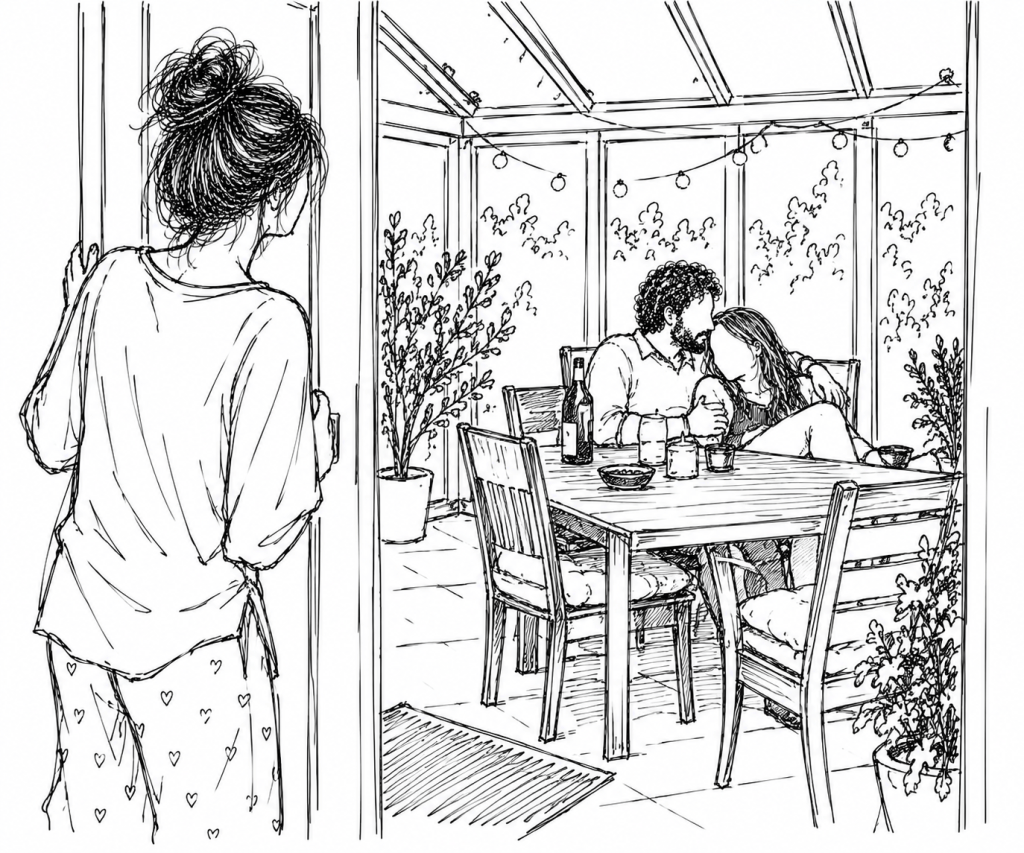
The empty conservatory.

The garden gate.

The unanswered calls.

Again and again I asked myself what I could have done differently.

Why hadn’t I stayed in the conservatory?

Why hadn’t I insisted he come to bed?

Why had I left them alone?

Why hadn’t I stopped him?

There was a terrible desperation in trying to find the precise moment when I might have changed the outcome.

And beneath all those questions was another one I simply couldn’t make sense of.

Why was Stephen willing to throw us away for a woman he had barely met?

Not just any woman.

My cousin.

After everything I had done to understand him, forgive him and believe in him, how could I possibly matter so little in that moment?

As the sun began to rise, I called my mum and dad.

I told them what had happened.

They were devastated for me and understood immediately why I needed to leave.

By the time I reached the station, daylight had arrived.

I stood there with my suitcase waiting for the train that would take me to the airport, utterly exhausted but far too distressed to feel tired.

The enormity of the night was beginning to sink in.

A year earlier, I had asked Stephen to leave my home because I believed that loving him did not mean protecting him from the consequences of his behaviour. I had given him another chance because I genuinely believed people could learn, grow and change.

And for almost a year, everything I saw seemed to tell me I had been right.

The alarm bells had become quieter.

And when they did sound, I had learned to question them.

Was I seeing something real, or was I allowing what had happened before to contaminate what was happening now?

I thought that was what learning to trust looked like.

Now I was standing alone on a railway platform in Denmark while the man I loved was somewhere else with my cousin.

Then, suddenly, my phone rang.

It was Stephen.

To be continued…

Stephen And The Denmark Event (Part I)

It had been almost a year since Stephen’s dismissal and his moving out of my house, and against all my fears at the time, that year had been amazing.

There had been almost no alarm bells.

Stephen seemed to have grown. We were enjoying each other more than ever, our relationship felt calmer and more secure, and I had begun to believe that asking him to leave had achieved exactly what I had hoped it would. He still didn’t have a job, but if that year had been spent working on himself, I could live with that. I wasn’t interested in measuring his progress by a salary. What mattered to me was whether he was becoming happier, healthier and more self-aware.

And from where I was standing, it seemed that he was.

Stephen’s son had been working for me one day a week at the house I managed. When he left for his summer break after leaving college, Stephen had stepped in to fill the role.

Shortly before Denmark, Stephen had made his first trip to his friend’s hostel in Scotland, taking his eldest son with him. His son had been feeling stressed about what he would do after college, and Stephen thought a few days away together might do him good.

When he returned, we had only a few days before we flew to Denmark.

This time we had been invited to stay with my aunt, my mum’s younger sister, because the guest rooms at my grandmother’s house would be occupied by my parents and other family members coming for the party.

I had always been very fond of my aunt. She is considerably younger than my mum, so when I visited Denmark as a little girl, she was still a teenager. I looked up to her. She would style my hair, paint my fingernails and do all those little things that made an older girl seem impossibly glamorous to a child.

About twenty years earlier, she had experienced an unimaginable tragedy. Her English husband, whom she had met through my dad while staying in England as a young woman, took his own life, leaving her with four children.

It was a devastating time for the whole family, but my aunt was incredibly resilient. Forever the optimist, she somehow found a way to continue living and to create joy again. Inevitably, though, the circumstances surrounding their father’s death affected each of her four children differently—some in ways that were obvious, and others that were perhaps much harder to see.

On our second evening, my aunt took Stephen and me to an outdoor live music event. The weather was kind to us, we had drinks, listened to music and had a genuinely lovely evening. It felt like the beginning of another wonderful trip.

The following day, my aunt’s eldest daughter—I’ll call her N—came to visit with her son. Of all my cousins, N had always seemed to me to be the one most visibly affected by what had happened to their father. Over the years I had heard stories about arguments and difficult encounters between her and other members of the family, including my mum.

We talked about some of those family tensions and asked whether she was planning to come to my grandmother’s party. N wasn’t sure she would be welcome.

Rather naively, we encouraged her to come.

Put the past behind you. Come with an open heart. Start again.

It sounded reasonable at the time.

Later that evening, my aunt’s eldest and only son—I’ll call him R—dropped by and stayed for dinner. Afterwards we sat in the garden well into the night, smoking, talking, listening to music and discussing films.

I had always been very fond of R, and Stephen seemed to connect with him easily too. I wondered whether Stephen’s own history of trauma and mental-health difficulties gave him a particular empathy for some of what my cousins had experienced following their father’s death.

Everything felt easy.

Then came the party.

My sister and her family had arrived in Denmark and were staying in a rented house nearby. We all went to my grandmother’s early to help my mum set everything up, and throughout the afternoon friends and extended family began arriving.

There was a lovely atmosphere. Everyone was outside in the garden—different generations milling around, joining conversations, drifting away and joining others.

My aunt’s middle daughter—I’ll call her M—arrived. Stephen looked up.

Almost immediately, I noticed something in him.

It reminded me of the young woman at the Claridge’s party the previous year. Nothing overt happened. It was simply a slight change in him: a little more nervousness, a fixed quality to his gaze, an attentiveness that felt different.

It occurred to me that M might be his type.

She was dark-haired, tall, around thirty, fit from going to the gym and had a couple of tattoos. She had a particular look I had noticed Stephen respond to before, both in women we passed in the street and women he saw on television.

If he found her attractive, that was fine. People don’t stop finding other people attractive because they’re in a relationship.

But I noticed.

And after the relative peace of the previous year, I had also become accustomed to questioning myself when I noticed things like this.

Perhaps this was simply what trusting someone required.

My aunt’s youngest daughter and her boyfriend arrived and Stephen and I had some lovely conversations with them. R arrived too.

Then N appeared with her son.

The reaction was immediate.

I could almost feel the atmosphere change.

People who had been relaxed suddenly seemed watchful. There was surprise on faces and an apprehension I hadn’t expected. For the first time, I wondered whether we had badly underestimated the fractures within this family and whether encouraging N to come had been a mistake.

Initially everything remained civilised, but as the afternoon went on and more alcohol was consumed, tension began building between N and M.

Then it escalated frighteningly quickly.

Before we really understood what was happening, N had become aggressive and M was in tears. N and her son were encouraged to leave before things became worse, while M stormed out of the garden crying.

Stephen and I followed her.

It was then that M told us what had happened the previous Christmas. What I had understood to have been an argument and a fight between the sisters had apparently been far more serious. She showed us a photograph of her face afterwards. It was black and blue all over.

We had had no idea.

Once N had gone, M began to settle down and Stephen spent a great deal of time talking to her, calming her and listening to her talk about her relationship with her sister.

At first I understood completely.

She was distressed. Stephen could be extraordinarily compassionate when someone was struggling, and this was exactly the sensitive, caring side of him that I loved.

But gradually I became aware of just how invested he was becoming.

He wasn’t simply offering some comfort and then returning to the party. His attention remained with her. Conversation after conversation revolved around M, her feelings and what had happened.

And once again, I began to experience that familiar sensation of somehow disappearing from Stephen’s awareness when another woman captured his attention.

I didn’t want to make something out of nothing.

So I said nothing.

Despite the drama, the party had otherwise been a success, and when it was finally time to leave I felt relieved. I was tired and ready to return to my aunt’s house, climb into bed with Stephen and put the events of the day behind us.

Then M asked her mother if she could come back with us and stay the night.

My heart sank slightly.

I didn’t particularly want her to come. I had already noticed what I thought might be chemistry between her and Stephen, and I had watched him devote much of the evening to her.

But what could I reasonably say?

She was my cousin. She had just been through an upsetting confrontation with her sister. This was her mother’s house.

So M came back with us.

My aunt soon went to bed, leaving the three of us sitting in the conservatory with another drink.

The table was small.

Stephen sat between M and me.

We chatted for perhaps half an hour, but it was late and I was exhausted. Eventually I said I was going to bed and asked Stephen to come with me.

He said he would stay up for just a little longer.

Something in me didn’t like it.

But I also knew that if I suddenly insisted he come to bed, I would look worried. Jealous. Controlling.

And after everything we had been through, I didn’t want to be that woman anymore.

So I said goodnight.

“See you shortly,” I told him.

I climbed into bed.

And lay there awake.

Of course I couldn’t sleep.

I knew they were outside alone together, and no matter how much I tried to reason with myself, my body would not settle.

I waited.

And waited.

And waited.

Every minute seemed to make the silence outside louder.

Nearly an hour passed.

Eventually I couldn’t stand it anymore.

I quietly got out of bed and crept back towards the conservatory.

What I saw stopped me.

They weren’t talking.

M was reclined in Stephen’s arms.

For a moment I couldn’t quite process the image in front of me.

Then something exploded inside me.

“What the hell is going on here?”

M jumped away from him and immediately pulled herself upright.

Stephen looked at me. His eyes bulging like a deer in the headlights.

I don’t remember exactly what I said next. I only remember the anger. The shock. The feeling that something I had feared without really allowing myself to fear it was suddenly happening right in front of me.

I could have stayed there.

I could have separated them.

I could have demanded Stephen to come to bed with me.

But I didn’t want to have to drag my partner away from another woman.

I wanted him to choose me.

Surely catching them like that and seeing how upset I was would be enough.

So I stormed back to the bedroom.

I expected to hear him behind me.

I waited for footsteps.

Nothing.

The house became completely quiet.

I gave it perhaps five minutes.

Still nothing.

Finally I got up again.

The conservatory was empty.

I checked the other rooms.

Nothing.

And then a horrible thought entered my head.

Don’t tell me they’ve left.

I hurried down the garden path and reached the gate. I looked one way and then the other.

There was nobody there.

They had gone.

To be continued…

Stephen Gets A Second Chance (Part I)

By October 2021, the complaints and the investigation that followed had brought our brief period of living together to an end.

It marked the end of the first chapter of our romance.

By then, those first ten months had accumulated an uncomfortable number of things I couldn’t explain away.

A broken promise.

A night when his phone was switched off.

My aunt.

The things Stephen had told me about his marriage and previous affairs.

J and H.

Other women.

Moments when something had felt wrong, even when I couldn’t quite identify what it was.

My instinct that there was something untrustworthy about Stephen, particularly when it came to women, had not appeared from nowhere. It had grown from a succession of events, observations, comments and disappearances.

With each one, I had become increasingly anxious that Stephen was going to betray me, although I had no idea what shape that betrayal might eventually take.

When I was finally told that two women had made complaints about his behaviour at work, it came as a complete shock.

It wasn’t something I could have imagined in my wildest dreams.

And yet, once I knew, it seemed connected to the same unease those earlier incidents had created in me: that Stephen’s boundaries with women were not always where I believed they should be.

Stephen was devastated by what had happened.

When it came to the complaints themselves, however, I didn’t always feel that he was taking full responsibility for the part he had played. He believed the pressure of the training and safeguarding responsibilities had affected him, and argued that J in particular had exaggerated events in a way that portrayed him unfairly.

I struggled with that.

Whatever else had contributed to what happened, two women had independently complained about his behaviour.

I needed Stephen to look at his own part in that rather than concentrate entirely on why other people might have interpreted him unfairly.

But in our private conversations, there were also signs that he was beginning to do exactly that.

When we talked about H and his behaviour around women more generally, Stephen acknowledged that he sometimes looked for interesting conversation and stimulation from other people. He accepted that the way he had done that had been inappropriate and disrespectful to me and to our relationship.

He began trying to understand why he did it.

Stephen told me that when he became flirtatious or sought attention, it tended to happen when he was bored or unhappy, or when he felt that other parts of his life were beyond his control.

He was adamant that he wasn’t bored or unhappy with me.

And he told me that none of this was an excuse.

That distinction mattered to me.

I could understand dysregulation, stress, pressure and boredom contributing to somebody behaving badly without believing those things absolved them of responsibility.

In fact, I told Stephen exactly where I thought the problem with his explanation lay.

He was going to be bored and unhappy again.

Life would frustrate him again.

There would be difficult jobs, difficult people and periods when he felt trapped, unstimulated or out of control.

If his response to those feelings was to seek excitement, attention or validation through other women, then changing jobs wasn’t going to solve anything.

He needed to learn another way of dealing with those feelings.

And now something enormous had happened.

Stephen hadn’t simply upset me or had an uncomfortable conversation with a colleague.

Two women had complained.

There had been an investigation.

A disciplinary process.

And he had lost his job.

However painful that was, I found it difficult to imagine that somebody could experience consequences on that scale and not seriously reflect on the behaviour that had led them there.

Surely this would stay with him.

Surely the next time a conversation with another woman began drifting towards a boundary, he would remember what had happened.

Surely losing his job would make him question his own behaviour in a way that my anxiety, questions and warnings never could.

If Stephen had succeeded in keeping his job, I couldn’t reasonably see how he would have moved forward positively. As painful as his dismissal was, I thought it was probably best for everyone concerned that his employment ended.

And that was an important part of why I didn’t walk away.

I wasn’t relying solely on Stephen promising me that he would change.

I believed something had happened that might actually make him change.

It was strange to think that we had only managed to live together for less than three months.

And so much was going to happen before we would share a home again.

Stephen and I discussed how we should move forward.

He still wanted a future with me.

I wasn’t sure I wanted the same now that this version of Stephen had been revealed to me in such a devastating way.

But I wasn’t ready to end the relationship either.

Instead, I told him that while he was living with his dad, he needed to sort himself out.

That meant something quite literal to begin with.

His bedroom.

When I had first seen it at the beginning of our relationship, it had been in a terrible state. He was sleeping in his bed surrounded by piles of belongings. There was furniture, clutter, filled cases and bags bursting with possessions. The carpet was barely visible, with little more than enough room to stand beside the bed.

So Stephen began clearing it.

He threw things away and rearranged the furniture until there was enough room for a desk. His bed was moved beneath a windowed alcove, and somehow the room that had once seemed so chaotic began to feel cosy.

Eventually, I started staying there for the first time.

In some ways, that little room reflected what I hoped Stephen might be able to do with the rest of his life.

Clear some things out.

Create some order.

Make room for something different.

We revisited the red flags that had troubled me during those first months. Stephen couldn’t really explain all of them, but he seemed remorseful.

I reminded him that stability and security had been part of our conversations from the very beginning.

They were among the things I had been looking for when I met him.

Ten months later, I felt he had provided me with neither.

If we were going to have any future together, that had to change.

I needed Stephen to create some stability of his own, and I needed him to stop giving me reasons to feel insecure.

This mattered particularly because Stephen had presented himself to me from the beginning as somebody capable of self-reflection and change.

When we first met, he had spoken about difficulties in his past and told me that it had taken him a long time and a lot of work to get through them.

I had admired that about him.

I had even told him that working on yourself was something to be proud of.

So when I asked Stephen to use what had happened as an opportunity to look at himself, I wasn’t asking him to become somebody completely different.

I believed I was asking him to be the person he had already told me he was capable of being.

I hated telling my friends and family how Stephen had lost his job and why he had moved out.

I think it inevitably changed their opinion of him a little, but they supported me in my choices and continued to welcome him into their homes.

I wrote Stephen a letter.

He pinned it to his notice board.

It was there as a reminder of what had happened, but also of what I needed from him if we were going to have a future.

One of the things I expressed was a suspicion I had begun to develop about Stephen and women.

I wondered whether he had a need to seek female attention whenever I wasn’t physically or emotionally available to him.

I had no proof of that.

It was an educated hunch based on the pattern I thought I could see emerging, and I had no idea whether I was right.

Years later, I would understand why that instinct had been so persistent.

But at the time, it was simply another question.

By then, though, I was becoming increasingly conscious of the difference between what Stephen said and what he actually did.

Words had always come easily between us.

From the beginning, we had talked endlessly about honesty, trust, communication, commitment and the kind of relationship we wanted to build. Stephen had reassured me many times.

But after everything that had happened, reassurance alone no longer carried the weight it once had.

I told him so.

“I can’t stress enough how little the words mean to me when the actions haven’t matched.”

It wasn’t that I believed everything Stephen had ever said to me had been meaningless. I still believed that much of what he told me reflected how he genuinely felt in the moment.

But feelings and intentions were no longer enough.

“We’ve exhausted the words.”

What I needed now was evidence.

Stephen told me that he understood.

“I am making my actions match how I feel. I will continue to do that.”

For the first time in a long while, I stopped listening quite so carefully to what Stephen was promising and started watching what he actually did.

Despite everything, there were still reasons for me to believe that Stephen might be capable of doing things differently.

Only shortly before everything unravelled, we had still been talking about the future we wanted to create together.

Stephen had told me that he wanted security for both of us.

He wanted a comfortable future with me.

Those weren’t merely things I wanted and was trying to persuade him to want too.

They were things we had talked about wanting together.

And that mattered.

Because I loved him.

Because much of our relationship was extraordinarily happy.

And because the Stephen I had fallen in love with had told me from the beginning that people could work on themselves, reflect, grow and change.

So I offered him a second chance.

But it wasn’t quite the clean slate I once remembered it as.

I didn’t tell him that what had happened didn’t matter.

I didn’t invite him straight back into my home and carry on as though nothing had changed.

Quite the opposite.

Stephen went back to his dad’s house.

I remained in mine.

He needed to sort himself out.

He needed to create some stability.

And I needed to see whether the man I loved could become someone I could feel safe trusting again.

We were also about to embark on a year of plans and experiences we had already been looking forward to.

In some ways, it would be like dating for the first time.

Even living separately seemed to bring back some of the small rituals we had developed earlier in our relationship.

One evening, Stephen and I decided to watch Parasite together from our separate homes. We couldn’t get the watch-together function to work through the television, so we resorted to synchronising the film ourselves.

Stephen found a frame near the beginning where a pair of socks were hanging in the background.

“I’ve paused at the socks,” I told him when I found the same place.

Then he counted us in.

“3…”

“2….”

“1…..”

“Go, go, go!”

And we pressed play together.

It was such a small thing, but that was part of what our relationship was like too. Alongside all the difficult conversations and uncertainty, there was companionship. We could make something as ordinary as watching a film from two different houses feel like something we were doing together.

Covid had meant we hadn’t really been able to date normally at the beginning of our relationship. So much of those first months had taken place inside houses, during restrictions, while the ordinary world of restaurants, concerts, travel and spontaneous days out remained largely closed to us.

Stephen had said himself that he probably hadn’t been ready for a relationship when he met me.

Perhaps, I thought, this was our opportunity to begin again differently.

For Stephen to sort himself out.

For both of us to enjoy the things we had missed the first time around.

And for me to get to know him again without immediately rebuilding the domestic life that had just fallen apart.

At the time, I believed perhaps this was exactly what we needed.

I thought the worst might finally have been exposed.

I thought losing his job might be the consequence serious enough to make him understand where his behaviour could lead.

I thought consequences might lead to reflection.

I thought reflection might lead to change.

And I thought that, if it did, perhaps we could begin again.

I didn’t know whether Stephen had changed.

There was no way I could know that yet.

That was what the second chance was for.

It wasn’t a declaration that I trusted him again.

It was an opportunity for him to show me that one day I might.

And, for a while at least, what happened next would give me reason to believe that hope had not been misplaced.

To be continued…

Stephen Drops A Bombshell (REFLECTION)

For months, I had been collecting fragments.

A broken promise.

A night of silence.

My aunt.

The stories from Stephen’s marriage.

The rule about cheating.

J.

Women in town.

A hand suddenly released when he saw me.

None of those things had given me certainty.

They had given me questions.

And because I loved Stephen, because so much of our relationship was extraordinarily happy, and because there was usually another possible explanation, I had continued living in the space between suspicion and proof.

Then Stephen told me he had been suspended from work following complaints involving two women.

Something changed.

Until then, almost everything troubling me had existed inside our relationship.

I was the person noticing.

I was the person questioning.

And increasingly, I was also the person wondering whether the problem might be me.

Had the broken promise involving his ex damaged my trust?

Was I becoming hypervigilant?

Was I connecting incidents that had nothing to do with one another?

Was I becoming jealous?

Was I interpreting ordinary friendliness as flirtation because I was frightened of being hurt again?

Then two women I barely knew stepped into the story.

They had experienced something too.

That was both validating and devastating.

There is a peculiar kind of relief in discovering that something you feared wasn’t entirely in your imagination.

But it isn’t a comforting relief.

It is the relief of discovering you may have been right about something you desperately wanted to be wrong about.

And then Stephen handed me his phone.

That changed things again.

Because I no longer had to choose between his interpretation and mine.

The messages existed.

I could read them.

What I found was more complicated than a man who had simply failed to understand that he was flirting.

Stephen knew there were boundaries.

He and H actually discussed them.

He referred to “casual flirting” himself.

He acknowledged that she was a young, attractive woman.

He knew she was twenty-two and that he was almost twice her age.

He told her that he couldn’t get her out of his mind.

He told her that if he were single and available, from his side there would not be a line.

And eventually, when H challenged the direction their conversation had taken, Stephen acknowledged it himself.

“I need to check my own emotions and behaviour.”

“I should have been more aware of boundaries.”

“I got a bit carried away.”

Those words mattered.

They made it much harder to understand what had happened simply as social clumsiness or an innocent misunderstanding.

I still couldn’t know exactly what Stephen had wanted from H.

Perhaps he hadn’t known himself.

Attraction, curiosity, excitement, validation and emotional stimulation may all have become tangled together.

I cannot retrospectively climb inside his mind and separate them.

But I no longer needed to know his precise intention in order to judge the behaviour.

That distinction was becoming important.

For so long, I had been trying to understand why Stephen did things.

Perhaps if I understood the mechanism, I thought, I could determine how seriously to take the behaviour.

But intention and effect are not the same thing.

Nor does understanding why somebody does something make the consequences disappear.

I could have compassion for whatever was happening inside Stephen and still decide that what he had done was unacceptable to me.

Perhaps the most extraordinary discovery, though, wasn’t any particular flirtatious message.

It was a date.

9 July.

I had lived that evening once already.

I remembered Stephen seeming troubled.

I remembered trying to understand what was wrong.

He had suggested that perhaps it was work.

I had told him I didn’t think it was situational.

“It seems every time we remove what troubles you, you remain troubled by a new thing.”

“I fear this may chase you the rest of your life.”

Then he told me:

“I am so confused.”

And when he stopped responding to me while remaining online, something inside me had reacted.

“Are you talking to someone else?”

“You’re staying online but not responding.”

I had no evidence.

I didn’t know about H.

I didn’t know what was happening in another WhatsApp conversation.

I just knew that something felt wrong.

Now, weeks later, I could finally see the part of that evening that had been invisible to me.

He had been talking to someone else.

He had been talking to H.

And while I was trying to understand Stephen’s strange mood, H was confronting him about comments that had made her uncomfortable.

Stephen was acknowledging to her that he needed to examine his behaviour and that he had become carried away.

The answer to the question I had asked had existed all along.

I simply hadn’t been allowed to see it.

That feels important to me now because for years afterwards I would struggle with the distinction between intuition and anxiety.

Both can feel remarkably similar in the body.

Both can make your heart race.

Both can make you search for meaning in tiny changes of behaviour.

Both can whisper that something is wrong.

And sometimes anxiety does create stories where there are none.

But sometimes the nervous system is responding to information the conscious mind hasn’t yet assembled.

A change in attention.

A delay in a response.

A slight withdrawal.

A shift in energy.

Something familiar behaving differently.

I don’t think that means I possessed some mystical ability to know Stephen was talking to another woman.

I didn’t.

I knew something without knowing what I knew.

There is a difference.

My instincts had detected the disturbance.

They could not supply the missing information.

And that distinction matters enormously when I look back at the woman I was becoming.

I wasn’t losing my mind.

I was trying to make sense of a reality from which relevant information was repeatedly missing.

There was another painful discovery in those messages too.

During the same period that Stephen’s attention was becoming increasingly focused on H, I had been trying harder and harder to settle him.

I had worried about the training.

I had encouraged him through difficult subjects.

I had come home at lunchtime.

I had tried to make our home comfortable.

I had tried to keep our emotional connection strong.

I had even thought about our sexual relationship partly in terms of helping to satisfy and settle him.

There was an assumption underneath some of that which I don’t think I fully recognised at the time.

If Stephen was happy enough with me, perhaps he wouldn’t need to look elsewhere.

If our sex life was satisfying enough.

If home was peaceful enough.

If I was supportive enough.

If he felt understood enough.

If I could help him regulate whatever restlessness was driving him.

Perhaps then he would settle.

But while I was trying to provide those things, he was still becoming preoccupied with somebody else.

That should not be interpreted as evidence that I failed.

It was evidence that my theory was wrong.

I could influence the quality of our relationship.

I could not regulate Stephen into fidelity.

That was his responsibility.

Interestingly, I was already beginning to understand that in 2021.

When Stephen explained that he tended to seek interesting, flirtatious interactions when he was bored or unhappy, I didn’t simply reassure him.

I told him:

“You will be bored and unhappy again.”

That was remarkably important.

Because I had identified the flaw in an explanation based entirely on circumstances.

There would always be another difficult day.

Another boring job.

Another period of low mood.

Another attractive woman.

Another interesting conversation.

Another opportunity to feel noticed.

A relationship could not be safe if Stephen’s loyalty depended upon never being bored, unhappy, insecure or stimulated by somebody new.

He needed another way of managing those feelings.

And I told him so.

When I was bored, I learned Danish or played Overcooked.

I didn’t create flirtatious intimacy with other men.

The solution, I told him, was to find ways of making himself happy and regaining control of his own life rather than escaping those feelings in ways that could make his life worse.

Reading that now, I am struck by how much I already understood.

There is a temptation, knowing everything that happened later, to imagine the woman I was then as somebody who simply couldn’t see what was happening.

But I could see a great deal.

What I couldn’t know was whether Stephen would do anything meaningful with what I was telling him.

That was the unknown.

And Stephen gave me reasons to believe he would.

He acknowledged that his behaviour had been inappropriate and disrespectful.

He apologised.

He said he needed to behave differently.

He told me:

“I only want you.”

And I did something else that feels extremely important now.

I gave him a way out.

I did not demand that Stephen choose monogamy because I was terrified of losing him.

I explicitly told him that if some part of him needed sexual freedom — if he felt he had missed out and needed time to “sow his wild oats” — he could take it.

Perhaps we would find one another again afterwards.

That wasn’t what I wanted.

It would have devastated me.

But I would rather have endured the truth than lived inside a commitment Stephen didn’t genuinely want.

He rejected the alternative.

“I know in my heart that I do not want any other woman.”

So I asked him directly.

Was he choosing a monogamous, devoted, loyal, long-term relationship with me over sexual and relationship freedom?

“Yes.”

“I do.”

That matters enormously when I think about why I stayed.

Because I wasn’t standing in front of a man telling me he couldn’t promise monogamy and deciding to pretend otherwise.

I asked the question.

I offered the alternative.

I made my requirements explicit.

And Stephen chose the relationship.

At least in words.

I even told him that words were no longer sufficient.

“Beautiful, sincere words aren’t enough anymore.”

I needed actions.

That may be one of the most important sentences I wrote during our relationship.

Because the problem wasn’t that I didn’t know what I deserved.

I wrote that too.

“I know I deserve integrity, truth and respect.”

The problem wasn’t that I had never established boundaries.

Or that I had never recognised danger.

Or that I had never given Stephen an opportunity to tell me that the relationship I wanted wasn’t the relationship he wanted.

I did all of those things.

What I did was believe that the answers he gave me were sincere.

And perhaps they were sincere in the moment.

That possibility is uncomfortable because it is much easier to understand betrayal if every promise preceding it was simply a calculated lie.

Human beings are more complicated than that.

Someone can desperately want to be a particular kind of person and repeatedly fail to behave like that person.

Someone can mean a promise when making it and later violate it.

Sincerity and reliability are not the same thing.

I hadn’t learned that distinction yet.

I still believed that sufficient insight, sufficient consequences and sufficient desire to change would eventually produce different behaviour.

And there were reasons for me to hope.

Stephen became quieter when confronted with the messages.

He acknowledged things.

He appeared ashamed.

He recognised that attention from other people felt good after spending much of his life believing himself unattractive and unlikeable.

He said he needed not to let it go to his head.

Those moments mattered to me because they looked like insight.

And if Stephen could see the problem, surely he could change it.

So I didn’t end the relationship.

We tried to rebuild.

That part of the chronology matters too.

There wasn’t one enormous revelation followed immediately by me forgiving everything and carrying on as though nothing had happened.

I told Stephen our relationship was on thin ice.

I told him what needed to change.

I told him beautiful words weren’t enough.

I offered him freedom if that was what he actually wanted.

He chose monogamy.

He promised action.

And I watched.

Then the full written grievances eventually arrived.

H’s account broadly corresponded with messages I had already read.

That gave it weight.

J’s complaint affected me differently because so much of it felt possible.

Some of the behaviour I had witnessed myself.

Some I already knew about.

I knew Stephen found her attractive.

I knew about the drinking while working.

I had seen the casual attitude towards online training.

Nothing about the account felt so alien to the Stephen I knew that I could dismiss it outright.

That frightened me.

Earlier in the relationship, when something unsettling happened, I had often asked whether it was out of character.

Now another question was beginning to emerge.

What if this is part of his character?

Not all of him.

That distinction matters.

The man behaving this way around women was also the man who could walk into a gathering of my oldest friends and fit beautifully amongst them.

He could be funny, clever, warm, engaging and attentive.

He could tap-dance unexpectedly in somebody’s living room.

He could make me laugh.

He could make ordinary life feel exciting.

He could understand parts of me other people missed.

He could make me feel deeply loved.

Those things weren’t necessarily fake simply because other things were also true.

That was the cognitive dissonance I was trying to resolve.

Stephen loves me.

Stephen behaves in ways that make loving him unsafe.

Both could be true.

At the time, however, I still believed the second statement could be changed without losing the first.

J’s allegation that Stephen had effectively told her he would go for her but had a girlfriend crystallised another difference between us.

The wording mattered enormously to me.

Perhaps Stephen genuinely couldn’t understand why.

But I could.

I didn’t want to be the fence separating Stephen from all the women he would otherwise pursue.

I wanted to be the choice that made pursuing them irrelevant.

I tended to understand commitment from the centre of the relationship outward.

I choose you, and therefore I protect what we have.

Stephen sometimes appeared to understand it from the boundary inward.

I may want something, but I have a girlfriend, and therefore this is where I must stop.

Perhaps that distinction is too neat.

Human desire is complicated. Loving someone doesn’t make every other human being sexually invisible.

I had never expected that.

But increasingly I was beginning to understand that attraction wasn’t really the issue.

What mattered was what happened next.

Where attention went.

What was encouraged.

What was disclosed.

What was hidden.

Whether attraction was simply experienced or actively fed.

And whether the relationship was treated as something precious to protect or merely as the line beyond which Stephen wasn’t supposed to go.

Eventually I asked him to leave.

Not because he had already been dismissed, as I later remembered the chronology.

At that point the employment process was still unfolding.

I asked him to leave because I needed space and because something fundamental between us had been damaged.

That correction matters.

I wasn’t enforcing a technical rule that he could only live with me while employed.

I was responding to what had happened between us.

Stephen asked:

“Are we splitting up?”

And I answered honestly.

“I don’t know.”

I wasn’t endlessly permissive.

I wasn’t pretending nothing had happened.

And I wasn’t incapable of acting.

I was establishing a boundary while still hoping the relationship could survive it.

Perhaps that sounds contradictory.

It didn’t feel contradictory then.

I didn’t believe I was choosing between Stephen and myself.

I believed I was creating conditions under which I might eventually be able to have both.

I could protect myself.

Stephen could reflect.

The employment process could resolve.

He could examine what had happened.

He could understand why he sought attention when bored, unhappy or insecure.

He could learn to recognise boundaries before somebody else had to enforce them.

He could become responsible for regulating himself rather than relying on me, another woman, alcohol, cigarettes or stimulation to change how he felt.

And perhaps, eventually, he could come home.

That seemed reasonable to me.

Healthy, even.

People make mistakes.

Relationships survive crises.

People learn.

People grow.

Sometimes consequences really do force us to confront things conversation has failed to change.

I had no reason then to believe that the only sensible response to somebody behaving badly was permanent abandonment.

What mattered was what happened afterwards.

Did they understand?

Did they take responsibility?

Did their behaviour change?

And I thought I was about to find out.

That is why his belongings remaining in my home feels so symbolic now.

I hadn’t closed the door.

But neither had I simply left it wide open.

I had placed something in the doorway.

A condition.

Change.

Looking back, perhaps the mistake wasn’t giving Stephen another chance.

It was something much harder to recognise.

I still believed insight would reliably lead to change.

I believed consequences would deepen that insight.

I believed that if Stephen finally understood how close he had come to losing our relationship, he would protect it differently.

And perhaps most importantly, I believed that because Stephen repeatedly told me he wanted the same relationship I wanted, we were ultimately working towards the same destination.

I had asked.

I had challenged.

I had offered him another path.

I had told him exactly what I needed.

He had chosen me.

So I believed him.

I didn’t yet understand that eventually I would have to judge the relationship not by the clarity of Stephen’s promises after something went wrong, but by what he did when the next opportunity arose.

For now, though, I watched him leave my home.

I still loved him.

I still believed in his capacity to change.

And somewhere amongst the sadness was hope.

Because for the first time, I thought the problem had finally become visible enough for both of us to see.

I thought seeing it would be the beginning of changing it.

I didn’t yet understand how many times I would see the same shape again.

Stephen And My Auntie

Some of my proudest moments in those early months came when I introduced Stephen to my friends and family.

He had mastered the art of conversation.

He seemed genuinely interested in everyone he met and had an extraordinary ability to find common ground with people who, on the surface, were very different from him.

My sons liked him. Although they didn’t necessarily have much in common, they all enjoyed a good debate, and Stephen could talk about almost anything.

My parents liked him too.

More importantly, they could see how happy I was.

This was one of the many things I loved about him.

My previous boyfriend had struggled socially, so there was something wonderful about being with a man I could confidently take anywhere. I never worried that Stephen wouldn’t know what to say or wouldn’t make an effort.

Quite the opposite.

I was immensely proud of him.

Eventually, the time came to introduce him to my aunt and uncle.

My aunt is my father’s sister, and I was particularly excited about this visit because I knew Stephen would love their home.

Their house has always been an emporium of curiosities.

For as long as I can remember, my aunt and uncle have been passionate collectors. They have unusual interests, fascinating objects and endless stories about the things they’ve accumulated over a lifetime.

One evening, Stephen and I visited them with my mum and dad.

After a lovely meal, my uncle offered to give Stephen a tour of the house.

Every room of their old Victorian semi-detached seemed to contain another collection. In some ways, it was like wandering through an antique shop. There was militaria, maps, crockery, silverware, paintings and countless other objects, each with its own history.

And then there was my uncle’s extraordinary lifetime collection of Rupert Bear memorabilia, reputed to be the largest in the UK.

Stephen was completely in his element.

He wanted to know about everything.

Where had this come from?

What was the story behind that?

How old was it?

My uncle was delighted.

There are few things a passionate collector enjoys more than meeting someone who is genuinely fascinated by their collection, and Stephen gave him an enthusiastic audience.

The tour must have lasted well over an hour.

Strangely, Stephen’s enthusiasm made me look at the house differently too. I’d grown up around many of these things and barely noticed them anymore. Watching him discover everything for the first time reminded me how extraordinary it all was.

I loved seeing the world through Stephen’s eyes.

Eventually, we joined everyone else in the garden.

It was getting late.

My aunt had been drinking and was already quite tipsy. She had been considered a great beauty when she was younger and, even at seventy, remained a very attractive woman.

Stephen began talking to her with his usual enthusiasm.

She told him about her new interest in singing and shared some of her fascinating stories about paranormal experiences. Stephen was intrigued and responded with stories of his own.

Initially, it was a group conversation.

My mum was involved.

My dad was there.

I was there.

But gradually, something changed.

The conversation narrowed until it seemed to exist almost entirely between Stephen and my aunt.

I watched his body language change.

He repositioned himself in his chair so that he was facing her directly, his posture open towards her. His attention became completely focused on her.

He stopped looking back at me.

He stopped including me in the conversation.

Then the subject matter changed too.

Stephen began telling increasingly risqué stories, including one about a job he’d once had that involved quality-testing adult products.

My aunt was fascinated.

And Stephen seemed to be enjoying her fascination.

What had begun as ordinary conversation was becoming something else.

Flirtatious.

My aunt was responding to it too.

She was tipsy, starry-eyed and completely absorbed in him.

Then Stephen began making suggestive comments about her sensuality.

I was sitting barely a foot away.

And suddenly I felt invisible.

What made it worse was that my parents were sitting there witnessing it too.

I tried subtly to steer the conversation somewhere else.

Stephen didn’t follow.

The innuendo continued.

Eventually, I’d had enough.

“We should go now,” I said.

Nothing.

Stephen carried on talking to my aunt as though I hadn’t spoken.

Their chairs were angled towards each other, their knees almost touching, their attention completely fixed on one another.

My mum and I stood up and walked towards the French doors leading back into the house.

“Come on, Stephen. It’s time to go.”

Still nothing.

My mum, dad and I ended up standing in the doorway waiting.

And waiting.

For what felt like nearly ten minutes, the three of us simply watched Stephen and my aunt continue their conversation as though they were the only two people in the garden.

Eventually, we practically had to drag him away.

I was furious.

But beneath the anger was something more unsettling.

Alarm.

Until then, one of the things I’d admired about Stephen was his openness about finding beauty in different kinds of women. I’d interpreted it as a lack of superficial judgement.

But I’d never seen this side of him before.

Stephen was an enormous flirt.

And if he was capable of becoming so absorbed in another woman while I was sitting beside him — with my mother and father watching too — what was he like when I wasn’t there?

That question disturbed me.

Especially because the incident with his ex had happened only weeks earlier.

I drove us home frostily.

Stephen seemed slightly drunk and, more surprisingly, completely oblivious to why I was upset.

We made the short fifteen-minute journey back to my parents’ flat and, because it was so late, everyone went to bed.

Stephen and I climbed into bed in my tiny childhood bedroom.

Then I confronted him.

We argued in whispers so my parents wouldn’t hear.

I told him how uncomfortable his behaviour with my aunt had made me.

Stephen didn’t understand.

Or said he didn’t.

He became defensive and denied that he’d been flirting at all.

He explained that because the tour of the house with my uncle had taken so long, he’d felt obliged to give my aunt his full attention afterwards. He’d spent all that time talking to my uncle, so now he was making an effort with her.

Then he said something that left me completely baffled.

“Besides, I don’t even know how to flirt.”

I couldn’t reconcile that statement with what I’d just witnessed.

Stephen also explained that he’d quickly drunk a couple of drinks to catch up with everyone else and that the alcohol had gone straight to his head.

He was clearly still tipsy.

He was also exhausted.

Before long, Stephen fell asleep.

I couldn’t.

I have never been good at sleeping after an argument.

So while Stephen snored beside me, I sat on the windowsill of my childhood bedroom, smoking cigarettes out of the third-floor window.

The rest of the flat was silent.

In the distance, I could see Greater London. Cars continued moving along the roads below as the darkness gradually began giving way to morning.

And I thought about what I’d witnessed.

My boyfriend has a way with women.

There seemed little point denying that.

But this was the same man who had presented himself to me as inexperienced with women.

The same man who now insisted he didn’t even know how to flirt.

And only weeks earlier, he’d disappeared while staying with his ex and subsequently admitted sharing her bed.

I found myself returning to that night.

Had everything happened exactly as Stephen had told me?

Was I joining together two completely unrelated incidents because I was frightened?

Or was I beginning to notice something about the man I was falling in love with that I hadn’t seen before?

I didn’t know.

Over the following days, Stephen and I talked extensively about flirting.

Strangely, the conversation gradually became less about what had happened with my aunt and more about what flirting actually was.

Stephen gave me the impression that he genuinely didn’t understand the distinction between being charming and being flirtatious.

So I tried to explain it.

To me, flirting involved verbal or non-verbal signals that introduced an element of romantic or sexual interest into an interaction, even if everything remained playful and ambiguous.

Charm was different.

Stephen was naturally charming.

That was one of the things I loved about him.

And I didn’t expect either of us to go through life never enjoying playful interactions with other people.

What mattered to me was context.

If you’re in a committed relationship, your partner shouldn’t be made to feel invisible while you direct sexual energy towards somebody else.

Their comfort should matter.

The relationship should still feel secure.

And loyalty should never be in question.

Stephen seemed receptive.

Part of me even enjoyed believing that perhaps I was teaching him something he genuinely hadn’t understood before.

I wasn’t considering ending the relationship over what had happened.

I loved him.

Most of our relationship was still extraordinarily happy, and this seemed like something we could resolve by communicating more clearly and establishing what was and wasn’t acceptable to us.

But something had shifted again.

After the night with his ex, I’d started wondering whether I could trust Stephen.

Now another question had joined it.

If this was how Stephen behaved with another woman while I was sitting right beside him, how did he behave when I wasn’t there to see it?