
Stephen moving back to his father’s house felt like the end of something.
Not the relationship.
I wasn’t ready for that.
But certainly the end of the version of it I had believed we were building.
Only a few months earlier, I’d cleared drawers and wardrobe space for him. I’d imagined breakfasts before work, evenings together and the quiet accumulation of an ordinary shared life.
Now I was helping him move backwards.
Back to his father’s house.
Back to the bedroom he’d been so desperate to escape.
Back to unemployment.
Back to complaints about his father and his estranged brother not paying rent.
It felt terribly sad.
And yet, underneath the sadness, there was also a strange sense of clarity.
For eight months, I had been trying to understand a feeling.
Something about Stephen and women hadn’t felt safe to me.
At first, there had been isolated moments.
The night with his ex.
My aunt.
Comments about women.
J.
The young woman at Claridge’s.
Stories from his marriage.
None of them had been enough on their own to tell me exactly what I was looking at.
And I had been extremely reluctant to join them together.
I didn’t want suspicion to become evidence simply because I was frightened.
Then Stephen lost his job following complaints from two women.
Suddenly, my unease had somewhere to land.
I hadn’t predicted this.
Nothing in my imagination had prepared me for sexual complaints at work.
But something inside me had been saying for months:
There is something here you don’t understand yet.
That distinction matters to me.
Instinct isn’t prophecy.
Mine hadn’t told me what Stephen was going to do.
It had simply kept responding to inconsistencies, broken agreements, unusual interactions and moments when his behaviour around women didn’t quite fit the man he described himself as being.
Perhaps my instincts weren’t trying to give me an answer.
Perhaps they were asking me not to stop looking.
Now I had an answer of sorts.
But it created another question.
What was I supposed to do with it?
The obvious answer might seem to be that I should have ended the relationship.
I considered it.
But from where I stood then, the situation didn’t feel that simple.
I loved Stephen.
Deeply.
And the eight months we’d spent together weren’t eight months of misery punctuated by occasional happiness.
Quite the opposite.
Most of our relationship had been joyful.
We had laughed constantly.
We had extraordinary chemistry.
We could talk for hours.
He was affectionate, interesting and exciting.
He embraced my friends and family.
He made ordinary experiences feel bigger.
I could imagine a future with him because there was so much in our present that genuinely worked.
The problem was that something else existed alongside all of that.
Something neither of us seemed properly able to explain.
Stephen appeared genuinely distressed by what had happened at work.
I don’t think his confusion was necessarily an act.
I suspect there may have been parts of the complaints he genuinely experienced very differently from the women involved.
That didn’t mean the women were wrong.
Nor did it absolve him.
But it made me wonder how much insight Stephen actually had into his own behaviour.
That seemed important.
Because you cannot reliably change a pattern you cannot recognise.
Perhaps shame made recognition harder.
There is a difference between guilt and shame that I understand better now.
Guilt says:
I did something bad.
Shame says:
I am bad.
Guilt can encourage repair.
Shame often encourages escape, defensiveness or explanation because fully accepting what happened feels like accepting something unbearable about yourself.
I sometimes wonder whether that was part of what I saw in Stephen.
When consequences arrived, he could appear remorseful.
But if we stayed with the behaviour too long, explanations would begin appearing around it.
Stress.
Safeguarding.
His mental health.
J exaggerating.
Pressure.
Circumstances.
Perhaps those things genuinely contributed.
But I was beginning to understand that explanations and accountability aren’t the same thing.
I didn’t need Stephen to declare himself a terrible person.
I needed him to be able to say:
Whatever was happening inside me, I behaved in ways that affected other people, and I need to understand why.
That was what I hoped his dismissal might finally force him to do.
So I asked him to leave my home.
Looking back, I think that decision tells me something important about the woman I was then.
I did have boundaries.
I wasn’t prepared to pretend nothing had happened simply because I loved him.
The condition for Stephen moving in had been employment, and that condition no longer existed.
But the deeper condition was trust.
That had been damaged too.
So I created distance.
What I didn’t create was an ending.
Instead, I created another opportunity.
A second chance.
At the time, that felt like a distinction worth making.
I wasn’t saying that what Stephen had done was acceptable.
I was saying I didn’t believe a person’s worst behaviour necessarily had to define everything they would ever become.
People can learn.
People can grow.
People can recognise patterns and change them.
I believed that then.
I still believe it now.
The question I didn’t yet understand was that change requires more than consequences.
It requires ownership.
Curiosity about oneself.
A willingness to tolerate uncomfortable truths.
And, eventually, behaviour that remains different even when nobody is watching.
I couldn’t do those things for Stephen.
But I could give him the opportunity to do them himself.
So Stephen returned to his father’s house.
And something surprisingly literal happened there.
He began clearing his room.
When I’d first seen it, the room had seemed almost overwhelmed by his life.
Bags.
Cases.
Furniture.
Possessions.
Clutter everywhere.
Barely enough visible floor to move around comfortably.
Now he started throwing things away.
He rearranged the furniture.
He created space for a desk.
He moved his bed beneath the windowed alcove.
The room became calmer.
More ordered.
More inviting.
I loved the transformation.
Perhaps I invested it with more meaning than it deserved.
But it looked like progress.
Stephen was sorting something out.
Even if, initially, it was only a bedroom.
I began staying there.
And slowly, the place he’d once described as intolerable became somewhere we could actually enjoy being together.
That encouraged me.
So did the letter.
Stephen pinned the letter I’d written to his notice board.
I found that deeply meaningful.
He wasn’t hiding it.
He wasn’t throwing it away.
There it was, visible in his room: my disappointment, my boundaries, my hopes for him.
I interpreted that as evidence that he’d heard me.
Perhaps he genuinely wanted the reminder.
Perhaps looking at it made him think about what he’d nearly lost.
Perhaps it represented his own determination to become the man he wanted to be.
I can’t know exactly what it meant to Stephen.
I know what it meant to me.
He’s taking this seriously.
That mattered enormously.
Because I wasn’t asking Stephen to become somebody else.
I was asking for consistency between the man he so often appeared to be and the behaviours that occasionally seemed completely at odds with him.
I wanted the loving Stephen.
The thoughtful Stephen.
The man who talked about integrity.
The man who wanted a future with me.
I wanted that man to become dependable.
And I believed he could.
There was one theory I had begun to develop that troubled me.
I wondered whether female attention did something for Stephen at particular moments.
Not simply sexual attraction.
Something more regulatory.
Perhaps when he was lonely, stressed, bored, emotionally disconnected or feeling badly about himself, attention from a woman gave him something immediate.
Validation.
Excitement.
Escape.
A sense of desirability.
A temporary shift in how he felt.
I didn’t have enough evidence to know whether that was true.
It was simply a hunch.
But it helped connect things I otherwise struggled to understand.
His marriage.
The teenage colleague he’d remembered so intensely.
His ex.
My aunt.
J.
The messages at work.
Maybe these weren’t expressions of a man constantly searching for another relationship.
Perhaps sometimes they were expressions of a man searching for a feeling.
If so, that distinction mattered.
Because Stephen could genuinely love me and still be vulnerable to seeking something from somebody else.
At that stage, though, I still believed love should provide considerable protection against that.
If our connection remained strong, perhaps he wouldn’t need whatever those interactions gave him.
And that belief placed me in a difficult position without me noticing.
Because if Stephen was most vulnerable to seeking attention when he felt disconnected, then keeping us connected began to feel important not only because connection was lovely.
It began to feel protective.
I didn’t consciously think:
I must keep Stephen happy or he might betray me.
Nothing so stark.
But the seed of that idea may already have been there.
Perhaps if he felt loved enough.
Desired enough.
Understood enough.
Secure enough.
Then whatever had happened before wouldn’t happen again.
The clean slate grew from that hope.
I didn’t want Stephen permanently living under suspicion.
If I had chosen to continue the relationship while repeatedly using his past against him, neither of us would have been happy.
So if I was going to give him another chance, I wanted it to be real.
I would watch what he did now.
Not endlessly prosecute what he’d already done.
That felt fair.
It also meant I was deliberately placing some of my fear to one side.
The next chapter would provide new evidence.
Stephen had told me himself that perhaps he hadn’t been ready for a relationship when we’d met.
Maybe he was right.
Our beginning had been extraordinary but chaotic.
Covid.
His father’s house.
The bedsit.
Unemployment.
His mental health.
Moving in.
The job.
The dismissal.
Perhaps we’d simply tried to build too much too quickly on foundations that weren’t ready.
Now we had an opportunity to do something different.
Date.
Go places.
Have experiences.
Spend time together without immediately trying to construct a shared household.
Get to know each other again.
There was something romantic about that idea.
Almost as though the first eight months had been the turbulent prologue and the real relationship could begin now.
I think Stephen wanted that too.
I think he wanted to prove something to me.
Perhaps also to himself.
He had lost his job.
He had moved out.
He had seen the consequences of his behaviour.
Maybe he genuinely believed that this was the shock he needed.
I certainly did.
And then something happened that would make that belief increasingly easy to maintain.
Life became calmer.
The alarm bells became quieter.
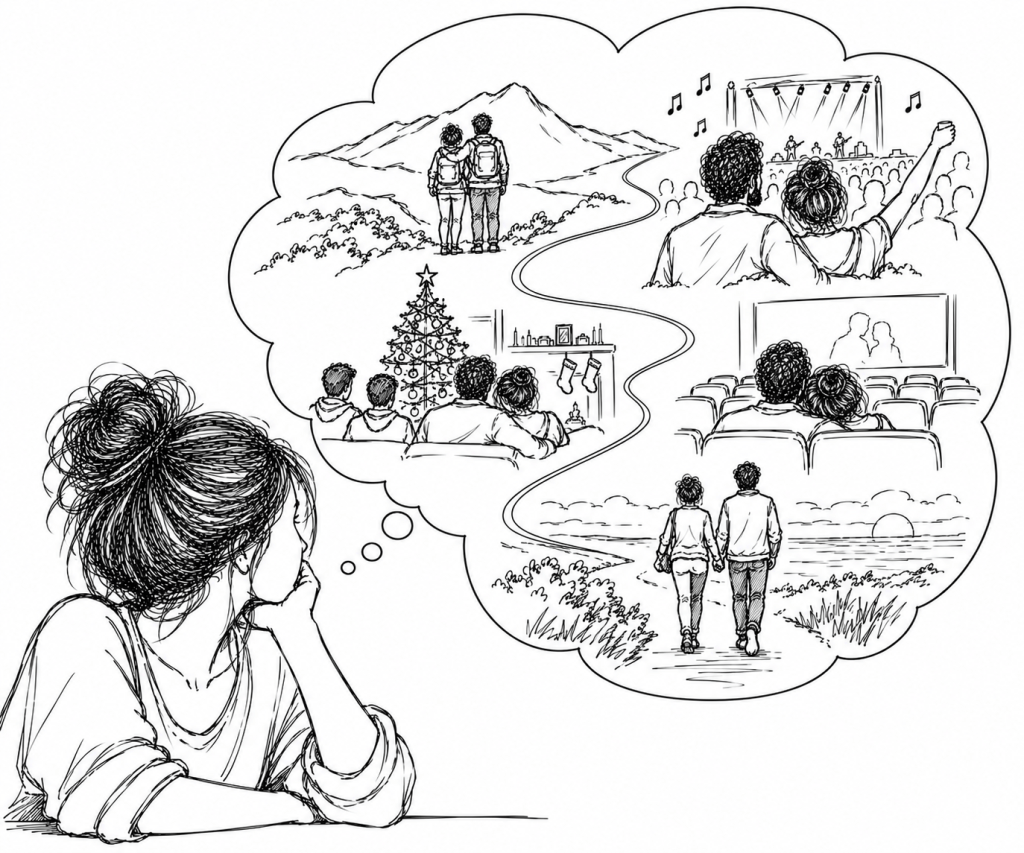
Stephen and I began doing the things Covid had prevented us from doing at the beginning.
We went places.
We shared experiences.
We built memories.
And gradually, the version of Stephen I had been waiting for seemed to become more consistent.
That mattered because trust isn’t restored only by apologies.
It is restored by experience.
Each ordinary day without a crisis becomes evidence.
Each situation handled differently becomes evidence.
Each month without another betrayal becomes evidence.
Slowly, the nervous system begins to relax.
Perhaps I hadn’t been foolish to stay.
Perhaps the boundary had worked.
Perhaps Stephen really had reflected.
Perhaps people really could change.
That was the second chance I believed I was giving him.
But looking back, I can see something I couldn’t see then.
I had created a test without knowing exactly what would constitute passing it.
How long did Stephen need to behave differently before I could believe the change was permanent?
Three months?
Six?
A year?
And how could I distinguish genuine internal change from a period in which the circumstances that activated the old behaviour simply hadn’t occurred?
I had no answer.
None of us really does.
We discover whether someone has changed only by trusting them enough to give life the opportunity to test that change.
So that is what I did.
I trusted Stephen again.
Not completely.
Not immediately.
But deliberately.
I loosened my grip on what had happened and allowed the relationship to move forward.
And for a long time, what happened next would seem to prove that I had made the right decision.
That is what makes this part of the story so important to me now.
I wasn’t giving Stephen a second chance because I knew he had changed.
I gave him one because I believed change was possible.
Then, slowly, life began giving me reasons to believe it had happened.
And the more reasons I found, the safer I allowed myself to feel.


