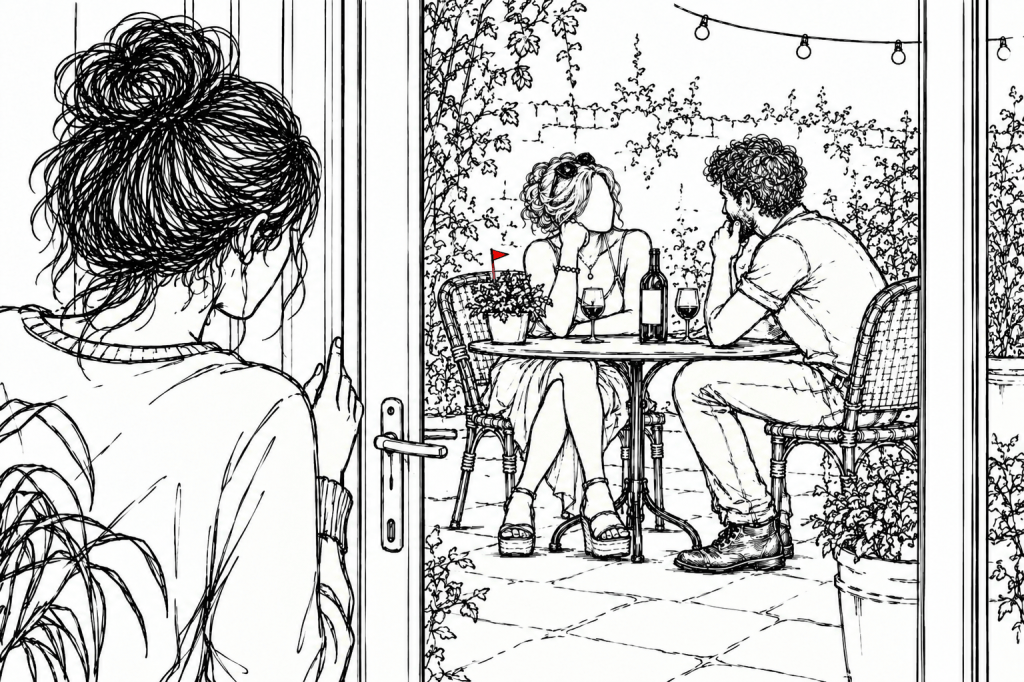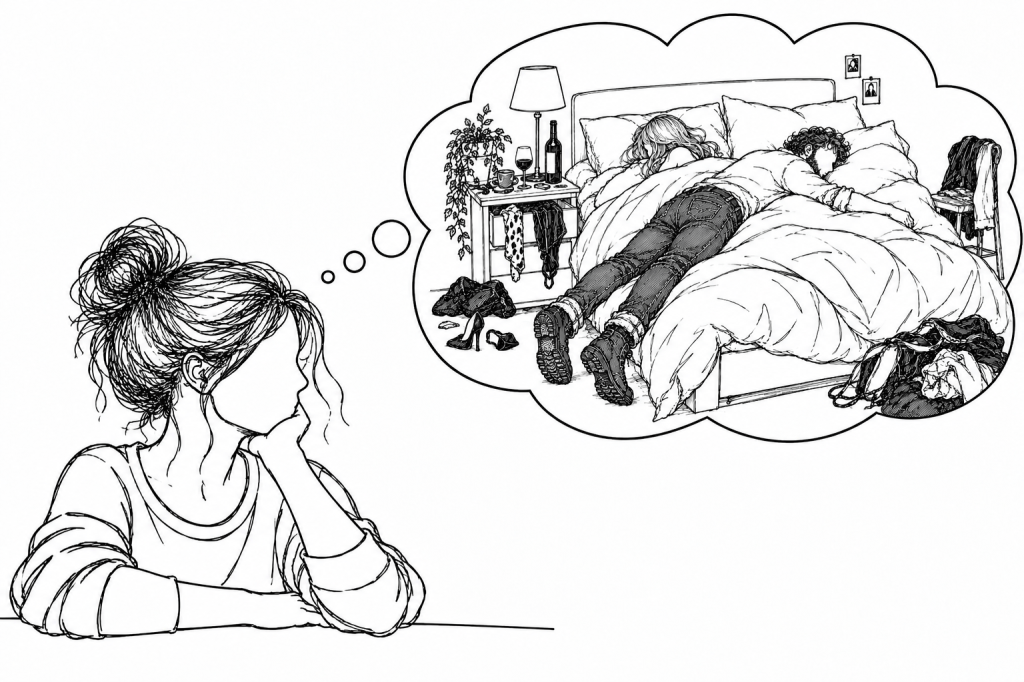
Stephen Drops A Bombshell

After Stephen returned from the Lake District, we finally had the weekend at Claridge’s that we had been looking forward to for months.

It had been extraordinary.

We had dressed up, stayed in one of London’s finest hotels, eaten wonderful food, laughed, smoked far too many cigarettes and experienced something neither of us was likely to forget.

There had been the incident with the young woman whose hand I had seen Stephen holding, and that had unsettled me.

But I had no idea there was something much bigger happening in the background.

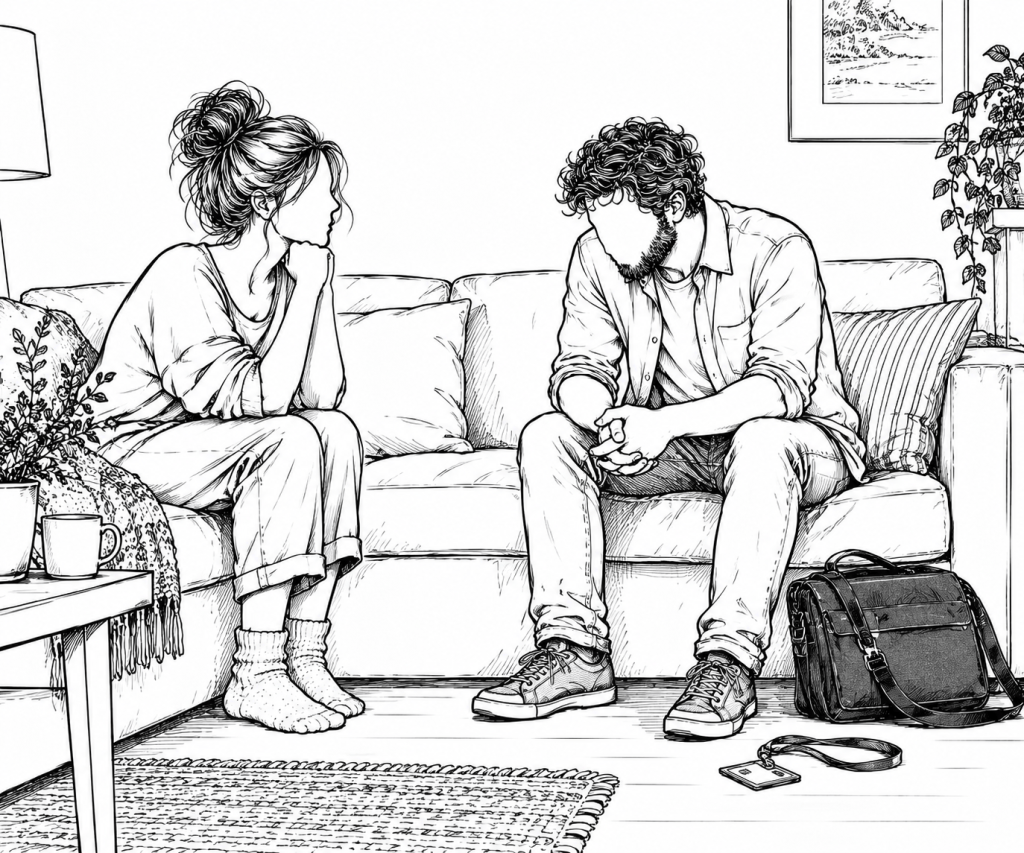
A few days later, Stephen dropped a bombshell.

He told me he wouldn’t be returning to work after his holiday.

He had been suspended.
Not that morning.

Not even the day before.

The suspension had happened around two weeks earlier, before the Lake District holiday.

While Stephen had been away with his father and sons, while we had celebrated his birthday, while we had been at Claridge’s, this had been sitting silently in the background.

I had known nothing about it.

He knew only that there had been complaints about his behaviour involving two female colleagues.

I was floored.

How could something so serious have been happening without me knowing?

I had spent weeks watching Stephen become increasingly unsettled at work. I had worried about his smoking, his agitation, his disengagement from the training and his preoccupation with other women.

I had even asked him one evening, when he seemed distracted and remained online without answering me:

“Are you talking to someone else?”

Now women were at the centre of the reason he had been suspended.

My first instinct was not simply to condemn him.

I needed to know what had happened.

But the fact that there were two women troubled me immediately.

How could two separate female colleagues have independently raised concerns about Stephen’s behaviour at roughly the same time?

I couldn’t dismiss that.

One of the women was J, the colleague Stephen had told me was his type.

The other was a much younger colleague called H.

He said the messages with H were a misunderstanding. He said J had exaggerated things to make him look bad.

A few days later, I asked Stephen if I could read the WhatsApp conversation between him and H.

I wanted to know what had happened between them.

Stephen allowed me to read it.

It began innocently enough.

On 6 July, Stephen contacted her because he was having trouble with Microsoft Teams and wanted to know whether his profile photograph was visible.

She helped him.

They chatted.

But the conversation moved away from work remarkably quickly.

Stephen became interested in her religion. H was Muslim and wore a hijab, and he asked her questions about Islam, relationships and the boundaries she observed.

At first, I could understand his curiosity. Stephen was naturally inquisitive and loved learning about people.

But there was a difference between curiosity and what I was reading.

Within that first day, he was commenting on the fact that she was a “Young Attractive Woman.”

They discussed their ages.

H was twenty-two.

Stephen was about to turn forty-four.

He explicitly acknowledged that he was roughly twice her age.

And still the conversation became increasingly personal.

He told her that theirs was one of the most interesting conversations he had had for a while.

The following day, he told her she was fascinating.

He asked about her anxiety and sleeping problems. They began talking about personal experiences and emotional difficulties.

I could recognise Stephen in the conversation.

This was the same intensity I knew.

The same curiosity.

The same desire to get underneath somebody’s surface very quickly.

And then it became impossible for me to interpret what I was reading as merely friendly conversation between colleagues.

Stephen told H that he couldn’t seem to get her out of his mind and that he was having trouble concentrating.

That hurt.

There is something very different about noticing that another woman is attractive and telling her that you cannot get her out of your mind.

This was no longer the harmless appreciation of attractive people I had always been comfortable with.

This was emotional attention.

Personal attention.

Attention I believed belonged inside our relationship.

And it continued.

At one point Stephen himself referred to their interaction as “casual flirting.”

He told her that even without the flirting, he wanted to know much more about her.

H repeatedly talked about lines and boundaries.

Eventually, when she reminded him that he wasn’t even single, Stephen indicated that if he were single and available, there would be no line from his side.

By then, I couldn’t accept that this was simply a misunderstanding.

The messages showed that boundaries were something they had actually discussed.

H had talked about them.

Stephen had talked about them.

He had described their interaction as flirting.

And when H told him that some of his comments had made her uncomfortable, Stephen acknowledged that he needed to check his own emotions and behaviour.

He admitted that he should have been more aware of boundaries.

He told her that he had got carried away.

That did not tell me exactly what Stephen had intended.

But it made it impossible for me to believe that the problem was simply that nobody had made the boundary clear.

There was something else in the dates that disturbed me too.

I recognised one of them.

On one of the evenings when these conversations were taking place, I had sensed something was wrong with Stephen. He had seemed distracted and remained online without answering me.

Without knowing why, I had asked:

“Are you talking to someone else?”

Reading the conversation with H, I discovered that he had been.

I remember how unsettling that was.

I hadn’t known what was happening.

I had simply sensed that something was.

When I finished reading the conversation, I told Stephen what I thought.

I did not think it was innocent.

I did not think it was simply two colleagues having an interesting conversation.

I thought he had shown a romantic interest in her and made himself emotionally available to another woman in a way that was inappropriate within our relationship.

Stephen didn’t really argue.

He became quieter.

His explanation was that he had been struggling with the training, that he had been bored and unhappy with what he was doing and that talking to H had provided something stimulating.

He was also genuinely interested in her religion.

I could believe that.

But it didn’t answer the important question.

Why had boredom or unhappiness led him there?

Why, when he was struggling, had he sought emotional stimulation from another woman rather than finding some other way of managing those feelings?

For perhaps the first time, I described what had happened in language that felt painfully accurate to me.

I told Stephen that I felt emotionally cheated on.

The following morning, I wrote:

“I feel I’ve been emotionally cheated on and that until now, I haven’t been enough to prevent you from showing emotional and romantic interests in other women.”

But I also told him something else.

I knew what I wanted for myself now, and I was willing to see whether he still wanted to be part of it.

Stephen replied that he did.

“I only want you.”

Later that day, he acknowledged more.

“I think that I do sometimes look for interesting chat and fun with other people.”

He said there was nothing inherently wrong with enjoying conversation, but admitted that the way he had done it had been inappropriate and disrespectful to me and to our relationship.

He also recognised something I had already begun to notice.

“Most of the time when I behave like that (flirty or seeking attention) it is when I am bored or unhappy.”

He insisted that he wasn’t bored or unhappy with me.

He said that when the conversations with H happened, he had been bored and unhappy with what he was doing at the time.

“This is not an excuse,” he added.

I agreed.

“You will be bored and unhappy again,” I told him, “but our life will only improve if you find other ways to deal with it.”

When I was bored, I told him, I learned Danish or played Overcooked.

I didn’t seek fun, flirtatious conversations with men.

“The solution to this is to make yourself happy and regain control of your life, not escape the lack of them in ways that could make your life worse.”

I was not blindly accepting an explanation.

I was identifying the problem remarkably clearly.

And I told Stephen that our relationship was now on thin ice.

“This has changed how I feel about you and how I feel about us, but not that it can’t be reclaimed again. It will just take time.”

And then I told him something that feels important to me now:

“Beautiful, sincere words aren’t enough anymore.”

I needed actions.

I needed to feel that I was enough.

I needed to feel exclusive.

Stephen apologised.

He told me he knew what he needed to do.

I told him it wasn’t really a question of forgiveness.

I was giving him an opportunity to show me that he genuinely believed I was enough for him and that I was the only one.

I even gave him an alternative.

If part of him felt that he had missed out on sexual freedom and wanted a year to “sow his wild oats”, I told him to take it.

Perhaps we would find our way back to one another afterwards.

Stephen rejected the idea.

“I know in my heart that I do not want any other woman.”

He told me he wanted everything with me for the rest of our lives.

So I asked him directly whether he was choosing a monogamous, devoted, loyal, long-term relationship with me over sexual and relationship freedom.

“Yes,” he replied.

“I do.”

I asked him to take his foot out of the other door he seemed to be keeping slightly ajar.

He denied seeing other women as potential partners.

He said he enjoyed conversation and company without intending anything more.

I told him:

“You like emotional and flirty intimacy with others.”

Stephen then said something revealing.

Having spent so much of his life believing he was unattractive and unlikeable, attention from other people felt good.

“I guess it is nice when it happens.”

He said he needed not to let it go to his head.

I told him that relying on validation from other people could go on forever.

He needed to believe in his own attractiveness and worth without constantly requiring somebody else to reflect it back to him.

And I knew my own worth too.

“I know I deserve integrity, truth and respect.”

Stephen agreed that he needed to behave differently.

“I need to show you the respect you deserve.”

“I promise to be more considerate.”

For the moment, I chose to give him the opportunity to do that.

The weekend after the revelation, we spent time with my oldest and best friend, her partner, her sisters and one of their partners.

After everything that had happened, there was something almost surreal about sitting together in the warm summer weather, drinking, smoking, laughing and catching up.

I was finally introducing Stephen to some of my favourite people in the world.

And despite everything going on behind the scenes, I was still proud to have him beside me.

My friend, however, was nobody’s fool.

She knew some of what had happened between us and asked Stephen what it was he loved about me.

I was fascinated to hear his answer.

He didn’t hesitate.

“She’s really cool, but she doesn’t know it.”

I adored his answer.

It felt as though he saw something in me that I sometimes struggled to see in myself.

We had a wonderful time.

Stephen was funny, intelligent, attentive and engaging. At one point he even treated us to an impromptu tap dance, one of the many unexpected talents he possessed.

This was part of what made everything so confusing.

There wasn’t one Stephen who hurt me and another who loved me.

The man capable of making me feel profoundly uncertain could also be the man who fitted beautifully amongst the people I loved, made everybody laugh and looked at me as though I was the most important person in the room.

Both experiences felt real.

But underneath that weekend, the suspension remained unresolved.

Stephen had still been given very little information by his employers.

On 25 August I had written to him that it was wrong they had left him for around two weeks without a proper explanation.

He received formal confirmation of his suspension, but the investigation continued.

Days became weeks.

We waited.

Stephen chased HR.

A union representative became involved.

There were arguments about procedure and delays in receiving information.

Meanwhile, I was trying to work out what all of this meant for our relationship.

One night, unable to settle, I told Stephen:

“I miss us.”

He replied:

“I miss us too. The way we were.”

“It’s like a shattered illusion,” I said.

Stephen disagreed.

“Not an illusion…”

“Can we just start again?”

I wanted to.

Or at least, I wanted to try.

But I was scared.

I told him I had no certainty and no security.

Stephen promised that when he came home he would give me both.

“Security, comfort, certainty….”

“All of Me.”

And once again I allowed myself to hope that perhaps this crisis might become the thing that finally changed something.

Then, in early October, the full written grievances finally arrived.

By then the suspension had dragged on for weeks.

Stephen allowed me to read them.

H’s account broadly corresponded with the conversation I had already seen.

That mattered.

Whatever arguments might be made about interpretation, I had read Stephen’s own words.

I knew the central complaint had substance.

J’s grievance was different.

It contained a series of allegations about behaviour she considered inappropriate: trying to take her hand while crossing the road, telling her that she was his type, making comments about what he might do if he did not have a girlfriend, touching himself during conversation, drinking alcohol while working, appearing in online meetings without a shirt and behaving inappropriately during meetings generally.

Some of those allegations involved things I had either witnessed myself or already knew something about.

That made it impossible for me simply to dismiss J as a woman trying to cause trouble.

But one allegation hurt me more than the others.

According to J, Stephen had told her that she was his type and indicated that he would go for her, but he had a girlfriend.

The wording mattered enormously to me.

If the message was, I might find you attractive, but I choose my girlfriend, then the emphasis was on commitment.

What I heard instead was:

I would, but I can’t.

And suddenly I felt less like the woman Stephen was actively choosing and more like the obstacle preventing him from pursuing somebody else.

I was furious.

Stephen struggled to understand why the distinction mattered so much to me.

But it did.

Because months earlier, when I had questioned him about temptation and fidelity, he had told me that when he found the right woman he wouldn’t need to fight temptation.

“You are all I will ever need.”

Now I was reading allegations that suggested a very different relationship with temptation, attention and possibility.

By this point, I was no longer prepared simply to take Stephen’s version of events because he was my partner.

He had the right to respond to the allegations.

He had the right to explain context, dispute anything he believed was inaccurate and receive a fair process from his employer.

But I had the right to make my own judgement about what his behaviour meant for me.

On 7 October, after reading the grievances, I wrote Stephen an email.

He asked me:

“Are we splitting up?”

“I don’t know,” I replied.

That was the truth.

I loved him.

But everything I had feared seemed to be materialising.

I told him I was reaching a place of acceptance.

“Now I have to make my life secure.”

The following day, Stephen returned to his father’s house.

The separation was not intended as the end of our relationship.

In fact, we both talked about it as something we were doing to give the relationship its best chance.

It would hurt to be apart.

But I needed space.

Stephen needed to deal with the investigation, think about his behaviour and take responsibility for what had happened.

And I needed to stop trying to hold everything together around him.

I wrote him a letter to take with him.

Stephen later described parts of it as hard truths he needed to hear.

He also called it the most beautiful letter he had ever received.

I still wanted us to succeed.

That is important.

I wasn’t throwing him out because I no longer loved him.

I was asking him to leave because I did love him, and because I could no longer see how allowing everything to continue unchanged could possibly help either of us.

I wanted him to use the separation to think about the kind of man he wanted to be and, more importantly, how he wanted to treat me.

I wanted him to find other ways of dealing with boredom, unhappiness, insecurity and his need for attention.

I wanted his behaviour to begin matching the beautiful things he continually told me.

And I still believed that perhaps consequences would make that happen.

Somewhere deep inside me, I had been expecting something like this.

There had already been enough cracks.

Enough moments that made me question what I was seeing.

Enough occasions when I had wondered whether my instincts were warning me about something real.

But anticipating that something might happen does not make discovering it hurt any less.

Perhaps the most disturbing part was realising that, while it had been happening, I had sensed something without understanding what I was sensing.

I had watched Stephen become distracted.

I had sensed a change.

And on one particular evening, without knowing why, I had looked at my phone and asked:

“Are you talking to someone else?”

He had been.

I hadn’t known what was happening.

I had simply been missing the information that would have allowed me to understand it.

Now some of that information was finally in front of me.

I still loved Stephen.

I still hoped we could survive this.

I still believed he might learn from it, change and come back to me having understood something important about himself.

But something had shifted.

Beautiful words were no longer enough.

I needed actions.

Because the things I had been quietly questioning were beginning to acquire a shape.

And once you can see the shape of something, it becomes much harder to convince yourself that it isn’t there.

Stephen Goes To A Party (REFLECTION)

Claridge’s should have reassured me.

In many ways, it did.

I had been slightly apprehensive about seeing Stephen in such a large social environment for the first time. Until then, Covid had kept much of our relationship contained within homes, cars, walks and small gatherings.

Now I was watching him in a room filled with strangers.

And I loved what I saw.

Stephen was completely himself.

Curious.

Enthusiastic.

Socially fearless.

He could talk to somebody wealthy or important without becoming intimidated, and to somebody completely ordinary without becoming less interested. He seemed genuinely fascinated by people rather than their status.

It was one of his loveliest qualities.

It also reminded me why introducing him to people made me so proud.

And something else happened that evening that mattered enormously.

There were attractive women everywhere.

Stephen spoke to some of them.

And I was fine.

More than fine.

I noticed that he seemed to have understood what I’d tried to explain after the evening with my aunt.

He included me.

His attention moved between people naturally.

He could be charming without making me feel displaced by his charm.

I remained connected to him.

That reassured me because it appeared to confirm something I desperately wanted to believe.

We can learn from each other.

Perhaps what had happened with my aunt really had been a misunderstanding.

Perhaps Stephen genuinely hadn’t understood how his behaviour had appeared from the outside.

I’d explained it.

He’d listened.

And now his behaviour was different.

That mattered.

It supported the idea that difficulties between us didn’t necessarily reveal some terrible incompatibility.

Sometimes people simply needed to communicate.

That was exactly how I wanted relationships to work.

Then the young woman appeared.

I noticed Stephen’s response almost immediately.

His attention sharpened.

There was something slightly nervous and self-conscious about him that I hadn’t seen with the other women we’d spoken to.

I registered it.

But I didn’t make anything of it.

That’s important.

I didn’t drag Stephen away.

I didn’t become territorial.

I didn’t sulk.

I didn’t tell him he wasn’t allowed to talk to her.

I noticed something and carried on enjoying my evening.

Because I wasn’t frightened of attraction itself.

I understood that Stephen would continue finding other women attractive.

I would continue finding other men attractive.

A relationship doesn’t remove your eyes, your sexuality or your capacity to respond to another human being.

For me, loyalty wasn’t about pretending those responses didn’t exist.

It was about what happened next.

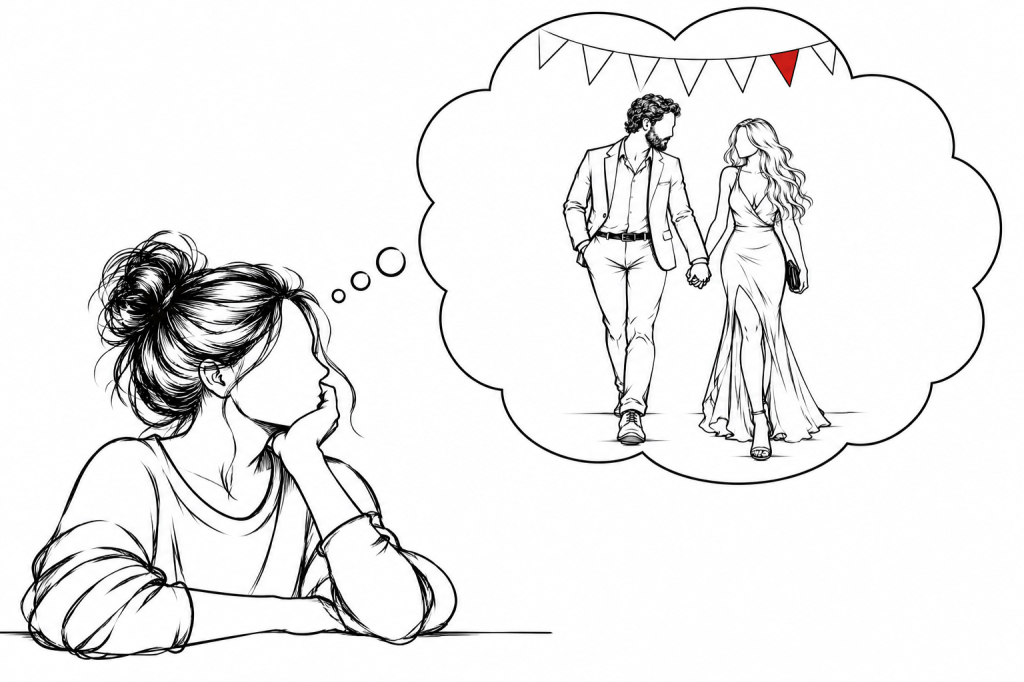
And later that evening, I saw something happen.

Stephen walked towards me holding her hand.

Even now, I can’t say with certainty what that meant.

His explanation was entirely plausible.

She’d been drinking.

She was unsteady.

He was helping her.

Maybe that is exactly what happened.

Perhaps if I could replay those minutes from somewhere above the hotel, I would watch the whole thing and discover there was absolutely nothing suspicious about it.

But there was one movement I couldn’t explain away quite so easily.

Stephen saw me.

And dropped her hand.

It was instantaneous.

That interested me more than the hand-holding itself.

Because human beings communicate enormous amounts of information through tiny automatic movements.

We withdraw a hand.

Change a facial expression.

Move away from someone.

Hide a screen.

Alter our voice.

None of those behaviours proves wrongdoing.

But sometimes they tell us that the person themselves understands that what we’re seeing might require an explanation.

Was that what happened?

Did Stephen suddenly realise how the situation would look to me?

Was he embarrassed by an entirely innocent gesture because he remembered our previous conversations?

Or did he let go because there had been something in the interaction he didn’t want me to see?

I couldn’t know.

And once again, not knowing became the problem.

Because this incident didn’t arrive in isolation.

If I’d met Stephen a week earlier and seen him helping a drunk woman into a hotel, perhaps I would have accepted the explanation without another thought.

But I wasn’t that woman anymore.

I had already spent a night unable to contact him while he was staying with an ex.

I’d already discovered that the promise I was trying to reassure myself he would keep had been broken.

I’d watched him become absorbed in my aunt and then tell me he didn’t know how to flirt.

I’d heard about infidelity during his marriage.

I’d listened to him describe the rule he’d needed to stop himself crossing a sexual line.

I’d heard him tell me that J was his type.

Every new piece of information was now landing on top of something else.

My brain was building a pattern.

The problem was that I couldn’t tell whether the pattern existed in Stephen’s behaviour or only in my increasingly anxious interpretation of it.

That distinction tormented me.

I didn’t want to become jealous.

Jealousy felt ugly to me.

Possessive.

Controlling.

Insecure.

I had always thought of myself as relaxed in relationships, and I liked that about myself.

I wanted Stephen to have female friends.

I wanted him to enjoy conversations with women.

I wanted us to be able to admire attractive people together and laugh about it.

I didn’t want to spend my relationship monitoring where his eyes went.

So whenever suspicion appeared, another part of me immediately turned the scrutiny back on myself.

Are you becoming insecure?

Are you overreacting?

Has what happened before made you hypersensitive?

Is Stephen actually doing anything wrong?

Increasingly, there were two investigations taking place at once.

I was watching Stephen.

And I was watching myself watching Stephen.

That is exhausting.

Hypervigilance can develop when the nervous system learns that safety isn’t completely predictable. Once something unexpected has happened, the brain becomes more sensitive to small changes that might help it predict the next threat.

But there was a complication in my case.

Some of the things I was noticing were real.

Stephen really had shared his ex’s bed.

He really had become absorbed in my aunt.

He really had told me about previous infidelity.

He really had told me J was his type.

And now he really had been holding another woman’s hand.

The uncertainty lay in what those facts meant.

My instincts were collecting information.

My conscious mind was trying desperately not to draw an unfair conclusion from it.

Perhaps that was why I could still enjoy the evening.

And I genuinely did.

This wasn’t a terrible night retrospectively disguised as a happy one.

It was wonderful.

We looked fantastic.

We laughed.

We met fascinating people.

We smoked far too many cigarettes.

We watched extraordinary entertainment.

We stayed at Claridge’s.

Then I spent half the night apparently attempting to remove my own eyeball before discovering I’d accidentally spent an obscene amount of money on two drinks.

Those memories still make me smile.

Stephen’s joy was real too.

His enthusiasm for experiences was one of the things that made being with him so much fun.

I don’t want what happened later to steal that from either of us.

This is one of the strange things about looking back at a complicated relationship.

We sometimes imagine that once we understand the painful parts, the happy memories must somehow become false.

I don’t believe that.

I was happy that night.

Stephen and I were good together that night.

And somewhere inside that genuinely wonderful experience was one small moment that frightened me.

Both things can be true.

Perhaps that was becoming characteristic of our relationship.

Joy wasn’t being replaced by unease.

Unease was beginning to live alongside joy.

And because the joy was so substantial, the uneasy moments remained comparatively small.

Why would I throw away everything we had because Stephen had held someone’s hand?

Especially when there was an innocent explanation.

So I let it go.

But letting something go isn’t necessarily the same as forgetting it.

My nervous system seemed to be keeping its own record.

Each unexplained moment joined the others.

Not enough to produce certainty.

Just enough to make me watch a little more closely next time.

And perhaps Stephen was learning something too.

I don’t know what.

Maybe there really was nothing more for him to learn from that encounter than that an innocent act could upset me.

Perhaps he thought my increasing sensitivity around women was becoming unreasonable.

Perhaps he was beginning to feel watched.

Or perhaps he knew there had been a little more electricity in that interaction than he was admitting, even to himself.

I can’t enter his mind and settle that question.

What I can see is what was happening inside mine.

I was beginning to lose the freedom of simply experiencing Stephen.

Increasingly, I was interpreting him.

A glance could mean something.

A disappearance could mean something.

A hand suddenly released could mean something.

And because I loved him, I didn’t want any of those things to mean what I feared they might.

So I kept searching for the interpretation that allowed trust to survive.

For the moment, I could still find one.

He had been helping her.

He had told me what happened.

Nothing else had occurred that I knew about.

We’d had a wonderful evening.

There was no reason to turn it into something it wasn’t.

And perhaps I was becoming too suspicious.

That explanation allowed me to put the incident down.

But somewhere underneath my conscious reasoning, another lesson was being absorbed.

The first time my instincts had frightened me, I’d told myself I was catastrophising.

Then I discovered Stephen had shared his ex’s bed.

Now my instincts were speaking again.

I didn’t know whether to listen to them.

And increasingly, I didn’t know whether the greater danger was mistrusting Stephen when he’d done nothing wrong…

or mistrusting myself when he had.

Stephen Goes To A Party

Before Stephen left for the Lake District, we went to the cinema together for the first time since Covid restrictions had been lifted.

We saw Black Widow.

At the time, it was simply another exciting thing we could finally do together after months of restrictions. I didn’t know that going to the cinema would become one of the great shared pleasures of our relationship.

Films became more than something we watched together.

They became a language of our own.

We would talk about performances, characters, cinematography and stories long after the credits had rolled. We’d recommend things to each other, discover old films one of us had somehow missed, get excited about new releases and endlessly discuss what we’d seen.

It became a source of connection and shared joy that would last throughout our relationship.

Then Stephen returned to his father’s house in preparation for the annual Lake District holiday with his sons.

I knew I was going to miss him terribly.

His birthday would fall while he was away too, and I felt sad that I wouldn’t be there to celebrate it with him.

But if I’m truthful, I also welcomed the break.

The previous few weeks had been stressful. I’d watched Stephen become increasingly agitated and disengaged from his new job, while conversations about other women had begun appearing with uncomfortable regularity.

I hoped some time away would do him good.

Perhaps he’d come back rested and return to his training with fresh eyes.

I could probably do with some breathing space too.

Stephen’s return from the Lake District would mark the beginning of a string of gatherings and events that Covid had postponed or threatened for so long.

And we were going to begin with something spectacular.

My boss was celebrating her fiftieth birthday at Claridge’s in London with a Roaring Twenties theme.

Think The Great Gatsby.

We were invited.

Better still, we were staying overnight at Claridge’s.

Stephen needed to cut his Lake District holiday short by a day, but he didn’t mind. Neither of us wanted him to miss such an extraordinary occasion.

Looking back, I realise that during our first six months together, Stephen and I had existed largely inside our own little bubble.

Lockdown had meant relatively few parties, gatherings or social events. I’d introduced him to some family, of course, but I hadn’t really seen much of Stephen in large social situations or surrounded by strangers.

Now I would.

We had our outfits organised and headed into London.

Before checking into the hotel, I took Stephen somewhere in Soho that I knew he’d love — a place filled with interactive automata.

I was right.

He was fascinated.

And watching him explore everything reminded me of another quality I’d fallen in love with.

Stephen could embrace an experience with his whole heart.

Take him somewhere interesting and he wanted to know everything. Show him something unusual and his curiosity lit up. He didn’t stand on the sidelines pretending to be too cool to participate.

He joined in.

His enthusiasm was infectious.

Going somewhere with Stephen could make the experience itself feel bigger, and it was an absolute pleasure sharing those moments with him.

That afternoon, we arrived at Claridge’s and got ready.

I put on my long beaded evening dress, added a feathered hairpiece and bravely inserted contact lenses for only the second time in my life.

Stephen wore a black suit, bow tie and a fabulous hat.

We looked fantastic.

As we queued to enter the celebration, each couple was professionally photographed.

I love the photograph of us from that night.

We look exactly as we were.

A happy couple, dressed beautifully, excited to be somewhere extraordinary together.

The party itself was magnificent.

There were around a hundred guests, including celebrities and dignitaries, everyone dressed in their finest twenties-inspired clothes.

And Stephen handled the environment beautifully.

He showed interest without being overawed. He was enthusiastic without being inappropriate. He seemed completely comfortable talking to people from very different backgrounds.

I remember admiring him.

This was one of the reasons I’d always been so proud to introduce Stephen to people.

He could walk into almost any room and find somebody to talk to.

We ate a wonderful three-course meal and drank cocktails.

And, because Stephen was a heavy smoker and I was smoking considerably more than I had since my twenties, we spent an embarrassing amount of the evening outside.

Smokers’ corner at Claridge’s was quite a sight.

There we’d all be, dressed to the nines in evening gowns, suits, feathers and bow ties, huddled outside puffing away.

There is something oddly democratic about a smoking area.

Status seems to disappear.

Wealth becomes irrelevant.

Everybody just wants a light.

Some of the funniest, deepest and most honest conversations Stephen and I ever had with complete strangers began over cigarettes.

I wished neither of us smoked.

But I loved those moments with him.

We spoke to all sorts of people that evening, including some very attractive and interesting women.

And I was comfortable.

In fact, I noticed that Stephen seemed to have taken on board some of what we’d discussed after the incident with my aunt.

He included me.

He didn’t become completely absorbed in another woman and forget I was there.

He was warm, interested and charming, but I still felt connected to him while he was doing it.

I noticed the difference.

And it reassured me.

Then a much younger woman joined us outside.

She was probably in her early twenties.

Almost immediately, I detected subtle changes in Stephen.

Nothing dramatic.

His attention sharpened.

His gaze lingered.

There was a slight nervousness about him, almost a shyness he seemed to be trying to conceal.

He became very interested in her very quickly.

And she appeared interested in him too.

These were tiny signals.

But by now I was noticing them.

Eventually, we all returned to the party.

After dinner, we were treated to a spectacular burlesque performance.

The dancers were extraordinary — beautiful, athletic women in elaborate costumes performing incredibly polished routines.

I was completely comfortable with Stephen enjoying it.

Why wouldn’t I be?

He was a sexual man.

The women were gorgeous.

I had eyes too.

My mother had always been wonderfully relaxed about this sort of thing. If an attractive, scantily dressed woman appeared on television, she’d practically call my father into the room to make sure he didn’t miss it.

I’d inherited some of that attitude.

I didn’t want a relationship in which either of us had to pretend we’d stopped noticing attractive people.

Harmless sexual appreciation didn’t threaten me.

What troubled me was something quite different.

It was when attraction entered an actual interaction.

When attention became personal.

When sexual energy seemed reciprocal.

When I started to feel excluded from something happening directly in front of me.

That distinction was becoming increasingly important.

After the entertainment, the disco started.

I love dancing.

Stephen, surprisingly, didn’t enjoy dancing publicly.

This always amused me because in the privacy of my bedroom he could dance for me with absolutely no inhibition — and he had moves.

Those spontaneous little performances were some of my favourite moments with him.

But that night, I danced alone.

We’d only recently returned from another cigarette break when I headed onto the dance floor.

Before the first song had even finished, I glanced back towards our table.

Stephen was gone.

Surely he hasn’t gone outside for another cigarette already?

And then:

Why didn’t he wait for me?

I left the dance floor and headed towards the vestibule leading to the street.

Halfway there, moving through the crowd, I saw Stephen coming towards me.

He wasn’t alone.

He was walking back into the hotel holding hands with the young woman we’d spoken to earlier.

My stomach dropped.

Perhaps in another relationship, or at another point in my life, I might not have reacted so quickly.

But there was already history.

The night with his ex.

The flirting with my aunt.

The stories about his marriage.

The increasingly frequent conversations about women.

And now this.

Then Stephen saw me.

And immediately dropped her hand.

That tiny movement changed everything for me.

Had he simply continued walking towards me with her hand in his and said, She’s had too much to drink, I’m helping her inside, perhaps I would have thought very little of it.

But he let go the instant our eyes met.

My suspicion ignited.

The young woman continued walking in the opposite direction while Stephen approached me.

I couldn’t hide my expression.

“What’s going on? Why did you leave? Why were you holding her hand?”

Stephen explained that she’d become unsteady after drinking and he’d been helping her safely back inside.

It was entirely possible.

But my mind was already interrogating the story.

She hadn’t seemed particularly drunk when we’d spoken to her only a short while earlier.

There were always plenty of people outside, so how had Stephen become the person responsible for bringing her back?

Why had he returned outside so quickly?

Why had he held her hand rather than simply walking beside her?

Why had he dropped it the moment he saw me?

And if she genuinely needed physical support, why was she suddenly capable of walking away perfectly well without it?

Perhaps there were innocent answers to every one of those questions.

That was the problem.

I didn’t know anymore.

I hated how suspicious I sounded.

I’ve never wanted to be the jealous girlfriend.

Quite the opposite.

I’d always taken pride in being relaxed and trusting in relationships.

I didn’t want to monitor a man’s eyes.

I didn’t want to analyse body language.

I didn’t want to interrogate innocent interactions between my boyfriend and other women.

Yet here I was doing exactly that.

And I couldn’t work out whether Stephen was giving me reasons to become suspicious or whether the previous incidents had simply made me hypersensitive.

Maybe he’d done nothing wrong.

Maybe he’d just helped a drunk young woman.

But I couldn’t unsee him dropping her hand when he saw me.

The incident soured the evening slightly, but I didn’t want it to ruin such a wonderful occasion.

So for the time being, I let it go.

We carried on enjoying ourselves.

When the main party finished, we were invited to a private afterparty in one of the hotel’s smaller bars.

Assuming the drinks were still complimentary, I ordered a gin and tonic and Stephen had a double whisky.

Then we finally returned to our room.

Under different circumstances, we might have had an enormous argument.

Instead, I encountered a more immediate crisis.

My contact lenses.

At three o’clock in the morning, after hours in a smoky environment, my eyes were painfully dry and I couldn’t get them out.

Stephen fell asleep while I battled with them.

Eventually, I managed to remove one.

The other tore in half.

Part of it remained stuck to my eyeball.

After what felt like an eternity of poking at a bloodshot, streaming eye, I admitted defeat and crawled into bed.

The following morning, I looked dreadful.

My eyes were red, swollen and watering.

Then, at checkout, came another surprise.

Apparently, the afterparty bar hadn’t been free after all.

That gin and tonic and double whisky had cost me somewhere in the region of £110.

At that point, I could only laugh.

We left one of London’s finest hotels and headed straight for the nearest optician, where I needed somebody to remove the remaining piece of contact lens from my eye so that I could see well enough to drive us home.

It was an absurd ending to an extraordinary couple of days.

And despite the incident with the young woman, much of the experience had been wonderful.

I’d watched Stephen embrace London, the automata, the hotel, the people, the food, the entertainment and the sheer spectacle of it all with the infectious enthusiasm I adored in him.

We had looked wonderful together.

We had laughed.

We had connected with strangers.

We had made another memory.

But there was now a familiar interruption inside all that happiness.

A tiny moment I couldn’t quite put away.

I had seen Stephen holding another woman’s hand.

Maybe his explanation was completely innocent.

Maybe I was becoming too suspicious.

But increasingly, that was the problem.

I was no longer sure whether my mistrust was something I needed to fix in myself, or something Stephen’s behaviour was teaching me to feel.

Stephen Goes To Work (REFLECTION)

For six months, I had believed that greater stability would help Stephen become more settled.

A job.

A home.

Routine.

Purpose.

A loving relationship.

Those things seemed like answers.

And yet, once Stephen had them, he seemed to become more unsettled rather than less.

What is striking to me now is that this wasn’t something I only recognised with hindsight.

Even then, I was beginning to question whether Stephen’s unhappiness was really being caused by his circumstances.

When he told me that he thought whatever was troubling him might have something to do with work, I told him I didn’t think it was situational.

“It seems every time we remove what troubles you, you remain troubled by a new thing,” I said.

“I fear this may chase you the rest of your life.”

That is difficult to read back now.

Because somewhere inside me, I had already begun to understand something I wasn’t yet ready to fully accept.

Perhaps the instability wasn’t only around Stephen.

Perhaps some of it travelled with him.

Recognising that possibility, however, was very different from knowing what to do with it.

I was still enormously proud of him for getting the job.

On paper, it seemed to suit him. Stephen was socially confident, curious about people and capable of great compassion. I could imagine him being very good at work that involved talking to people and understanding difficult circumstances.

But applying for a job and sustaining one are very different things.

Some of the training may also have genuinely triggered painful memories for him.

When he told me he was struggling through a morning of training about domestic abuse, my instinct was to help him find a way through it. I encouraged him to think about the people he might eventually be able to help rather than allowing the subject to pull him backwards.

That was how I approached most difficulties with Stephen.

Understand the problem.

Find another way of looking at it.

Work out what might help.

Keep moving.

The difficulty was that I increasingly didn’t know how much of what I was seeing could reasonably be explained by trauma.

The smoking.

The restlessness.

Missing the beginnings of meetings.

Drinking whisky while working.

Disengaging from training.

Behaving almost adolescently when he was supposed to be working.

I didn’t know where trauma ended and responsibility began.

And because I knew what Stephen had been through, I sometimes became uncertain about how far I was entitled to challenge him.

Not because I stopped challenging him.

I didn’t.

But challenging someone becomes complicated when you are simultaneously wondering whether the behaviour upsetting you might be a symptom of something painful.

Empathy can make judgement surprisingly difficult.

The pub bothered me for a similar reason.

Going for a drink after work is hardly suspicious behaviour.

But Stephen had already told me a story about another period of his life in which going to the pub had been part of avoiding going home.

So when he did something similar after moving in with me, my brain connected the two things.

That was increasingly how my mind worked.

The night at his ex’s.

The broken promise.

My aunt.

The stories about his marriage.

The pub.

J.

Each new detail arrived carrying all the ones that had come before it.

Once trust has been damaged, very little arrives alone.

Sometimes my mind was joining dots that didn’t need joining.

Sometimes it was noticing something accurately.

The problem was that I couldn’t tell which was happening.

Even when my instincts told me something was wrong, instinct could only take me so far. It could make me ask questions. It could make me notice changes. It could tell me that an explanation didn’t quite fit.

It couldn’t give me information I didn’t have.

Collecting Stephen from work is probably one of the clearest examples of how my role in the relationship was beginning to change.

Initially, it was ordinary care.

I had deliberately arranged time off partly so that I could help settle him into our home and his new job.

Stephen himself had told me how much easier life felt when we were together.

“With you…… Even the mundane feels nice. Hard things are easy. Good things are great!”

I believed him.

And I liked making life easier for him.

So collecting him meant seeing him sooner, saving him a bus journey and helping establish the life we had planned.

Then another motive crept in.

If I collected him, he couldn’t stop at the pub.

That is such a small shift, but I think it matters.

Care had begun to mix with anxiety.

I didn’t want to be a suspicious girlfriend.

But I didn’t want to become a managing girlfriend either.

What I really wanted was a third option.

A partner whose behaviour made neither role necessary.

J created another version of the same problem.

Stephen told me she was his type.

Part of me was reassured by that openness.

Surely someone intending to do something inappropriate wouldn’t tell his girlfriend that he found another woman attractive?

I repeatedly returned to that kind of reasoning.

At least he’s telling me.

And disclosure can be a form of honesty.

But I would eventually learn that disclosure doesn’t automatically make a situation safe.

Someone can tell you that they find another person attractive and still struggle with what they do with that attraction.

Women were beginning to appear in our conversations more often.

J.

Women walking around town.

My son’s girlfriend.

Any one of those things in isolation might have meant very little.

Together, they created a feeling that Stephen was unusually preoccupied with female attractiveness.

I didn’t expect him to stop looking at women.

I didn’t expect attraction to disappear because he loved me.

I expected him to know what to do with it.

Instead, I sometimes found myself explaining boundaries that felt instinctive to me.

Don’t stare.

Don’t make somebody uncomfortable.

My son’s girlfriend belongs in a completely different mental category.

Make sure a young woman living in our home feels safe.

The fact that I quietly checked with her matters to me now.

She told me Stephen had never done anything to make her uncomfortable, and I believed her.

But I had reached a point where I felt the need to ask.

My concern was beginning to extend beyond protecting my relationship.

I was checking the environment around it too.

And still, I loved him enormously.

That is important.

I wasn’t standing outside the relationship clinically assessing Stephen’s behaviour.

I was waking up beside the man I loved.

I was attracted to him.

We laughed.

We cooked dinner.

We went shopping.

We watched television.

We made plans.

We had sex.

There were countless ordinary moments in which nothing was wrong.

And then something would happen that unsettled me again.

Love and alarm were beginning to coexist more regularly.

I think that is where hypervigilance really begins.

Not simply in noticing danger, but in the exhausting process of continually trying to decide whether something is dangerous at all.

Is this normal?

Is this his mental health?

Is this trauma?

Is he immature?

Should I challenge it?

Am I being controlling?

Am I overreacting?

Or am I seeing something important?

Those questions are exhausting when you ask them often enough.

There may have been many things happening for Stephen at once.

Perhaps the demands of a full-time job were harder for him to sustain than getting the job had been.

Perhaps living together changed our relationship from something exciting and episodic into something ordinary and accountable.

Perhaps emerging from lockdown into colleagues, offices and social freedom provided a kind of stimulation he hadn’t experienced for a long time.

Perhaps it was several things at once.

I don’t know.

What I do know is that the stable version of Stephen I had expected to emerge once his circumstances improved wasn’t appearing.

And the unsettling thing is that I had already begun to recognise that at the time.

I had told him myself that I didn’t think it was situational.

But recognising a pattern and accepting its implications are two very different things.

If circumstances were the problem, then circumstances could be changed.

A better home.

A better routine.

A different way of approaching work.

More support.

More understanding.

There was always something we could do.

If the problem was something Stephen himself needed to understand and manage, however, then there were limits to what I could change for him.

I wasn’t ready to accept those limits.

Especially because Stephen himself had given me reason to believe that my presence made a difference.

He had told me that hard things were easier with me.

That the mundane felt nice.

That being together made life more achievable.

Those were beautiful things to hear from someone I loved.

But they also reinforced an idea that was becoming increasingly important in our relationship:

If I could help create the right environment — stable enough, supportive enough, calm enough — perhaps Stephen would be okay.

So I kept trying.

Encouraging.

Collecting.

Reasoning.

Making suggestions.

Setting boundaries.

Watching.

Keeping the plan moving.

And slowly, without really noticing it, the ordinary domestic life I had wanted so badly was becoming remarkably unordinary.

By the time Stephen was preparing to go to the Lake District with his father and sons, I was looking forward to the house being quiet.

I would miss him.

I loved him.

But I wanted a few days in which I didn’t have to watch, interpret, encourage, question or wonder.

Perhaps that was the first faint understanding that loving Stephen could also be exhausting.

But I didn’t interpret my exhaustion as a reason to leave.

I interpreted it as evidence that we needed a reset.

A holiday.

Some space.

A clear head.

Then perhaps the man I had fallen in love with would come back.

I still believed he was in there.

I didn’t yet understand that I was beginning to organise my hope around the return of a version of Stephen I had already known.

And each time he returned, even briefly, it reassured me that waiting for him had been worthwhile.

Stephen Goes To Work

​Since Stephen moved in, one of my greatest pleasures was simply waking up beside him every morning.

After six months of late-night meetings, phone calls, the bedsit and constantly travelling backwards and forwards, there was something wonderfully ordinary about having breakfast together before work.

This was what I’d wanted.

A normal life with the man I loved.

Stephen’s new office was only a bus ride into the centre of town, and on his first morning I sent him off feeling ridiculously proud — like a parent watching their child disappear through the school gates for the first time.

This job felt important.

Not just for Stephen, but for us.

The pay, conditions and benefits were excellent. When Stephen discovered exactly what his salary would be, I told him, “You’ve really landed.”

I wanted him to make the most of the opportunity.

“Open ears, closed mouth,” I advised him.

“And a level of humility.”

“I will try to remember that,” he replied.

I had even deliberately arranged some time off work around the beginning of his new job. I told him it would give me a chance to do some work on our home and “settle you in to home and the job.”

“Perfect,” he replied.

In my mind, the two things were connected. We had spent so much time talking about how to make this transition work that I wanted to give Stephen every possible chance to settle into both his new home and his new working life.

During that first week he was issued with a laptop and lanyard, began his training and met the other people who were starting alongside him.

I loved coming home and hearing about his day.

He told me about his new colleagues and the friendships beginning to form. I was pleased for him. In the six months I’d known Stephen, I’d become conscious that his world was considerably smaller than mine. A job wasn’t only going to give him financial independence. It would give him structure, purpose and a social world of his own.

One of the women he mentioned was J.

They had lunch together and there was something strangely familiar about her. Stephen wondered whether they might have crossed paths on a dating site at some point.

He also told me that she was his type.

I didn’t particularly like hearing that, but I was reassured by the fact that he was telling me. If there was anything to worry about, surely he wouldn’t be openly discussing her with me.

It wasn’t long, however, before small things began to unsettle me.

Within days of starting work, Stephen went to the pub by himself after finishing for the day.

It bothered me more than I thought it should.

He had previously told me that during his marriage he would often avoid going home, stopping at the pub instead. Now, after all those months of telling me how desperately he wanted us to live together, I couldn’t understand why he would want to delay coming home to me.

I began offering to collect him from work.

There were perfectly ordinary reasons for doing that. It saved him getting the bus. I got to see him sooner. I wanted to help him settle into this new life.

Stephen had told me before that being with me made things easier. Even mundane things felt nice. Hard things felt easier.

I liked being that person for him.

But there was another thought beginning to creep in too.

If I collected him, he couldn’t go to the pub.

I didn’t want to manage Stephen. I didn’t want to monitor where he went or what he did.

But increasingly, I noticed that I felt safer when I knew where he was.

One evening I met J outside his workplace when she was with Stephen and another colleague.

There was nothing obviously threatening about her. Meeting her should probably have reassured me.

Instead, I found myself wondering why Stephen had been so interested in her.

Perhaps that said more about me than it did about him.

As the weeks passed, much of Stephen’s training moved online and he began working from home.

Our ordinary domestic life continued around it.

We talked about dinner and shopping, watched football, laughed, made plans and enjoyed our evenings together.

But alongside that ordinary life, I began noticing things that worried me.

Stephen stopped getting up with me in the mornings.

Sometimes he would get up for a cigarette with me and then go back to bed.

Although we had created a proper home office for him, he often worked from the kitchen instead. He wasn’t always properly dressed. He smoked constantly, sometimes going outside every fifteen or twenty minutes.

He occasionally missed the beginning of meetings or seemed distracted by things completely unrelated to work.

This surprised me.

Stephen was intelligent and could be incredibly studious when something interested him. More importantly, this job mattered. Employment had been the boundary I had set before he could move into my home. His salary represented independence and the possibility of the future we had been planning.

Yet he seemed increasingly casual about it.

He also began complaining about people, procedures and aspects of the training.

I encouraged him to persevere.

Some of the training covered extremely difficult subjects. One morning he messaged me:

“🤬 really struggling today!”

The entire morning had been about domestic abuse.

“That’s hard, darling. ❤️” I replied. “Just think… mindsets: don’t focus on the past and its challenges. Think of the future and how you may help someone.”

I knew some subjects could touch painfully on Stephen’s own history, and I tried to understand that.

But it was becoming difficult to understand where his distress ended and something else began.

He seemed increasingly agitated.

He smoked more.

He became restless and sometimes almost adolescent in the way he behaved during online meetings.

I kept trying to help.

I encouraged him. Reassured him. Tried to reframe things when he became negative. Tried to make home comfortable. Tried to give him reasons to persevere.

This was supposed to be our six weeks to find our groove.

But instead of settling into it, Stephen seemed to be becoming more unsettled.

One evening in early July, while we were apart, I could sense something was wrong.

Stephen told me he thought it might have something to do with work, although he didn’t know exactly what.

I found myself questioning that.

“I don’t think it’s to do with a thing or an environment,” I told him. “Nothing in the future will fix it. It’s within you.”

I tried to explain what I meant.

“It seems every time we remove what troubles you, you remain troubled by a new thing.”

I worried that whatever was making Stephen unhappy might follow him regardless of how much his circumstances improved.

“I fear this may chase you the rest of your life,” I told him.

“I don’t think it’s situational.”

Stephen said he didn’t know what I meant.

Perhaps it was a conversation better had when we were together.

Later that Friday evening he was now at his dad’s to spend a weekend with his sons. He messaged:

“I am so confused.”

I asked him why.

There was no immediate answer.

I could see that he was still online.

Something about it bothered me.

“Are you talking to someone else?” I asked.

“You’re staying online but not responding.”

Stephen said he didn’t know what to say and that he had just gone upstairs to bed.

I suggested we talk on the phone.

And we did.

At the time, I had no idea what, if anything, had prompted the strange feeling I had that evening.

I only knew that something about Stephen felt different.

As the weeks went on, other things added to my unease.

Then came 19 July 2021 — so-called Freedom Day — when most remaining legal Covid restrictions in England were lifted.

My sons wanted to celebrate properly.

They planned to go clubbing and bring their friends back to the house afterwards. I thought they deserved to enjoy themselves after everything young people had missed during lockdown, so Stephen and I agreed to get out of their way.

I booked us a hotel in the centre of town.

It seemed perfect.

I could go to work as usual, and Stephen’s office was practically around the corner.

Except Stephen had apparently arranged to continue working remotely because of his mental health.

That disappointed me.

Instead of going into the office, he would now be alone in the hotel room while I was at work.

One evening when I returned, Stephen told me something that made me uneasy.

He’d been outside the hotel having a cigarette when J happened to walk past on her way to work.

She was surprised to see him.

Why was Stephen standing outside a hotel when he was supposedly working from home?

I don’t know exactly what explanation he gave her.

But Stephen told me he’d also mentioned that he’d been drinking whisky while working.

I couldn’t believe it.

Why would you tell a colleague that?

Why would you be drinking whisky during the working day at all?

I was becoming increasingly frustrated.

He had this fantastic opportunity and seemed determined not to take it seriously.

One evening, we went to Nando’s for dinner.

While I was queuing, Stephen suddenly disappeared.

I looked around and couldn’t see him anywhere.

Then I spotted him emerging from a convenience store.

He’d bought cigarettes.

This irritated me enormously because one of the agreements we’d made when he moved into my home was that he wouldn’t smoke cigarettes anymore, only rolling tobacco.

Perhaps to somebody else that distinction sounds ridiculous.

But we’d discussed it.

He’d agreed.

And now he’d simply done what he wanted anyway.

We argued.

That night, there was an unpleasant atmosphere between us at the hotel.

Increasingly, it seemed that small agreements I’d believed we’d made together didn’t necessarily carry the same weight for Stephen that they did for me.

There was something else happening that summer.

Women were becoming a subject.

With restrictions lifted and the weather exceptionally hot, the town centre was suddenly full of people again.

Stephen told me that he was finding it difficult seeing so many young women wearing very little in the summer heat.

He said he couldn’t help looking at them and that his staring sometimes made him feel awkward.

I tried to reassure him.

Finding other people attractive doesn’t disappear simply because you’re in a relationship.

I wasn’t expecting Stephen to become blind.

I told him that noticing attractive women was perfectly natural. He just needed to make sure he wasn’t staring in a way that made anyone uncomfortable.

Then he told me something that was much harder for me to dismiss.

My son’s girlfriend was living with us at the time.

She was young and, because it was exceptionally hot, she sometimes wore shorts and crop tops around the house.

Stephen told me that he found this distracting.

That alarmed me.

This wasn’t an anonymous woman walking through town.

This was my son’s young girlfriend.

She lived in my home.

She needed to feel completely safe there.

I told Stephen that he needed to mentally place her in an entirely different category. She was my son’s girlfriend and young enough to be treated like family. Whatever automatic physical response he might experience, his behaviour towards her needed to reflect that.

I wasn’t sure whether Stephen fully understood what I was trying to say.

And because there were times when the two of them would be alone in the house while I was at work, I quietly spoke to her too.

I told her that if Stephen ever said or did anything that made her feel uncomfortable, she must tell me.

She reassured me that everything was fine.

Stephen hadn’t done anything to concern her.

I was relieved.

But the fact that I’d felt it necessary to have the conversation troubled me.

As August approached, I felt increasingly exhausted.

Only weeks earlier, I’d been joyfully clearing drawers and wardrobe space, imagining breakfast together, dinner after work and the beginning of our ordinary domestic life.

Instead, I was watching Stephen struggle with the job we’d both been so excited about.

He was agitated.

He was smoking heavily.

He was drinking when he should have been working.

He was complaining about his training.

He seemed increasingly distracted and disengaged.

And somehow, alongside all of that, other women had suddenly become a recurring subject in our relationship.

J.

Women in town.

My son’s girlfriend.

And, inevitably, my mind sometimes returned to his ex and the bed he’d promised not to share.

I didn’t know what any of it meant.

Perhaps it meant nothing.

Perhaps I was becoming oversensitive because my trust had already been shaken.

Perhaps Stephen was simply struggling with his mental health and needed some time to settle.

Thankfully, he had two weeks’ holiday approaching.

For the first week, he would be going to the Lake District with his father and his sons on their annual family trip.

I knew I would miss him.

But for the first time since we’d met, I also found myself looking forward to being apart.

I needed some space.

Only a few weeks earlier, I’d thought Stephen moving in would mark the beginning of the life we’d been waiting for.

Instead, as I watched him prepare to leave for the Lake District, I found myself hoping that a little distance might somehow bring the man I’d fallen in love with back to me.

Stephen Moves In (REFLECTION)

Reading those conversations again, I’m struck by how sensible it all seemed.

There is a version of this story that could easily be told differently.

Stephen was unemployed when I met him.

Within months, I let him move into my home.

Knowing everything that happened afterwards, those two sentences could be placed beside each other and made to look like evidence of terrible judgement.

But that isn’t what happened.

I had been clear from very early in our relationship that Stephen couldn’t live with me while he wasn’t working.

I loved him.

I wanted to be with him.

I hated the constant travelling backwards and forwards.

I knew he disliked the bedsit and struggled with being alone there.

But I still held the boundary.

Get a job first.

Then we can talk about living together.

And he did.

Not just any job, either.

It was a proper job with a good salary, doing something I genuinely believed suited him.

For the first time, I could see the possibility of us functioning as two working adults building a life together.

I had my income.

Stephen would have his.

I was already saving.

We could both contribute.

We could make plans.

There was nothing obviously reckless about that.

In fact, what surprises me most when I read the messages now is how much thought we gave to the transition.

We talked about money.

I talked to my sons about household contributions.

Stephen and I discussed what he would contribute.

We considered whether he might actually be better remaining at the bedsit while he established himself at work.

We thought about routines.

Sleep.

Shopping.

Cooking.

Showers.

Work.

Our children.

The ordinary logistics of combining two lives.

I even recognised that Stephen was facing several major changes simultaneously and told him that we needed to take the situation seriously.

“Really strategise to get this right.”

Those aren’t the words of a woman blindly sweeping a man into her home because she is in love with him.

I was trying to think ahead.

And perhaps that matters because hindsight has a habit of making bad outcomes look inevitable.

Once we know how something ended, every earlier decision can begin to look like an obvious mistake.

But decisions aren’t made with hindsight.

They are made with the information available at the time.

And at that time, the information looked encouraging.

Stephen had found employment.

He was excited about it.

I believed he would be good at it.

We were extraordinarily happy together.

We communicated constantly.

We were deeply attracted to one another.

We talked about marriage and a future.

And, importantly, Stephen seemed every bit as invested in protecting the relationship as I was.

When he worried about everything changing at once, the thing he was frightened of losing wasn’t the job.

It was us.

“I’d rather the job failed than us.”

“There will always be other jobs and other opportunities.”

“We are a one off.”

Those words meant something to me.

They told me that I wasn’t dragging Stephen towards domesticity while he reluctantly followed.

He wanted this too.

Perhaps even more urgently than I did.

And yet, reading the conversations now, there is another strand I notice.

It is subtle.

Nothing about it felt unhealthy at the time.

Stephen struggled when we were apart.

He found the bedsit lonely.

He didn’t sleep particularly well there.

Being with me, he said, made everything else feel easier and more achievable.

And I took that seriously.

When we considered whether he should establish his working routine from the bedsit before moving in, one of my concerns was whether he would cope.

Would he sleep?

Would he wake up alone and struggle to motivate himself?

Would he come home to an empty flat and become miserable?

Could that jeopardise the job?

I wanted him to succeed.

So my thinking naturally moved towards a question that would become increasingly familiar over the years ahead.

What does Stephen need in order to be okay?

At the time, there was nothing strange about asking it.

That is one of the things people do when they love each other.

We support.

We accommodate.

We think about what will help the other person thrive.

And Stephen was thinking about our relationship too.

This wasn’t yet a story of one person endlessly giving while the other endlessly took.

We were two people trying to work something out together.

But I can see the beginnings of something in myself.

When Stephen anticipated difficulty, I instinctively began looking for the solution.

If the bedsit made him lonely, perhaps he shouldn’t be there.

If starting work and moving house simultaneously might overwhelm him, perhaps we could structure the transition.

If routine was difficult, perhaps we could create one together.

If several competing demands might cause something to “slip”, perhaps we could strategise so nothing did.

There was love in that.

There was practicality in it.

There was also, perhaps, the earliest suggestion of how easily I could begin organising myself around somebody else’s ability to cope.

I don’t think I could or should have recognised that then.

There was nothing obviously alarming to recognise.

But knowing myself better now, I can see how naturally the role suited me.

I liked helping.

I liked solving problems.

I liked creating stability.

I liked making a home feel safe.

And Stephen seemed to need precisely those things.

In that sense, we fitted together beautifully.

At least at first.

There is another part of this period that feels important when I look back.

My bedroom.

Moving the bed.

Emptying the drawers.

Clearing the wardrobe rail.

Making room for his things amongst mine.

They were such ordinary acts.

But perhaps that is exactly why they mattered.

I wasn’t merely giving Stephen somewhere to stay.

I was making space for him inside a life that had previously been mine.

My home had been my security.

My bedroom was my sanctuary.

I liked order.

I liked knowing where things belonged.

And now I was willingly disturbing some of that order because having Stephen there mattered more to me than preserving everything exactly as it had been.

That is what commitment requires to some extent.

Two lives cannot become one shared life without each person giving up a little territory.

I wasn’t losing myself by clearing a wardrobe rail.

I was making room for someone I loved.

And I was excited to do it.

Perhaps the most poignant part of the messages is how ordinary our ambitions were.

“So, move in, then use six weeks to plan OUR routine?”

“Six weeks just to find our groove…”

“That sounds like Home.”

Home.

Not excitement.

Not drama.

Not grand declarations.

Home.

Bedtimes and showers.

Dinner and shopping.

Work and children.

Coming home at the end of the day and finding each other there.

That was what I wanted.

For all the intensity of our beginning, I wasn’t actually chasing intensity.

I was chasing ordinary.

I wanted the relationship to settle.

I wanted the uncertainty and travelling backwards and forwards to give way to something dependable.

I wanted us to become boring in the loveliest possible way.

And everything seemed to suggest that was exactly where we were heading.

There was work.

There was money.

There was planning.

There was extraordinary physical intimacy.

There was affection.

There was a future we both talked about as though it belonged to us.

Even the way Stephen desired me contributed to that sense of security.

I didn’t feel as though I had to compete with some impossible physical ideal.

I was carrying more weight than I wanted, and he seemed entirely unconcerned.

He made me feel desirable exactly as I was.

I loved that about him.

Perhaps because it seemed to confirm something I already believed about the relationship.

That what existed between us was deeper than surfaces.

That we had chosen each other as whole people.

I had no reason then to imagine how complicated that particular belief would eventually become.

At the time, I simply felt loved.

Wanted.

Chosen.

Secure.

That is important to remember.

Because when a relationship later becomes painful, there can be a temptation to rewrite its beginning so that the ending makes sense.

To search backwards for the moment when I should have known.

The obvious warning.

The foolish decision.

The door I should never have opened.

But I don’t think Stephen moving in was one of those moments.

I had set a boundary.

He had met it.

We had discussed the practicalities.

We had identified potential difficulties.

We had made a plan.

And then I opened my home to the man I loved.

What I couldn’t know was whether the life we had so carefully planned would reveal the people we believed ourselves to be.

Living together does something that dating cannot.

Eventually, the conversations about who we are give way to the ordinary evidence of how we actually live.

There would be plenty of time for that evidence to emerge.

But on the day Stephen moved in, I wasn’t standing at the edge of something that felt dangerous.

I was standing at the beginning of something that felt stable.

I had made room beside my bed.

I had emptied his drawers.

I had cleared a rail in my wardrobe.

We had six weeks to find our groove.

And, for the first time, the future we had spent months talking about was no longer somewhere ahead of us.

We were living in it.

Stephen Moves In

​It’s now spring 2021, and Stephen still has the bedsit.

He’s receiving help from government agencies to find employment when an unexpected opportunity comes his way: a role working for the same government department that has been helping him find work.

I’m immediately excited.

I can see Stephen being brilliant at it.

He’s fantastic with people, loves conversation and has a natural ability to engage with people from all walks of life. He’s also compassionate towards those who find themselves on the fringes of society, so the work seems particularly well suited to him.

The salary isn’t to be sniffed at either.

By this point, I’ve already started thinking more seriously about our financial future.

I’ve been crunching numbers, looking at my own income and savings and considering what I might be able to put away over the coming year. I tell Stephen that I feel inspired to start saving to give us the best possible start.

A decent income for Stephen makes those plans suddenly feel much more achievable.

We could both save.

We could make plans.

Perhaps some of those dreams we’ve spent the past few months talking about might actually begin taking shape.

Stephen is remarkably confident about his chances.

He tells me that he has to be careful which jobs he applies for because, once he reaches the interview stage, he tends to get them.

I’m impressed.

And remarkably confident too.

This feels like a slam dunk.

Stephen prepares thoroughly for the interview.

Then, when it’s time, he throws on a wonderfully creased seventies shirt as though ironing it would somehow destroy its character.

I look at him and think:

My boyfriend is so cool.

The interview goes well.

And after several more stages, including identity checks and the usual administrative hoops, Stephen gets the news.

He’s got the job.

We’re ecstatic.

I’m enormously proud of him.

But getting the job also means something else.

For months, I’ve been clear that Stephen can’t simply move into my house while he isn’t working.

Now that obstacle has disappeared.

But despite how much we both want to live together, we don’t simply throw his belongings into the car and hope for the best.

We talk about it.

A lot.

In fact, even before Stephen gets the job, we’ve begun discussing what living together might actually look like.

I’ve spoken to my sons about household contributions and worked out what seems fair while they are still living at home. Stephen and I talk about money too.

We talk about whether it might actually be more convenient for him to remain at the bedsit once he starts work.

Neither of us particularly likes that idea.

Then, once the job becomes real, the conversations become more serious.

Stephen is worried about how many things in his life are changing at once.

A new relationship.

A new job.

A new routine.

Living with me.

Continuing to be there for his family.

He tells me he finds it easier to focus on one thing at a time and worries that if he tries to adapt to everything simultaneously, something might slip.

I understand his concern.

And I have one of my own.

“I think we have to take this more seriously than we have,” I tell him. “Really strategise to get this right.”

The last thing I want is for all these changes to damage our relationship.

Stephen agrees.

He tells me that the part he absolutely doesn’t want to slip is us.

For a while, we consider two possibilities.

Perhaps Stephen should stay at the bedsit, start the job and establish his new working routine before moving in with me.

There is a certain logic to that.

But there is another problem.

Stephen doesn’t cope particularly well with being apart from me.

He struggles to sleep alone. He finds the bedsit isolating. He tells me that being with me seems to make everything else in his life easier and more achievable.

I worry about him trying to begin a demanding new job while simultaneously waking up alone and returning each evening to an empty bedsit.

Stephen worries about it too.

At one point, he tells me that although the job is important and a wonderful opportunity, he would rather the job failed than us.

There will always be other jobs, he says.

But you and me?

“We are a one off.”

I don’t want either to fail.

“We can have both,” I tell him.

We just need to be clever about it.

Eventually, a plan begins to emerge.

Stephen’s new job will start with several weeks of training, much of it from home.

Perhaps that gives us the perfect transition.

He can move in before the job begins.

Then, during those first weeks of training, we can concentrate on establishing our own domestic rhythm before his full working routine takes over.

What time do we go to bed?

When do we shower?

Who cooks dinner?

When do we shop?

How do we make space for ourselves, my sons, his sons, work and everything else our lives contain?

Nothing particularly romantic.

Just the ordinary mechanics of sharing a life.

“So, move in, then use six weeks to plan OUR routine?” Stephen asks.

“Six weeks just to find our groove…”

“That sounds like Home.”

And it does.

Finally, after months of snatched evenings, late nights, the bedsit, his father’s house and constantly travelling backwards and forwards, we’re going to live together.

We’ll go to bed together every night.

We’ll wake up together every morning.

It feels like something we’ve been waiting for since we met.

At the beginning of June 2021, I start preparing my bedroom.

I move the bed slightly to give Stephen more room on his side. I empty a bedside table and a chest of drawers for him. I clear an entire rail in my wardrobe for his clothes.

These seem like mundane little things, but they feel significant to me.

I haven’t shared my space with a man for a very long time.

My bedroom is my sanctuary. I’m proud of it. I’ve deliberately made it beautiful, comfortable and organised, with everything where it’s supposed to be because that makes my life feel calmer.

There is a little trepidation about giving some of that up.

What will it feel like having somebody else’s belongings everywhere?

Will he be tidy?

Will I still have enough space?

But those concerns are tiny compared with my excitement.

I love this man.

Of course I’m willing to compromise to have more of him in my life.

Stephen ties things up at the bedsit and we begin moving his belongings into my house.

I find myself imagining the ordinary life we’re about to have.

We’ll both be busy during the day.

We’ll come home from work.

We’ll have dinner together.

We’ll talk about our days, listen to music, watch something, relax and eventually climb into bed together.

Ordinary couple things.

After such an unconventional beginning, I can’t wait for us to finally experience what being a “real” couple feels like.

And underneath all that excitement is something else.

A sense that we’re doing this properly.

We haven’t simply decided that love will somehow take care of everything.

We’ve talked about money.

We’ve talked about contributions.

We’ve talked about work.

We’ve talked about routine.

We’ve talked about the pressures Stephen might face and how we can protect our relationship from them.

We are actively trying to build something sustainable.

And our physical relationship is extraordinary.

Stephen tells me repeatedly that it is the best and most comfortable sexual relationship he’s ever experienced. We’re so enthusiastic that my sons inform us during a house meeting, to our considerable embarrassment, that we’re being far too loud.

Our intimacy is playful, passionate and completely natural.

Most importantly for me, Stephen never hides his desire for me.

He makes me feel sexy.

At the time, I’m carrying about a stone more than I would have liked, but Stephen doesn’t seem remotely concerned. In fact, he once suggests that I could afford to put on a little more weight.

That surprises me.

Then I remember what he’s told me about the women he’s loved before and conclude that perhaps he simply prefers bigger women.

I think that’s wonderful.

Here is a man who seems genuinely unconcerned with conventional ideas about what a woman’s body is supposed to look like.

It’s another quality I admire about him.

Everything seems to be moving in the right direction.

Stephen has a good job to begin.

I’m thinking about savings and our financial future.

We’ve thought carefully about how to combine our lives rather than simply assuming it will work.

We’re deeply in love.

We desire each other.

We talk about marriage.

We talk about our future.

And now, finally, we’re going to share a home.

I don’t feel as though I’m taking a reckless chance on Stephen.

Quite the opposite.

I feel as though we’ve considered the risks and made a plan.

We’re not simply hoping that living together will work.

We’re going to make it work.

Six weeks to find our groove.

That sounds like home.

Stephen And My Auntie (REFLECTION)

Until that evening, Stephen’s ability to connect with people had been one of the things I loved most about him.

I was proud to introduce him.

That feeling matters because what happened with my aunt wasn’t simply an isolated uncomfortable interaction. It emerged from something I genuinely admired.

Stephen was curious about people.

He could enter somebody else’s world with extraordinary enthusiasm. He asked questions. He listened. He found connections. He made people feel interesting.

I’d watched my uncle light up while showing him around the house.

I’d watched my parents enjoy him.

I’d watched my sons engage with him.

And I’d felt proud.

Stephen could go anywhere with me.

Then I watched exactly the same quality turn into something I didn’t recognise.

His curiosity narrowed.

His attention intensified.

His body moved towards my aunt.

The rest of us seemed gradually to disappear.

And I felt something I hadn’t expected to feel while sitting beside the man who had made me feel so extraordinarily seen.

Invisible.

That contrast hurt.

Perhaps because Stephen’s attention had been so powerful when it was directed towards me.

I already knew what it felt like to occupy the centre of it.

His curiosity could make you feel fascinating. His enthusiasm could make an ordinary story seem extraordinary. His physical attention could make you feel intensely desirable.

Now I was watching another woman respond to the same energy.

And she was responding.

Whatever Stephen believed he was doing, the interaction appeared reciprocal to me.

My aunt seemed captivated by him.

And he seemed captivated by her.

I don’t know what was happening inside Stephen.

That’s one of the questions I still find interesting.

Perhaps he genuinely wasn’t consciously flirting.

Maybe when Stephen said he didn’t know how to flirt, he meant it.

There are people who consciously deploy flirtation: they know they’re creating sexual tension and enjoy doing it.

Perhaps Stephen experienced something different.

Maybe attention simply intensified when he found another person interesting. Maybe he enjoyed the response he received without consciously identifying the interaction as sexual. Perhaps the boundary between curiosity, charm, attraction and flirtation was genuinely less distinct for him than it was for me.

Or perhaps he knew perfectly well that he was flirting and didn’t want to admit it once he saw how upset I was.

I can’t know.

What matters is that his explanation and my observation were suddenly very far apart.

I watched you flirt with her.

I don’t know how to flirt.

Those two realities couldn’t easily coexist.

And that was becoming familiar.

After the night with his ex, I had tried repeatedly to reconcile what Stephen told me with what I knew had happened.

Now I found myself doing it again.

Was I misunderstanding him?

Was he misunderstanding himself?

Was he minimising something because admitting it would make him uncomfortable?

Or was I becoming suspicious because my trust had already been damaged?

That last possibility mattered enormously to me.

I didn’t want what had happened with his ex to turn me into someone who saw danger everywhere.

I didn’t want to become jealous.

I didn’t want to police harmless conversations or interpret every interaction with another woman as a threat.

That wasn’t the relationship I wanted.

So I examined myself as carefully as I examined Stephen.

Am I overreacting?

That question was beginning to appear more often.

There is a psychological reason that makes sense to me now.

Once trust has been damaged, the brain becomes more attentive to information associated with the original threat. It starts scanning.

That’s often described as hypervigilance.

But hypervigilance doesn’t necessarily mean the things being noticed aren’t real.

That’s an important distinction.

Sometimes increased vigilance produces false alarms.

Sometimes it simply means you’re noticing genuine information more quickly because you’ve learned that it might matter.

The difficult part is knowing which is which.

My concern about Stephen and women hadn’t appeared from nowhere.

Only weeks earlier, I’d expressed discomfort about him staying with an ex, received reassurance, then discovered he’d shared her bed.

Now I was sitting beside him while he became intensely absorbed in another woman and apparently forgot I existed.

Of course my nervous system connected those events.

The question was whether they actually belonged together.

I didn’t know yet.

So I did what I had increasingly learned to do.

I tried to understand.

And this time, understanding became almost educational.

Stephen gave me the impression that he genuinely didn’t understand what I meant by flirting.

So I explained it.

I distinguished charm from sexual or romantic signalling.

I talked about context.

I explained that the issue wasn’t that either of us must never enjoy attention from another human being. It was about protecting the sense of security between us.

At the time, I found that conversation strangely hopeful.

If Stephen hadn’t understood the boundary before, perhaps now he did.

That meant what had happened didn’t necessarily reveal something fundamental about him.

Perhaps it revealed something he simply hadn’t learned yet.

And once again, I found myself drawn towards potential.

Now that we’ve talked about it, things can be different.

There is something appealing about a problem that can be solved through communication.

It gives you something to do.

If the problem is misunderstanding, explain more clearly.

If the problem is an unclear boundary, define it.

If the problem is lack of experience, teach.

That approach suited me because communication was something I believed strongly in.

Relationships weren’t supposed to arrive perfectly formed. Two people learned each other.

So I didn’t ask myself why I was having to explain to a man in his forties that directing sexualised attention towards another woman while his partner sat beside him might be uncomfortable.

I asked myself how I could explain it in a way he would understand.

That’s another subtle shift I can see now.

Increasingly, when Stephen’s behaviour troubled me, my mind moved towards solving the problem.

What does he need to understand?

How can I communicate this differently?

What information is he missing?

Perhaps that was partly because I still believed the problem was informational.

If Stephen understood how something affected me, surely he wouldn’t want to do it again.

That belief depended on something fundamental.

That my feelings mattered to him even when his immediate impulses were pulling his attention somewhere else.

And then there was my aunt.

Her age mattered to me, although perhaps not for the reason one might assume.

Stephen had already reassured me repeatedly that his attraction wasn’t governed by conventional ideas about age or body type.

I’d found that beautiful.

It had made me feel safer.

Now I was beginning to understand that the same openness I’d admired could have another implication.

If Stephen could see sensuality and attractiveness in women irrespective of age, size or conventional ideals, then perhaps the category of women who might capture his attention was much broader than I’d imagined.

Again, that wasn’t inherently a problem.

Being in a relationship doesn’t make other people cease to be attractive.

The question was what someone did with that attraction.

Could Stephen notice another woman and still remain emotionally anchored to me?

That was what frightened me in the garden.

For those minutes, he didn’t seem anchored to me at all.

I asked him to leave.

He didn’t respond.

I stood up.

He remained seated.

My parents and I waited in the doorway while his attention remained somewhere else.

It wasn’t merely jealousy.

It was the experience of temporarily ceasing to matter.

And then, later, came the familiar transformation.

Stephen was defensive.

I was upset.

We argued.

He fell asleep.

And I remained awake carrying the emotional consequences.

I can still picture myself sitting on that windowsill.

Smoking.

Looking out over London.

Trying to understand the man asleep behind me.

That image feels important now.

Stephen could switch off and sleep.

I couldn’t.

My mind needed resolution.

If something didn’t make sense, I turned it over repeatedly, looking for the interpretation that would make the pieces fit.

Perhaps that difference between us mattered more than I understood.

Stephen could apparently leave an unresolved conflict for the night.

I carried it into the early morning.

And increasingly, I was becoming the person doing the psychological work of the relationship.

Observing.

Questioning.

Explaining.

Connecting.

Trying to understand.

Trying to repair.

None of this meant Stephen didn’t care about our relationship.

I believe he did.

Perhaps he was doing his own internal work in ways I couldn’t see.

But from inside my experience, I was beginning to feel responsible not only for communicating my boundaries, but for helping Stephen understand why those boundaries existed.

And because I loved him, that still felt reasonable.

The conversation with my aunt hadn’t destroyed anything.

Stephen was still the funny, affectionate, fascinating man I was proud to introduce to people.

Most of our relationship remained extraordinarily happy.

But the night had given me another piece of information.

The man whose attention made me feel more visible than almost anyone I’d ever known could direct that same extraordinary attention elsewhere.

And when he did, I could disappear remarkably quickly.

After his ex, I had begun asking:

Can I trust Stephen?

Now another question was forming underneath it.

What happens to us when something —or someone else — captures his attention?

I didn’t know why that question frightened me.

Not yet.

Stephen And My Auntie

Some of my proudest moments in those early months came when I introduced Stephen to my friends and family.

He had mastered the art of conversation.

He seemed genuinely interested in everyone he met and had an extraordinary ability to find common ground with people who, on the surface, were very different from him.

My sons liked him. Although they didn’t necessarily have much in common, they all enjoyed a good debate, and Stephen could talk about almost anything.

My parents liked him too.

More importantly, they could see how happy I was.

This was one of the many things I loved about him.

My previous boyfriend had struggled socially, so there was something wonderful about being with a man I could confidently take anywhere. I never worried that Stephen wouldn’t know what to say or wouldn’t make an effort.

Quite the opposite.

I was immensely proud of him.

Eventually, the time came to introduce him to my aunt and uncle.

My aunt is my father’s sister, and I was particularly excited about this visit because I knew Stephen would love their home.

Their house has always been an emporium of curiosities.

For as long as I can remember, my aunt and uncle have been passionate collectors. They have unusual interests, fascinating objects and endless stories about the things they’ve accumulated over a lifetime.

One evening, Stephen and I visited them with my mum and dad.

After a lovely meal, my uncle offered to give Stephen a tour of the house.

Every room of their old Victorian semi-detached seemed to contain another collection. In some ways, it was like wandering through an antique shop. There was militaria, maps, crockery, silverware, paintings and countless other objects, each with its own history.

And then there was my uncle’s extraordinary lifetime collection of Rupert Bear memorabilia, reputed to be the largest in the UK.

Stephen was completely in his element.

He wanted to know about everything.

Where had this come from?

What was the story behind that?

How old was it?

My uncle was delighted.

There are few things a passionate collector enjoys more than meeting someone who is genuinely fascinated by their collection, and Stephen gave him an enthusiastic audience.

The tour must have lasted well over an hour.

Strangely, Stephen’s enthusiasm made me look at the house differently too. I’d grown up around many of these things and barely noticed them anymore. Watching him discover everything for the first time reminded me how extraordinary it all was.

I loved seeing the world through Stephen’s eyes.

Eventually, we joined everyone else in the garden.

It was getting late.

My aunt had been drinking and was already quite tipsy. She had been considered a great beauty when she was younger and, even at seventy, remained a very attractive woman.

Stephen began talking to her with his usual enthusiasm.

She told him about her new interest in singing and shared some of her fascinating stories about paranormal experiences. Stephen was intrigued and responded with stories of his own.

Initially, it was a group conversation.

My mum was involved.

My dad was there.

I was there.

But gradually, something changed.

The conversation narrowed until it seemed to exist almost entirely between Stephen and my aunt.

I watched his body language change.

He repositioned himself in his chair so that he was facing her directly, his posture open towards her. His attention became completely focused on her.

He stopped looking back at me.

He stopped including me in the conversation.

Then the subject matter changed too.

Stephen began telling increasingly risqué stories, including one about a job he’d once had that involved quality-testing adult products.

My aunt was fascinated.

And Stephen seemed to be enjoying her fascination.

What had begun as ordinary conversation was becoming something else.

Flirtatious.

My aunt was responding to it too.

She was tipsy, starry-eyed and completely absorbed in him.

Then Stephen began making suggestive comments about her sensuality.

I was sitting barely a foot away.

And suddenly I felt invisible.

What made it worse was that my parents were sitting there witnessing it too.

I tried subtly to steer the conversation somewhere else.

Stephen didn’t follow.

The innuendo continued.

Eventually, I’d had enough.

“We should go now,” I said.

Nothing.

Stephen carried on talking to my aunt as though I hadn’t spoken.

Their chairs were angled towards each other, their knees almost touching, their attention completely fixed on one another.

My mum and I stood up and walked towards the French doors leading back into the house.

“Come on, Stephen. It’s time to go.”

Still nothing.

My mum, dad and I ended up standing in the doorway waiting.

And waiting.

For what felt like nearly ten minutes, the three of us simply watched Stephen and my aunt continue their conversation as though they were the only two people in the garden.

Eventually, we practically had to drag him away.

I was furious.

But beneath the anger was something more unsettling.

Alarm.

Until then, one of the things I’d admired about Stephen was his openness about finding beauty in different kinds of women. I’d interpreted it as a lack of superficial judgement.

But I’d never seen this side of him before.

Stephen was an enormous flirt.

And if he was capable of becoming so absorbed in another woman while I was sitting beside him — with my mother and father watching too — what was he like when I wasn’t there?

That question disturbed me.

Especially because the incident with his ex had happened only weeks earlier.

I drove us home frostily.

Stephen seemed slightly drunk and, more surprisingly, completely oblivious to why I was upset.

We made the short fifteen-minute journey back to my parents’ flat and, because it was so late, everyone went to bed.

Stephen and I climbed into bed in my tiny childhood bedroom.

Then I confronted him.

We argued in whispers so my parents wouldn’t hear.

I told him how uncomfortable his behaviour with my aunt had made me.

Stephen didn’t understand.

Or said he didn’t.

He became defensive and denied that he’d been flirting at all.

He explained that because the tour of the house with my uncle had taken so long, he’d felt obliged to give my aunt his full attention afterwards. He’d spent all that time talking to my uncle, so now he was making an effort with her.

Then he said something that left me completely baffled.

“Besides, I don’t even know how to flirt.”

I couldn’t reconcile that statement with what I’d just witnessed.

Stephen also explained that he’d quickly drunk a couple of drinks to catch up with everyone else and that the alcohol had gone straight to his head.

He was clearly still tipsy.

He was also exhausted.

Before long, Stephen fell asleep.

I couldn’t.

I have never been good at sleeping after an argument.

So while Stephen snored beside me, I sat on the windowsill of my childhood bedroom, smoking cigarettes out of the third-floor window.

The rest of the flat was silent.

In the distance, I could see Greater London. Cars continued moving along the roads below as the darkness gradually began giving way to morning.

And I thought about what I’d witnessed.

My boyfriend has a way with women.

There seemed little point denying that.

But this was the same man who had presented himself to me as inexperienced with women.

The same man who now insisted he didn’t even know how to flirt.

And only weeks earlier, he’d disappeared while staying with his ex and subsequently admitted sharing her bed.

I found myself returning to that night.

Had everything happened exactly as Stephen had told me?

Was I joining together two completely unrelated incidents because I was frightened?

Or was I beginning to notice something about the man I was falling in love with that I hadn’t seen before?

I didn’t know.

Over the following days, Stephen and I talked extensively about flirting.

Strangely, the conversation gradually became less about what had happened with my aunt and more about what flirting actually was.

Stephen gave me the impression that he genuinely didn’t understand the distinction between being charming and being flirtatious.

So I tried to explain it.

To me, flirting involved verbal or non-verbal signals that introduced an element of romantic or sexual interest into an interaction, even if everything remained playful and ambiguous.

Charm was different.

Stephen was naturally charming.

That was one of the things I loved about him.

And I didn’t expect either of us to go through life never enjoying playful interactions with other people.

What mattered to me was context.

If you’re in a committed relationship, your partner shouldn’t be made to feel invisible while you direct sexual energy towards somebody else.

Their comfort should matter.

The relationship should still feel secure.

And loyalty should never be in question.

Stephen seemed receptive.

Part of me even enjoyed believing that perhaps I was teaching him something he genuinely hadn’t understood before.

I wasn’t considering ending the relationship over what had happened.

I loved him.

Most of our relationship was still extraordinarily happy, and this seemed like something we could resolve by communicating more clearly and establishing what was and wasn’t acceptable to us.

But something had shifted again.

After the night with his ex, I’d started wondering whether I could trust Stephen.

Now another question had joined it.

If this was how Stephen behaved with another woman while I was sitting right beside him, how did he behave when I wasn’t there to see it?

Stephen And The Red Flag (REFLECTION)

Until that night, my doubts about Stephen had mostly existed in the space between instinct and explanation.

Something would feel slightly wrong.

I would notice it.

I would question it.

Then more information would arrive and the feeling would settle.

This time, it didn’t.

What I remember most clearly about that night is the argument taking place inside my own head.

Stephen had disappeared.

That was a fact.

For almost three months, we’d been in constant contact, and on the one evening when I had specifically told him I felt uncomfortable, the pattern abruptly changed.

My instincts responded immediately.

Something isn’t right.

But I didn’t simply surrender to suspicion.

I challenged it.

His battery has probably died.

He’s busy.

You’re catastrophising.

Wait until you know what actually happened.

I was doing exactly what I believed a reasonable, emotionally mature person should do. I was separating feelings from facts. I was resisting the temptation to turn anxiety into accusation.

And then the following day, I discovered that the thing I’d been frightened of had actually happened.

Stephen had shared her bed.

That moment changed something in me.

Not because sharing a bed automatically meant something sexual had happened. I still didn’t know whether it had.

The deeper injury was that I had identified one particular situation that would make me feel unsafe, communicated it clearly, received an explicit promise — and then spent the night trying to persuade myself not to trust the very instinct that turned out to be correct.

I had told myself I was catastrophising.

I wasn’t.

At least not about the bed.

That distinction matters enormously to me now.

Because anxiety and intuition can feel remarkably similar from inside the body. Both can produce that tightening sensation, the racing thoughts, the feeling that something isn’t right.

The difficulty is knowing which one you’re experiencing.

And once you’ve mistakenly labelled an accurate perception as anxiety, something unsettling can happen to your relationship with yourself.

You become less certain which internal voice deserves your trust.

But there was another contradiction waiting for me.

Stephen told me the truth.

He could have said he’d slept on the sofa.

As far as I knew, there was nobody who could have contradicted him. Instead, when I asked him directly, he admitted he’d shared the bed.

That mattered to me.

It complicated everything.

If Stephen were simply a liar trying to deceive me, why tell me the one thing he knew would hurt me?

Perhaps his willingness to admit it meant the rest of his explanation was true.

Perhaps nothing sexual had happened.

Perhaps he really had been exhausted and overwhelmed.

Perhaps this was exactly what it looked like to love someone whose mind sometimes worked differently from mine.

I wanted to understand.

But understanding became remarkably difficult during our argument.

I wasn’t expecting perfection from Stephen. I wasn’t even demanding an explanation that made everything disappear.

I wanted accountability.

I promised you something. I broke that promise. I understand why that hurt you.

Had he been able to remain there with me, perhaps the rupture would have been easier to repair.

Instead, he seemed compelled to explain why his responsibility was smaller than I believed it was.

He’d been exhausted.

His head had gone.

His ex had taken him upstairs.

He hadn’t properly registered what was happening.

He couldn’t remember much.

He hadn’t consciously decided to betray me.

Perhaps all of that was genuinely how Stephen experienced the night.

I can’t know.

People under extreme emotional stress can experience impaired judgement, fragmented memory and states of overwhelm. Stephen also had a history and diagnosis that made me take the possibility seriously.

But even if his explanation was entirely accurate, another question remained.

What did that mean for being in a relationship with him?

If Stephen could become so overwhelmed that a promise made only hours earlier effectively disappeared, how was I supposed to know which promises I could rely upon?

That frightened me almost as much as the possibility that he was lying.

There seemed to be only two broad explanations.

Either Stephen had knowingly broken his promise and wasn’t being completely honest with me about why.

Or he genuinely could become so dysregulated that promises, boundaries and awareness of my feelings became temporarily inaccessible to him.

Neither possibility made me feel particularly safe.

And then I saw another Stephen.

He became angry.

Defensive.

Dismissive.

He told me I was blowing things out of proportion.

That was new.

Until then, I had known a man who seemed unusually attentive to my feelings. Now I was telling him I was hurt and somehow finding myself having to defend my right to be hurt.

Psychologically, defensiveness often appears when accepting responsibility threatens something we need to believe about ourselves. Shame can make accountability particularly difficult: if I did something hurtful is experienced internally as I am a terrible person, explaining, minimising or shifting responsibility can become a way of escaping an intolerable feeling.

I sometimes wonder whether something like that was happening for Stephen.

Perhaps admitting that he’d simply chosen the bed would have required him to see himself as someone who had knowingly betrayed a woman he believed he loved.

Perhaps the explanation protected him from that.

Or perhaps he was simply telling me exactly what happened.

I still don’t know.

What I do know is what happened to me while we argued.

I became increasingly certain that my boundary was reasonable.

So certain, in fact, that I ended the relationship.

That is important.

I didn’t discover that Stephen had broken his promise and immediately explain it away because I couldn’t bear to lose him.

My first response was to protect myself.

This isn’t acceptable.

I’m leaving.

Then something changed.

Stephen changed.

The anger disappeared and the vulnerable man returned.

He became tearful, overwhelmed and confused.

And almost immediately, something changed inside me too.

Anger had made separation possible.

His vulnerability made compassion return.

Suddenly I wasn’t only thinking about what Stephen had done to me.

I was thinking about what might be happening to Stephen.

His childhood.

His diagnosis.

His emotional instability.

His exhaustion.

His distress.

His history.

Perhaps I was expecting him to respond like somebody whose mind worked very differently from his.

Perhaps loving him meant learning that difference.

That thought opened the door I had just tried to close.

This is where compassion became complicated for me.

Empathy is the ability to step outside our own experience and imagine somebody else’s. It is one of the qualities I value most deeply.

But empathy has a vulnerability of its own.

If every hurtful behaviour can be understood through the pain of the person who caused it, the question can quietly shift from:

Was this acceptable to me?

to:

Did he have an understandable reason for doing it?

Those aren’t the same question.

I didn’t understand that yet.

So instead of deciding whether sharing the bed, disappearing and then dismissing my reaction were things I was willing to accept in a relationship, I became absorbed in understanding why Stephen might have behaved that way.

And because there were possible explanations, leaving became harder.

Then came four words I would remember for years.

Out of sight, out of mind.

I didn’t have a psychological framework for them.

I simply knew I didn’t like them.

They suggested something about Stephen’s experience of connection that felt profoundly different from mine.

When someone I loved wasn’t physically beside me, they didn’t disappear from my emotional world.

I carried them with me.

I thought about how my choices might affect them even when they weren’t there to witness those choices.

Was Stephen telling me that he experienced this differently?

Perhaps he only meant he’d become distracted.

Perhaps it was a throwaway remark.

Perhaps it revealed something more important about the way he held other people in mind when they weren’t immediately present.

At that stage, I had no way of knowing.

So I stored the words somewhere inside me.

Along with everything else I couldn’t yet explain.

And then the crisis ended.

This may be the most important part.

Stephen became loving again.

We laughed again.

We talked.

He was gentle and affectionate.

The relationship I thought I’d lost returned.

And the relief was enormous.

Psychologically, relief can be a remarkably powerful reinforcer. When distress is followed by warmth and reconnection, the return of safety can feel even more intense because of what immediately preceded it.

I wasn’t thinking about reinforcement.

I was thinking:

We’ve survived our first big argument.

Perhaps this was what relationships required.

People hurt one another.

They argued.

They learned.

They forgave.

And carried on.

That fitted perfectly with everything I already believed about love.

Except something had changed.

Before that night, trust had mostly been an assumption.

Afterwards, it became something I was watching.

I wanted to believe Stephen had understood.

I wanted to believe the boundary was now unmistakable.

I wanted to believe that because he had seen how deeply he’d hurt me, he would never put me in that position again.

But another part of me had learned something too.

Stephen was capable of reassuring me and then doing the thing he’d reassured me he wouldn’t do.

That knowledge couldn’t simply be argued away.

And perhaps that is where the quieter story of my instincts began to change.

Before this, when something felt wrong, I could usually reassure myself that there was probably an innocent explanation.

Now I had evidence that sometimes there wasn’t.

So I became more alert.

More watchful.

Not because I wanted to police Stephen.

Because something I had trusted had failed.

And yet, almost immediately, I was being encouraged to question whether my reaction to that failure was itself the problem.

When Stephen later suggested that perhaps I didn’t know how to truly love someone, the accusation reached somewhere particularly vulnerable in me.

Love was something I believed I was good at.

Patience.

Forgiveness.

Understanding.

Staying through difficulty.

These were qualities I was proud of.

So the suggestion that my inability to accept what had happened might represent a failure of love was deeply destabilising.

Perhaps loving Stephen really did require something different from me.

More understanding.

Less judgement.

Greater tolerance of his difficulties.

I didn’t yet realise how dangerous that question could become for someone like me.

Because if endurance could be interpreted as evidence of love, then leaving could begin to feel like evidence that I hadn’t loved enough.

I stayed.

Not because the broken promise stopped mattering.

Not because I suddenly believed every part of Stephen’s explanation.

And not because my instincts told me everything was fine.

I stayed because I loved him, because most of what we had was still wonderful, because I could see possible explanations for what had happened, and because I believed people should have the opportunity to learn from their mistakes.

That decision didn’t feel weak.

It felt compassionate.

Reasonable.

Hopeful.

Perhaps it was all three.

But something had entered the relationship that hadn’t been there before.

I had learned that Stephen could make me feel extraordinarily safe.

And I had learned that he could suddenly make me feel profoundly unsafe.

I didn’t yet understand what living between those two versions of the relationship might eventually do to me.

For now, I simply wanted the loving one back.

And when it returned, I was enormously relieved.