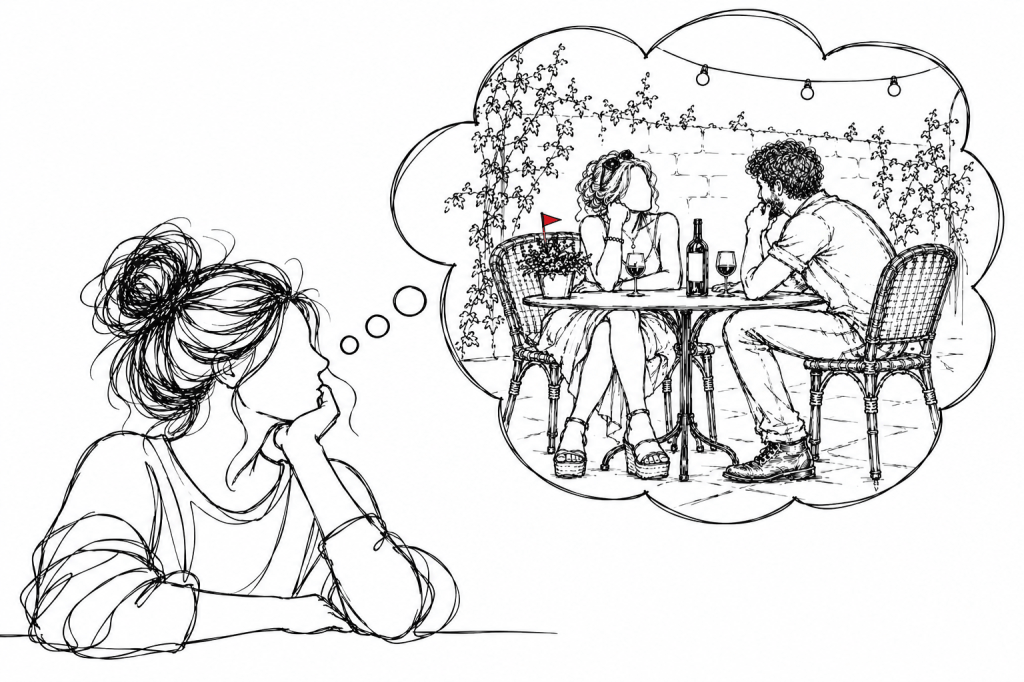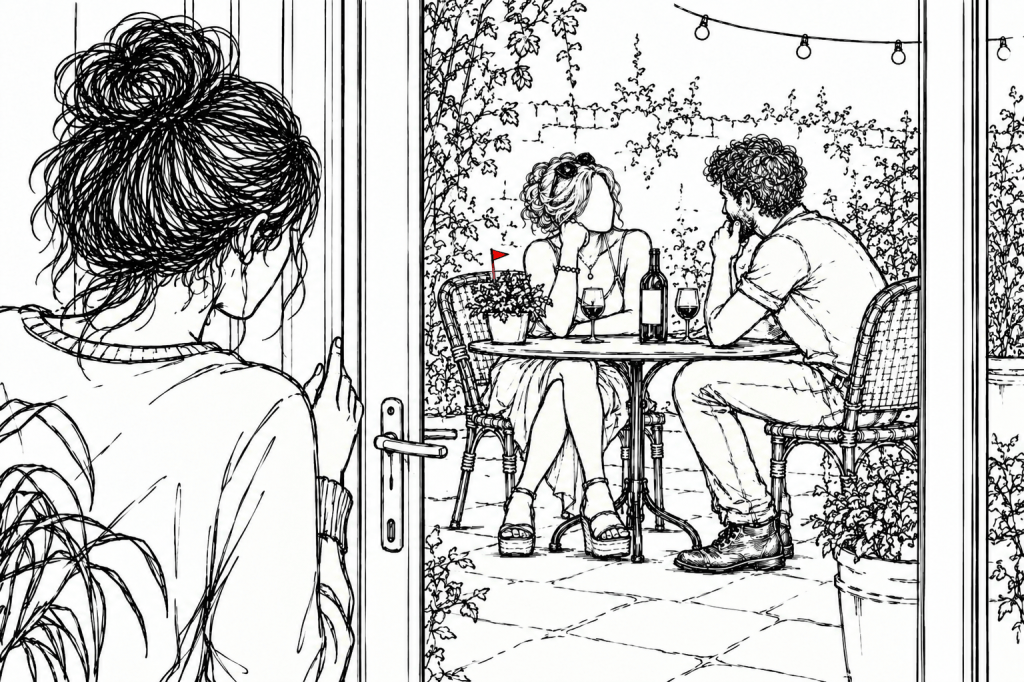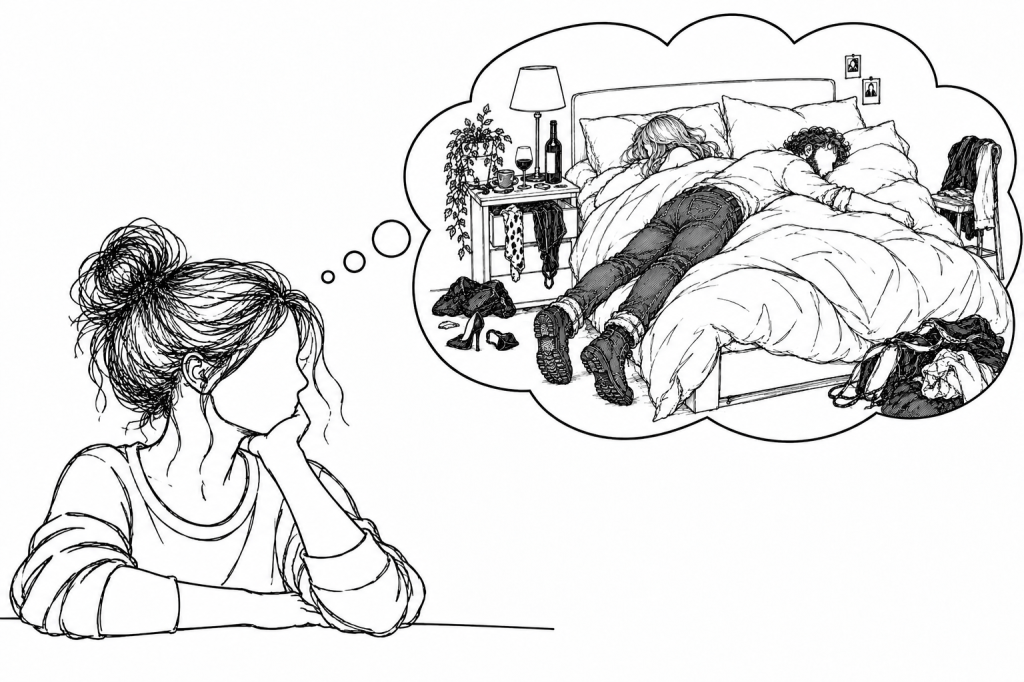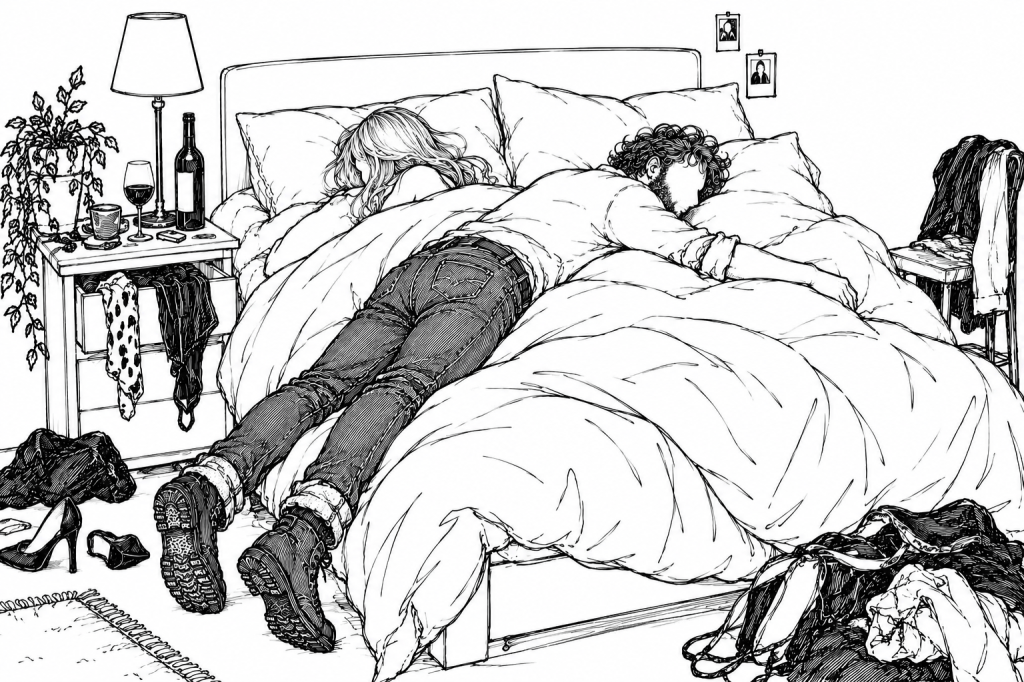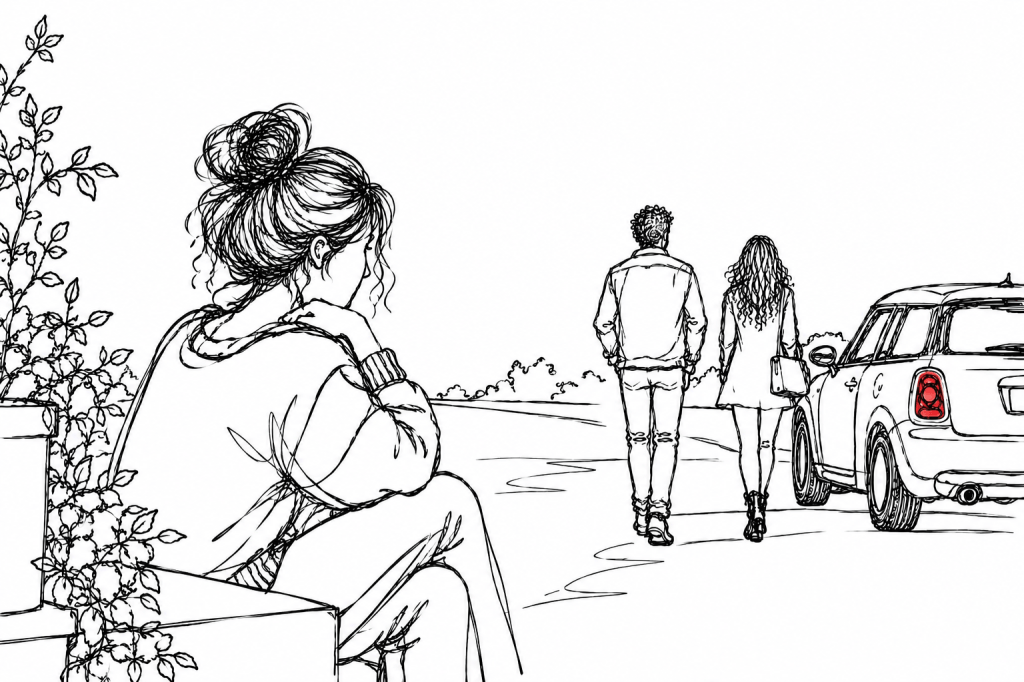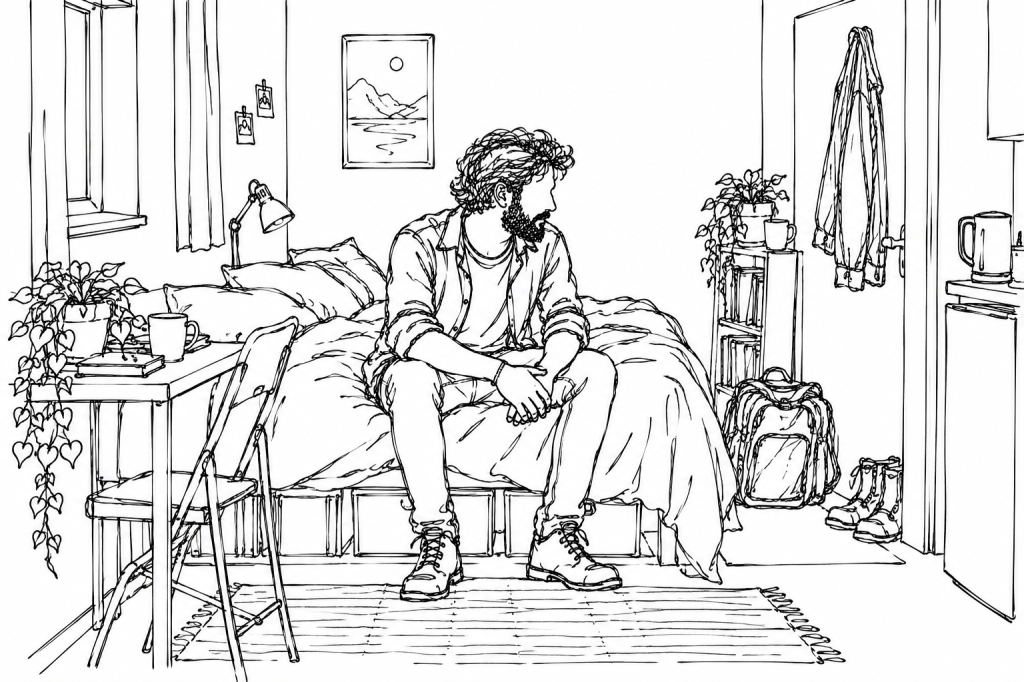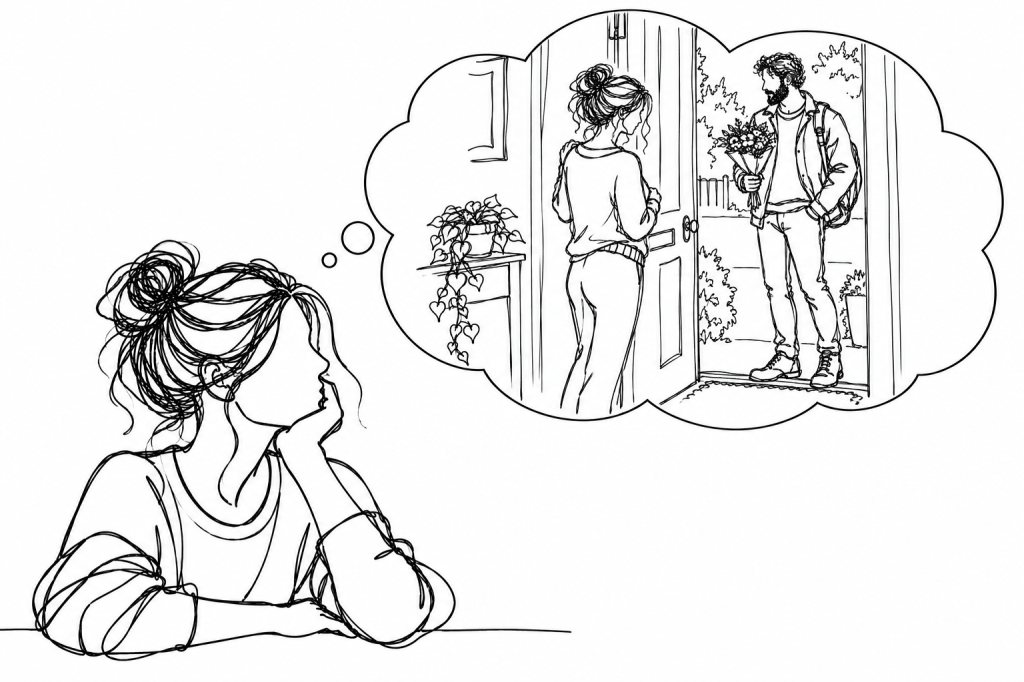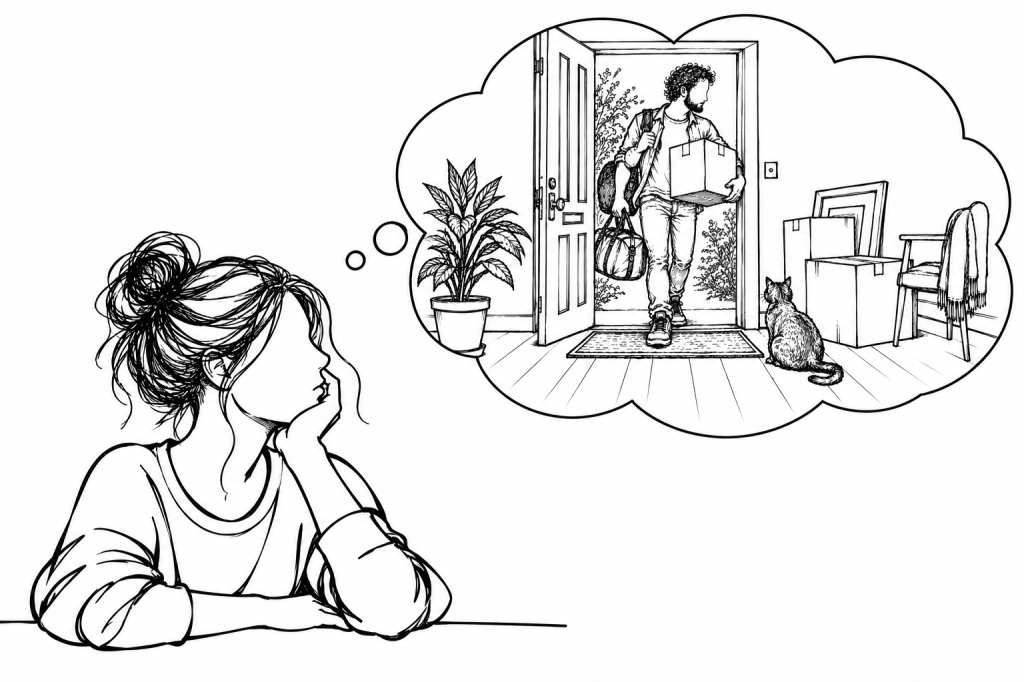
Stephen Moves In (REFLECTION)

Reading those conversations again, I’m struck by how sensible it all seemed.

There is a version of this story that could easily be told differently.

Stephen was unemployed when I met him.

Within months, I let him move into my home.

Knowing everything that happened afterwards, those two sentences could be placed beside each other and made to look like evidence of terrible judgement.

But that isn’t what happened.

I had been clear from very early in our relationship that Stephen couldn’t live with me while he wasn’t working.

I loved him.

I wanted to be with him.

I hated the constant travelling backwards and forwards.

I knew he disliked the bedsit and struggled with being alone there.

But I still held the boundary.

Get a job first.

Then we can talk about living together.

And he did.

Not just any job, either.

It was a proper job with a good salary, doing something I genuinely believed suited him.

For the first time, I could see the possibility of us functioning as two working adults building a life together.

I had my income.

Stephen would have his.

I was already saving.

We could both contribute.

We could make plans.

There was nothing obviously reckless about that.

In fact, what surprises me most when I read the messages now is how much thought we gave to the transition.

We talked about money.

I talked to my sons about household contributions.

Stephen and I discussed what he would contribute.

We considered whether he might actually be better remaining at the bedsit while he established himself at work.

We thought about routines.

Sleep.

Shopping.

Cooking.

Showers.

Work.

Our children.

The ordinary logistics of combining two lives.

I even recognised that Stephen was facing several major changes simultaneously and told him that we needed to take the situation seriously.

“Really strategise to get this right.”

Those aren’t the words of a woman blindly sweeping a man into her home because she is in love with him.

I was trying to think ahead.

And perhaps that matters because hindsight has a habit of making bad outcomes look inevitable.

Once we know how something ended, every earlier decision can begin to look like an obvious mistake.

But decisions aren’t made with hindsight.

They are made with the information available at the time.

And at that time, the information looked encouraging.

Stephen had found employment.

He was excited about it.

I believed he would be good at it.

We were extraordinarily happy together.

We communicated constantly.

We were deeply attracted to one another.

We talked about marriage and a future.

And, importantly, Stephen seemed every bit as invested in protecting the relationship as I was.

When he worried about everything changing at once, the thing he was frightened of losing wasn’t the job.

It was us.

“I’d rather the job failed than us.”

“There will always be other jobs and other opportunities.”

“We are a one off.”

Those words meant something to me.

They told me that I wasn’t dragging Stephen towards domesticity while he reluctantly followed.

He wanted this too.

Perhaps even more urgently than I did.

And yet, reading the conversations now, there is another strand I notice.

It is subtle.

Nothing about it felt unhealthy at the time.

Stephen struggled when we were apart.

He found the bedsit lonely.

He didn’t sleep particularly well there.

Being with me, he said, made everything else feel easier and more achievable.

And I took that seriously.

When we considered whether he should establish his working routine from the bedsit before moving in, one of my concerns was whether he would cope.

Would he sleep?

Would he wake up alone and struggle to motivate himself?

Would he come home to an empty flat and become miserable?

Could that jeopardise the job?

I wanted him to succeed.

So my thinking naturally moved towards a question that would become increasingly familiar over the years ahead.

What does Stephen need in order to be okay?

At the time, there was nothing strange about asking it.

That is one of the things people do when they love each other.

We support.

We accommodate.

We think about what will help the other person thrive.

And Stephen was thinking about our relationship too.

This wasn’t yet a story of one person endlessly giving while the other endlessly took.

We were two people trying to work something out together.

But I can see the beginnings of something in myself.

When Stephen anticipated difficulty, I instinctively began looking for the solution.

If the bedsit made him lonely, perhaps he shouldn’t be there.

If starting work and moving house simultaneously might overwhelm him, perhaps we could structure the transition.

If routine was difficult, perhaps we could create one together.

If several competing demands might cause something to “slip”, perhaps we could strategise so nothing did.

There was love in that.

There was practicality in it.

There was also, perhaps, the earliest suggestion of how easily I could begin organising myself around somebody else’s ability to cope.

I don’t think I could or should have recognised that then.

There was nothing obviously alarming to recognise.

But knowing myself better now, I can see how naturally the role suited me.

I liked helping.

I liked solving problems.

I liked creating stability.

I liked making a home feel safe.

And Stephen seemed to need precisely those things.

In that sense, we fitted together beautifully.

At least at first.

There is another part of this period that feels important when I look back.

My bedroom.

Moving the bed.

Emptying the drawers.

Clearing the wardrobe rail.

Making room for his things amongst mine.

They were such ordinary acts.

But perhaps that is exactly why they mattered.

I wasn’t merely giving Stephen somewhere to stay.

I was making space for him inside a life that had previously been mine.

My home had been my security.

My bedroom was my sanctuary.

I liked order.

I liked knowing where things belonged.

And now I was willingly disturbing some of that order because having Stephen there mattered more to me than preserving everything exactly as it had been.

That is what commitment requires to some extent.

Two lives cannot become one shared life without each person giving up a little territory.

I wasn’t losing myself by clearing a wardrobe rail.

I was making room for someone I loved.

And I was excited to do it.

Perhaps the most poignant part of the messages is how ordinary our ambitions were.

“So, move in, then use six weeks to plan OUR routine?”

“Six weeks just to find our groove…”

“That sounds like Home.”

Home.

Not excitement.

Not drama.

Not grand declarations.

Home.

Bedtimes and showers.

Dinner and shopping.

Work and children.

Coming home at the end of the day and finding each other there.

That was what I wanted.

For all the intensity of our beginning, I wasn’t actually chasing intensity.

I was chasing ordinary.

I wanted the relationship to settle.

I wanted the uncertainty and travelling backwards and forwards to give way to something dependable.

I wanted us to become boring in the loveliest possible way.

And everything seemed to suggest that was exactly where we were heading.

There was work.

There was money.

There was planning.

There was extraordinary physical intimacy.

There was affection.

There was a future we both talked about as though it belonged to us.

Even the way Stephen desired me contributed to that sense of security.

I didn’t feel as though I had to compete with some impossible physical ideal.

I was carrying more weight than I wanted, and he seemed entirely unconcerned.

He made me feel desirable exactly as I was.

I loved that about him.

Perhaps because it seemed to confirm something I already believed about the relationship.

That what existed between us was deeper than surfaces.

That we had chosen each other as whole people.

I had no reason then to imagine how complicated that particular belief would eventually become.

At the time, I simply felt loved.

Wanted.

Chosen.

Secure.

That is important to remember.

Because when a relationship later becomes painful, there can be a temptation to rewrite its beginning so that the ending makes sense.

To search backwards for the moment when I should have known.

The obvious warning.

The foolish decision.

The door I should never have opened.

But I don’t think Stephen moving in was one of those moments.

I had set a boundary.

He had met it.

We had discussed the practicalities.

We had identified potential difficulties.

We had made a plan.

And then I opened my home to the man I loved.

What I couldn’t know was whether the life we had so carefully planned would reveal the people we believed ourselves to be.

Living together does something that dating cannot.

Eventually, the conversations about who we are give way to the ordinary evidence of how we actually live.

There would be plenty of time for that evidence to emerge.

But on the day Stephen moved in, I wasn’t standing at the edge of something that felt dangerous.

I was standing at the beginning of something that felt stable.

I had made room beside my bed.

I had emptied his drawers.

I had cleared a rail in my wardrobe.

We had six weeks to find our groove.

And, for the first time, the future we had spent months talking about was no longer somewhere ahead of us.

We were living in it.
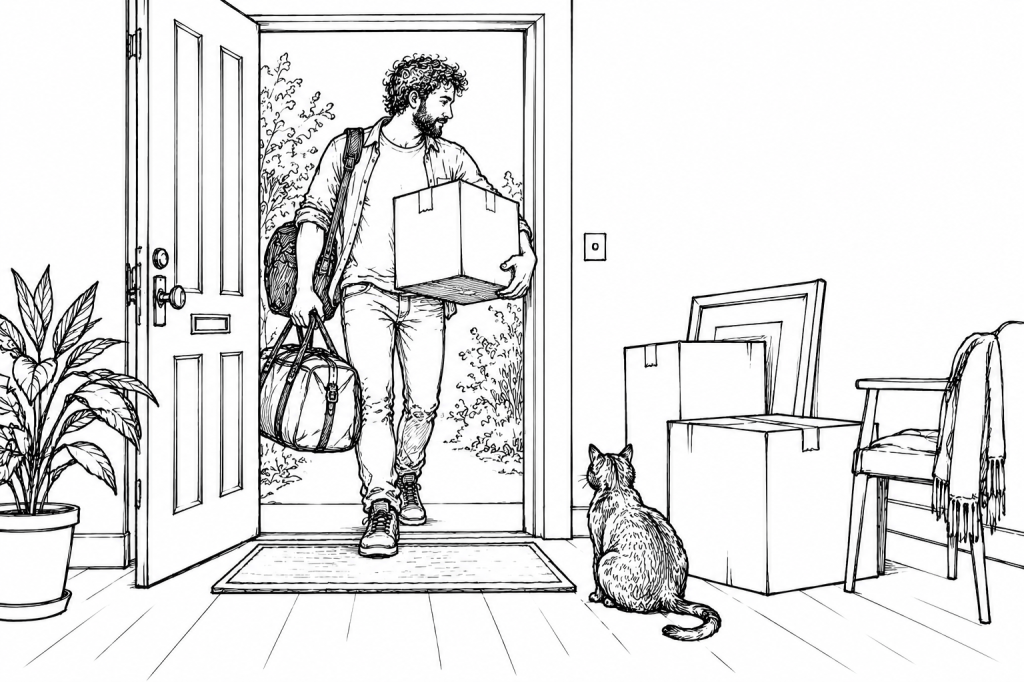
Stephen Moves In

​It’s now spring 2021, and Stephen still has the bedsit.

He’s receiving help from government agencies to find employment when an unexpected opportunity comes his way: a role working for the same government department that has been helping him find work.

I’m immediately excited.

I can see Stephen being brilliant at it.

He’s fantastic with people, loves conversation and has a natural ability to engage with people from all walks of life. He’s also compassionate towards those who find themselves on the fringes of society, so the work seems particularly well suited to him.

The salary isn’t to be sniffed at either.

By this point, I’ve already started thinking more seriously about our financial future.

I’ve been crunching numbers, looking at my own income and savings and considering what I might be able to put away over the coming year. I tell Stephen that I feel inspired to start saving to give us the best possible start.

A decent income for Stephen makes those plans suddenly feel much more achievable.

We could both save.

We could make plans.

Perhaps some of those dreams we’ve spent the past few months talking about might actually begin taking shape.

Stephen is remarkably confident about his chances.

He tells me that he has to be careful which jobs he applies for because, once he reaches the interview stage, he tends to get them.

I’m impressed.

And remarkably confident too.

This feels like a slam dunk.

Stephen prepares thoroughly for the interview.

Then, when it’s time, he throws on a wonderfully creased seventies shirt as though ironing it would somehow destroy its character.

I look at him and think:

My boyfriend is so cool.

The interview goes well.

And after several more stages, including identity checks and the usual administrative hoops, Stephen gets the news.

He’s got the job.

We’re ecstatic.

I’m enormously proud of him.

But getting the job also means something else.

For months, I’ve been clear that Stephen can’t simply move into my house while he isn’t working.

Now that obstacle has disappeared.

But despite how much we both want to live together, we don’t simply throw his belongings into the car and hope for the best.

We talk about it.

A lot.

In fact, even before Stephen gets the job, we’ve begun discussing what living together might actually look like.

I’ve spoken to my sons about household contributions and worked out what seems fair while they are still living at home. Stephen and I talk about money too.

We talk about whether it might actually be more convenient for him to remain at the bedsit once he starts work.

Neither of us particularly likes that idea.

Then, once the job becomes real, the conversations become more serious.

Stephen is worried about how many things in his life are changing at once.

A new relationship.

A new job.

A new routine.

Living with me.

Continuing to be there for his family.

He tells me he finds it easier to focus on one thing at a time and worries that if he tries to adapt to everything simultaneously, something might slip.

I understand his concern.

And I have one of my own.

“I think we have to take this more seriously than we have,” I tell him. “Really strategise to get this right.”

The last thing I want is for all these changes to damage our relationship.

Stephen agrees.

He tells me that the part he absolutely doesn’t want to slip is us.

For a while, we consider two possibilities.

Perhaps Stephen should stay at the bedsit, start the job and establish his new working routine before moving in with me.

There is a certain logic to that.

But there is another problem.

Stephen doesn’t cope particularly well with being apart from me.

He struggles to sleep alone. He finds the bedsit isolating. He tells me that being with me seems to make everything else in his life easier and more achievable.

I worry about him trying to begin a demanding new job while simultaneously waking up alone and returning each evening to an empty bedsit.

Stephen worries about it too.

At one point, he tells me that although the job is important and a wonderful opportunity, he would rather the job failed than us.

There will always be other jobs, he says.

But you and me?

“We are a one off.”

I don’t want either to fail.

“We can have both,” I tell him.

We just need to be clever about it.

Eventually, a plan begins to emerge.

Stephen’s new job will start with several weeks of training, much of it from home.

Perhaps that gives us the perfect transition.

He can move in before the job begins.

Then, during those first weeks of training, we can concentrate on establishing our own domestic rhythm before his full working routine takes over.

What time do we go to bed?

When do we shower?

Who cooks dinner?

When do we shop?

How do we make space for ourselves, my sons, his sons, work and everything else our lives contain?

Nothing particularly romantic.

Just the ordinary mechanics of sharing a life.

“So, move in, then use six weeks to plan OUR routine?” Stephen asks.

“Six weeks just to find our groove…”

“That sounds like Home.”

And it does.

Finally, after months of snatched evenings, late nights, the bedsit, his father’s house and constantly travelling backwards and forwards, we’re going to live together.

We’ll go to bed together every night.

We’ll wake up together every morning.

It feels like something we’ve been waiting for since we met.

At the beginning of June 2021, I start preparing my bedroom.

I move the bed slightly to give Stephen more room on his side. I empty a bedside table and a chest of drawers for him. I clear an entire rail in my wardrobe for his clothes.

These seem like mundane little things, but they feel significant to me.

I haven’t shared my space with a man for a very long time.

My bedroom is my sanctuary. I’m proud of it. I’ve deliberately made it beautiful, comfortable and organised, with everything where it’s supposed to be because that makes my life feel calmer.

There is a little trepidation about giving some of that up.

What will it feel like having somebody else’s belongings everywhere?

Will he be tidy?

Will I still have enough space?

But those concerns are tiny compared with my excitement.

I love this man.

Of course I’m willing to compromise to have more of him in my life.

Stephen ties things up at the bedsit and we begin moving his belongings into my house.

I find myself imagining the ordinary life we’re about to have.

We’ll both be busy during the day.

We’ll come home from work.

We’ll have dinner together.

We’ll talk about our days, listen to music, watch something, relax and eventually climb into bed together.

Ordinary couple things.

After such an unconventional beginning, I can’t wait for us to finally experience what being a “real” couple feels like.

And underneath all that excitement is something else.

A sense that we’re doing this properly.

We haven’t simply decided that love will somehow take care of everything.

We’ve talked about money.

We’ve talked about contributions.

We’ve talked about work.

We’ve talked about routine.

We’ve talked about the pressures Stephen might face and how we can protect our relationship from them.

We are actively trying to build something sustainable.

And our physical relationship is extraordinary.

Stephen tells me repeatedly that it is the best and most comfortable sexual relationship he’s ever experienced. We’re so enthusiastic that my sons inform us during a house meeting, to our considerable embarrassment, that we’re being far too loud.

Our intimacy is playful, passionate and completely natural.

Most importantly for me, Stephen never hides his desire for me.

He makes me feel sexy.

At the time, I’m carrying about a stone more than I would have liked, but Stephen doesn’t seem remotely concerned. In fact, he once suggests that I could afford to put on a little more weight.

That surprises me.

Then I remember what he’s told me about the women he’s loved before and conclude that perhaps he simply prefers bigger women.

I think that’s wonderful.

Here is a man who seems genuinely unconcerned with conventional ideas about what a woman’s body is supposed to look like.

It’s another quality I admire about him.

Everything seems to be moving in the right direction.

Stephen has a good job to begin.

I’m thinking about savings and our financial future.

We’ve thought carefully about how to combine our lives rather than simply assuming it will work.

We’re deeply in love.

We desire each other.

We talk about marriage.

We talk about our future.

And now, finally, we’re going to share a home.

I don’t feel as though I’m taking a reckless chance on Stephen.

Quite the opposite.

I feel as though we’ve considered the risks and made a plan.

We’re not simply hoping that living together will work.

We’re going to make it work.

Six weeks to find our groove.

That sounds like home.

Stephen And My Auntie (REFLECTION)

Until that evening, Stephen’s ability to connect with people had been one of the things I loved most about him.

I was proud to introduce him.

That feeling matters because what happened with my aunt wasn’t simply an isolated uncomfortable interaction. It emerged from something I genuinely admired.

Stephen was curious about people.

He could enter somebody else’s world with extraordinary enthusiasm. He asked questions. He listened. He found connections. He made people feel interesting.

I’d watched my uncle light up while showing him around the house.

I’d watched my parents enjoy him.

I’d watched my sons engage with him.

And I’d felt proud.

Stephen could go anywhere with me.

Then I watched exactly the same quality turn into something I didn’t recognise.

His curiosity narrowed.

His attention intensified.

His body moved towards my aunt.

The rest of us seemed gradually to disappear.

And I felt something I hadn’t expected to feel while sitting beside the man who had made me feel so extraordinarily seen.

Invisible.

That contrast hurt.

Perhaps because Stephen’s attention had been so powerful when it was directed towards me.

I already knew what it felt like to occupy the centre of it.

His curiosity could make you feel fascinating. His enthusiasm could make an ordinary story seem extraordinary. His physical attention could make you feel intensely desirable.

Now I was watching another woman respond to the same energy.

And she was responding.

Whatever Stephen believed he was doing, the interaction appeared reciprocal to me.

My aunt seemed captivated by him.

And he seemed captivated by her.

I don’t know what was happening inside Stephen.

That’s one of the questions I still find interesting.

Perhaps he genuinely wasn’t consciously flirting.

Maybe when Stephen said he didn’t know how to flirt, he meant it.

There are people who consciously deploy flirtation: they know they’re creating sexual tension and enjoy doing it.

Perhaps Stephen experienced something different.

Maybe attention simply intensified when he found another person interesting. Maybe he enjoyed the response he received without consciously identifying the interaction as sexual. Perhaps the boundary between curiosity, charm, attraction and flirtation was genuinely less distinct for him than it was for me.

Or perhaps he knew perfectly well that he was flirting and didn’t want to admit it once he saw how upset I was.

I can’t know.

What matters is that his explanation and my observation were suddenly very far apart.

I watched you flirt with her.

I don’t know how to flirt.

Those two realities couldn’t easily coexist.

And that was becoming familiar.

After the night with his ex, I had tried repeatedly to reconcile what Stephen told me with what I knew had happened.

Now I found myself doing it again.

Was I misunderstanding him?

Was he misunderstanding himself?

Was he minimising something because admitting it would make him uncomfortable?

Or was I becoming suspicious because my trust had already been damaged?

That last possibility mattered enormously to me.

I didn’t want what had happened with his ex to turn me into someone who saw danger everywhere.

I didn’t want to become jealous.

I didn’t want to police harmless conversations or interpret every interaction with another woman as a threat.

That wasn’t the relationship I wanted.

So I examined myself as carefully as I examined Stephen.

Am I overreacting?

That question was beginning to appear more often.

There is a psychological reason that makes sense to me now.

Once trust has been damaged, the brain becomes more attentive to information associated with the original threat. It starts scanning.

That’s often described as hypervigilance.

But hypervigilance doesn’t necessarily mean the things being noticed aren’t real.

That’s an important distinction.

Sometimes increased vigilance produces false alarms.

Sometimes it simply means you’re noticing genuine information more quickly because you’ve learned that it might matter.

The difficult part is knowing which is which.

My concern about Stephen and women hadn’t appeared from nowhere.

Only weeks earlier, I’d expressed discomfort about him staying with an ex, received reassurance, then discovered he’d shared her bed.

Now I was sitting beside him while he became intensely absorbed in another woman and apparently forgot I existed.

Of course my nervous system connected those events.

The question was whether they actually belonged together.

I didn’t know yet.

So I did what I had increasingly learned to do.

I tried to understand.

And this time, understanding became almost educational.

Stephen gave me the impression that he genuinely didn’t understand what I meant by flirting.

So I explained it.

I distinguished charm from sexual or romantic signalling.

I talked about context.

I explained that the issue wasn’t that either of us must never enjoy attention from another human being. It was about protecting the sense of security between us.

At the time, I found that conversation strangely hopeful.

If Stephen hadn’t understood the boundary before, perhaps now he did.

That meant what had happened didn’t necessarily reveal something fundamental about him.

Perhaps it revealed something he simply hadn’t learned yet.

And once again, I found myself drawn towards potential.

Now that we’ve talked about it, things can be different.

There is something appealing about a problem that can be solved through communication.

It gives you something to do.

If the problem is misunderstanding, explain more clearly.

If the problem is an unclear boundary, define it.

If the problem is lack of experience, teach.

That approach suited me because communication was something I believed strongly in.

Relationships weren’t supposed to arrive perfectly formed. Two people learned each other.

So I didn’t ask myself why I was having to explain to a man in his forties that directing sexualised attention towards another woman while his partner sat beside him might be uncomfortable.

I asked myself how I could explain it in a way he would understand.

That’s another subtle shift I can see now.

Increasingly, when Stephen’s behaviour troubled me, my mind moved towards solving the problem.

What does he need to understand?

How can I communicate this differently?

What information is he missing?

Perhaps that was partly because I still believed the problem was informational.

If Stephen understood how something affected me, surely he wouldn’t want to do it again.

That belief depended on something fundamental.

That my feelings mattered to him even when his immediate impulses were pulling his attention somewhere else.

And then there was my aunt.

Her age mattered to me, although perhaps not for the reason one might assume.

Stephen had already reassured me repeatedly that his attraction wasn’t governed by conventional ideas about age or body type.

I’d found that beautiful.

It had made me feel safer.

Now I was beginning to understand that the same openness I’d admired could have another implication.

If Stephen could see sensuality and attractiveness in women irrespective of age, size or conventional ideals, then perhaps the category of women who might capture his attention was much broader than I’d imagined.

Again, that wasn’t inherently a problem.

Being in a relationship doesn’t make other people cease to be attractive.

The question was what someone did with that attraction.

Could Stephen notice another woman and still remain emotionally anchored to me?

That was what frightened me in the garden.

For those minutes, he didn’t seem anchored to me at all.

I asked him to leave.

He didn’t respond.

I stood up.

He remained seated.

My parents and I waited in the doorway while his attention remained somewhere else.

It wasn’t merely jealousy.

It was the experience of temporarily ceasing to matter.

And then, later, came the familiar transformation.

Stephen was defensive.

I was upset.

We argued.

He fell asleep.

And I remained awake carrying the emotional consequences.

I can still picture myself sitting on that windowsill.

Smoking.

Looking out over London.

Trying to understand the man asleep behind me.

That image feels important now.

Stephen could switch off and sleep.

I couldn’t.

My mind needed resolution.

If something didn’t make sense, I turned it over repeatedly, looking for the interpretation that would make the pieces fit.

Perhaps that difference between us mattered more than I understood.

Stephen could apparently leave an unresolved conflict for the night.

I carried it into the early morning.

And increasingly, I was becoming the person doing the psychological work of the relationship.

Observing.

Questioning.

Explaining.

Connecting.

Trying to understand.

Trying to repair.

None of this meant Stephen didn’t care about our relationship.

I believe he did.

Perhaps he was doing his own internal work in ways I couldn’t see.

But from inside my experience, I was beginning to feel responsible not only for communicating my boundaries, but for helping Stephen understand why those boundaries existed.

And because I loved him, that still felt reasonable.

The conversation with my aunt hadn’t destroyed anything.

Stephen was still the funny, affectionate, fascinating man I was proud to introduce to people.

Most of our relationship remained extraordinarily happy.

But the night had given me another piece of information.

The man whose attention made me feel more visible than almost anyone I’d ever known could direct that same extraordinary attention elsewhere.

And when he did, I could disappear remarkably quickly.

After his ex, I had begun asking:

Can I trust Stephen?

Now another question was forming underneath it.

What happens to us when something —or someone else — captures his attention?

I didn’t know why that question frightened me.

Not yet.

Stephen And My Auntie

Some of my proudest moments in those early months came when I introduced Stephen to my friends and family.

He had mastered the art of conversation.

He seemed genuinely interested in everyone he met and had an extraordinary ability to find common ground with people who, on the surface, were very different from him.

My sons liked him. Although they didn’t necessarily have much in common, they all enjoyed a good debate, and Stephen could talk about almost anything.

My parents liked him too.

More importantly, they could see how happy I was.

This was one of the many things I loved about him.

My previous boyfriend had struggled socially, so there was something wonderful about being with a man I could confidently take anywhere. I never worried that Stephen wouldn’t know what to say or wouldn’t make an effort.

Quite the opposite.

I was immensely proud of him.

Eventually, the time came to introduce him to my aunt and uncle.

My aunt is my father’s sister, and I was particularly excited about this visit because I knew Stephen would love their home.

Their house has always been an emporium of curiosities.

For as long as I can remember, my aunt and uncle have been passionate collectors. They have unusual interests, fascinating objects and endless stories about the things they’ve accumulated over a lifetime.

One evening, Stephen and I visited them with my mum and dad.

After a lovely meal, my uncle offered to give Stephen a tour of the house.

Every room of their old Victorian semi-detached seemed to contain another collection. In some ways, it was like wandering through an antique shop. There was militaria, maps, crockery, silverware, paintings and countless other objects, each with its own history.

And then there was my uncle’s extraordinary lifetime collection of Rupert Bear memorabilia, reputed to be the largest in the UK.

Stephen was completely in his element.

He wanted to know about everything.

Where had this come from?

What was the story behind that?

How old was it?

My uncle was delighted.

There are few things a passionate collector enjoys more than meeting someone who is genuinely fascinated by their collection, and Stephen gave him an enthusiastic audience.

The tour must have lasted well over an hour.

Strangely, Stephen’s enthusiasm made me look at the house differently too. I’d grown up around many of these things and barely noticed them anymore. Watching him discover everything for the first time reminded me how extraordinary it all was.

I loved seeing the world through Stephen’s eyes.

Eventually, we joined everyone else in the garden.

It was getting late.

My aunt had been drinking and was already quite tipsy. She had been considered a great beauty when she was younger and, even at seventy, remained a very attractive woman.

Stephen began talking to her with his usual enthusiasm.

She told him about her new interest in singing and shared some of her fascinating stories about paranormal experiences. Stephen was intrigued and responded with stories of his own.

Initially, it was a group conversation.

My mum was involved.

My dad was there.

I was there.

But gradually, something changed.

The conversation narrowed until it seemed to exist almost entirely between Stephen and my aunt.

I watched his body language change.

He repositioned himself in his chair so that he was facing her directly, his posture open towards her. His attention became completely focused on her.

He stopped looking back at me.

He stopped including me in the conversation.

Then the subject matter changed too.

Stephen began telling increasingly risqué stories, including one about a job he’d once had that involved quality-testing adult products.

My aunt was fascinated.

And Stephen seemed to be enjoying her fascination.

What had begun as ordinary conversation was becoming something else.

Flirtatious.

My aunt was responding to it too.

She was tipsy, starry-eyed and completely absorbed in him.

Then Stephen began making suggestive comments about her sensuality.

I was sitting barely a foot away.

And suddenly I felt invisible.

What made it worse was that my parents were sitting there witnessing it too.

I tried subtly to steer the conversation somewhere else.

Stephen didn’t follow.

The innuendo continued.

Eventually, I’d had enough.

“We should go now,” I said.

Nothing.

Stephen carried on talking to my aunt as though I hadn’t spoken.

Their chairs were angled towards each other, their knees almost touching, their attention completely fixed on one another.

My mum and I stood up and walked towards the French doors leading back into the house.

“Come on, Stephen. It’s time to go.”

Still nothing.

My mum, dad and I ended up standing in the doorway waiting.

And waiting.

For what felt like nearly ten minutes, the three of us simply watched Stephen and my aunt continue their conversation as though they were the only two people in the garden.

Eventually, we practically had to drag him away.

I was furious.

But beneath the anger was something more unsettling.

Alarm.

Until then, one of the things I’d admired about Stephen was his openness about finding beauty in different kinds of women. I’d interpreted it as a lack of superficial judgement.

But I’d never seen this side of him before.

Stephen was an enormous flirt.

And if he was capable of becoming so absorbed in another woman while I was sitting beside him — with my mother and father watching too — what was he like when I wasn’t there?

That question disturbed me.

Especially because the incident with his ex had happened only weeks earlier.

I drove us home frostily.

Stephen seemed slightly drunk and, more surprisingly, completely oblivious to why I was upset.

We made the short fifteen-minute journey back to my parents’ flat and, because it was so late, everyone went to bed.

Stephen and I climbed into bed in my tiny childhood bedroom.

Then I confronted him.

We argued in whispers so my parents wouldn’t hear.

I told him how uncomfortable his behaviour with my aunt had made me.

Stephen didn’t understand.

Or said he didn’t.

He became defensive and denied that he’d been flirting at all.

He explained that because the tour of the house with my uncle had taken so long, he’d felt obliged to give my aunt his full attention afterwards. He’d spent all that time talking to my uncle, so now he was making an effort with her.

Then he said something that left me completely baffled.

“Besides, I don’t even know how to flirt.”

I couldn’t reconcile that statement with what I’d just witnessed.

Stephen also explained that he’d quickly drunk a couple of drinks to catch up with everyone else and that the alcohol had gone straight to his head.

He was clearly still tipsy.

He was also exhausted.

Before long, Stephen fell asleep.

I couldn’t.

I have never been good at sleeping after an argument.

So while Stephen snored beside me, I sat on the windowsill of my childhood bedroom, smoking cigarettes out of the third-floor window.

The rest of the flat was silent.

In the distance, I could see Greater London. Cars continued moving along the roads below as the darkness gradually began giving way to morning.

And I thought about what I’d witnessed.

My boyfriend has a way with women.

There seemed little point denying that.

But this was the same man who had presented himself to me as inexperienced with women.

The same man who now insisted he didn’t even know how to flirt.

And only weeks earlier, he’d disappeared while staying with his ex and subsequently admitted sharing her bed.

I found myself returning to that night.

Had everything happened exactly as Stephen had told me?

Was I joining together two completely unrelated incidents because I was frightened?

Or was I beginning to notice something about the man I was falling in love with that I hadn’t seen before?

I didn’t know.

Over the following days, Stephen and I talked extensively about flirting.

Strangely, the conversation gradually became less about what had happened with my aunt and more about what flirting actually was.

Stephen gave me the impression that he genuinely didn’t understand the distinction between being charming and being flirtatious.

So I tried to explain it.

To me, flirting involved verbal or non-verbal signals that introduced an element of romantic or sexual interest into an interaction, even if everything remained playful and ambiguous.

Charm was different.

Stephen was naturally charming.

That was one of the things I loved about him.

And I didn’t expect either of us to go through life never enjoying playful interactions with other people.

What mattered to me was context.

If you’re in a committed relationship, your partner shouldn’t be made to feel invisible while you direct sexual energy towards somebody else.

Their comfort should matter.

The relationship should still feel secure.

And loyalty should never be in question.

Stephen seemed receptive.

Part of me even enjoyed believing that perhaps I was teaching him something he genuinely hadn’t understood before.

I wasn’t considering ending the relationship over what had happened.

I loved him.

Most of our relationship was still extraordinarily happy, and this seemed like something we could resolve by communicating more clearly and establishing what was and wasn’t acceptable to us.

But something had shifted again.

After the night with his ex, I’d started wondering whether I could trust Stephen.

Now another question had joined it.

If this was how Stephen behaved with another woman while I was sitting right beside him, how did he behave when I wasn’t there to see it?

Stephen And The Red Flag (REFLECTION)

Until that night, my doubts about Stephen had mostly existed in the space between instinct and explanation.

Something would feel slightly wrong.

I would notice it.

I would question it.

Then more information would arrive and the feeling would settle.

This time, it didn’t.

What I remember most clearly about that night is the argument taking place inside my own head.

Stephen had disappeared.

That was a fact.

For almost three months, we’d been in constant contact, and on the one evening when I had specifically told him I felt uncomfortable, the pattern abruptly changed.

My instincts responded immediately.

Something isn’t right.

But I didn’t simply surrender to suspicion.

I challenged it.

His battery has probably died.

He’s busy.

You’re catastrophising.

Wait until you know what actually happened.

I was doing exactly what I believed a reasonable, emotionally mature person should do. I was separating feelings from facts. I was resisting the temptation to turn anxiety into accusation.

And then the following day, I discovered that the thing I’d been frightened of had actually happened.

Stephen had shared her bed.

That moment changed something in me.

Not because sharing a bed automatically meant something sexual had happened. I still didn’t know whether it had.

The deeper injury was that I had identified one particular situation that would make me feel unsafe, communicated it clearly, received an explicit promise — and then spent the night trying to persuade myself not to trust the very instinct that turned out to be correct.

I had told myself I was catastrophising.

I wasn’t.

At least not about the bed.

That distinction matters enormously to me now.

Because anxiety and intuition can feel remarkably similar from inside the body. Both can produce that tightening sensation, the racing thoughts, the feeling that something isn’t right.

The difficulty is knowing which one you’re experiencing.

And once you’ve mistakenly labelled an accurate perception as anxiety, something unsettling can happen to your relationship with yourself.

You become less certain which internal voice deserves your trust.

But there was another contradiction waiting for me.

Stephen told me the truth.

He could have said he’d slept on the sofa.

As far as I knew, there was nobody who could have contradicted him. Instead, when I asked him directly, he admitted he’d shared the bed.

That mattered to me.

It complicated everything.

If Stephen were simply a liar trying to deceive me, why tell me the one thing he knew would hurt me?

Perhaps his willingness to admit it meant the rest of his explanation was true.

Perhaps nothing sexual had happened.

Perhaps he really had been exhausted and overwhelmed.

Perhaps this was exactly what it looked like to love someone whose mind sometimes worked differently from mine.

I wanted to understand.

But understanding became remarkably difficult during our argument.

I wasn’t expecting perfection from Stephen. I wasn’t even demanding an explanation that made everything disappear.

I wanted accountability.

I promised you something. I broke that promise. I understand why that hurt you.

Had he been able to remain there with me, perhaps the rupture would have been easier to repair.

Instead, he seemed compelled to explain why his responsibility was smaller than I believed it was.

He’d been exhausted.

His head had gone.

His ex had taken him upstairs.

He hadn’t properly registered what was happening.

He couldn’t remember much.

He hadn’t consciously decided to betray me.

Perhaps all of that was genuinely how Stephen experienced the night.

I can’t know.

People under extreme emotional stress can experience impaired judgement, fragmented memory and states of overwhelm. Stephen also had a history and diagnosis that made me take the possibility seriously.

But even if his explanation was entirely accurate, another question remained.

What did that mean for being in a relationship with him?

If Stephen could become so overwhelmed that a promise made only hours earlier effectively disappeared, how was I supposed to know which promises I could rely upon?

That frightened me almost as much as the possibility that he was lying.

There seemed to be only two broad explanations.

Either Stephen had knowingly broken his promise and wasn’t being completely honest with me about why.

Or he genuinely could become so dysregulated that promises, boundaries and awareness of my feelings became temporarily inaccessible to him.

Neither possibility made me feel particularly safe.

And then I saw another Stephen.

He became angry.

Defensive.

Dismissive.

He told me I was blowing things out of proportion.

That was new.

Until then, I had known a man who seemed unusually attentive to my feelings. Now I was telling him I was hurt and somehow finding myself having to defend my right to be hurt.

Psychologically, defensiveness often appears when accepting responsibility threatens something we need to believe about ourselves. Shame can make accountability particularly difficult: if I did something hurtful is experienced internally as I am a terrible person, explaining, minimising or shifting responsibility can become a way of escaping an intolerable feeling.

I sometimes wonder whether something like that was happening for Stephen.

Perhaps admitting that he’d simply chosen the bed would have required him to see himself as someone who had knowingly betrayed a woman he believed he loved.

Perhaps the explanation protected him from that.

Or perhaps he was simply telling me exactly what happened.

I still don’t know.

What I do know is what happened to me while we argued.

I became increasingly certain that my boundary was reasonable.

So certain, in fact, that I ended the relationship.

That is important.

I didn’t discover that Stephen had broken his promise and immediately explain it away because I couldn’t bear to lose him.

My first response was to protect myself.

This isn’t acceptable.

I’m leaving.

Then something changed.

Stephen changed.

The anger disappeared and the vulnerable man returned.

He became tearful, overwhelmed and confused.

And almost immediately, something changed inside me too.

Anger had made separation possible.

His vulnerability made compassion return.

Suddenly I wasn’t only thinking about what Stephen had done to me.

I was thinking about what might be happening to Stephen.

His childhood.

His diagnosis.

His emotional instability.

His exhaustion.

His distress.

His history.

Perhaps I was expecting him to respond like somebody whose mind worked very differently from his.

Perhaps loving him meant learning that difference.

That thought opened the door I had just tried to close.

This is where compassion became complicated for me.

Empathy is the ability to step outside our own experience and imagine somebody else’s. It is one of the qualities I value most deeply.

But empathy has a vulnerability of its own.

If every hurtful behaviour can be understood through the pain of the person who caused it, the question can quietly shift from:

Was this acceptable to me?

to:

Did he have an understandable reason for doing it?

Those aren’t the same question.

I didn’t understand that yet.

So instead of deciding whether sharing the bed, disappearing and then dismissing my reaction were things I was willing to accept in a relationship, I became absorbed in understanding why Stephen might have behaved that way.

And because there were possible explanations, leaving became harder.

Then came four words I would remember for years.

Out of sight, out of mind.

I didn’t have a psychological framework for them.

I simply knew I didn’t like them.

They suggested something about Stephen’s experience of connection that felt profoundly different from mine.

When someone I loved wasn’t physically beside me, they didn’t disappear from my emotional world.

I carried them with me.

I thought about how my choices might affect them even when they weren’t there to witness those choices.

Was Stephen telling me that he experienced this differently?

Perhaps he only meant he’d become distracted.

Perhaps it was a throwaway remark.

Perhaps it revealed something more important about the way he held other people in mind when they weren’t immediately present.

At that stage, I had no way of knowing.

So I stored the words somewhere inside me.

Along with everything else I couldn’t yet explain.

And then the crisis ended.

This may be the most important part.

Stephen became loving again.

We laughed again.

We talked.

He was gentle and affectionate.

The relationship I thought I’d lost returned.

And the relief was enormous.

Psychologically, relief can be a remarkably powerful reinforcer. When distress is followed by warmth and reconnection, the return of safety can feel even more intense because of what immediately preceded it.

I wasn’t thinking about reinforcement.

I was thinking:

We’ve survived our first big argument.

Perhaps this was what relationships required.

People hurt one another.

They argued.

They learned.

They forgave.

And carried on.

That fitted perfectly with everything I already believed about love.

Except something had changed.

Before that night, trust had mostly been an assumption.

Afterwards, it became something I was watching.

I wanted to believe Stephen had understood.

I wanted to believe the boundary was now unmistakable.

I wanted to believe that because he had seen how deeply he’d hurt me, he would never put me in that position again.

But another part of me had learned something too.

Stephen was capable of reassuring me and then doing the thing he’d reassured me he wouldn’t do.

That knowledge couldn’t simply be argued away.

And perhaps that is where the quieter story of my instincts began to change.

Before this, when something felt wrong, I could usually reassure myself that there was probably an innocent explanation.

Now I had evidence that sometimes there wasn’t.

So I became more alert.

More watchful.

Not because I wanted to police Stephen.

Because something I had trusted had failed.

And yet, almost immediately, I was being encouraged to question whether my reaction to that failure was itself the problem.

When Stephen later suggested that perhaps I didn’t know how to truly love someone, the accusation reached somewhere particularly vulnerable in me.

Love was something I believed I was good at.

Patience.

Forgiveness.

Understanding.

Staying through difficulty.

These were qualities I was proud of.

So the suggestion that my inability to accept what had happened might represent a failure of love was deeply destabilising.

Perhaps loving Stephen really did require something different from me.

More understanding.

Less judgement.

Greater tolerance of his difficulties.

I didn’t yet realise how dangerous that question could become for someone like me.

Because if endurance could be interpreted as evidence of love, then leaving could begin to feel like evidence that I hadn’t loved enough.

I stayed.

Not because the broken promise stopped mattering.

Not because I suddenly believed every part of Stephen’s explanation.

And not because my instincts told me everything was fine.

I stayed because I loved him, because most of what we had was still wonderful, because I could see possible explanations for what had happened, and because I believed people should have the opportunity to learn from their mistakes.

That decision didn’t feel weak.

It felt compassionate.

Reasonable.

Hopeful.

Perhaps it was all three.

But something had entered the relationship that hadn’t been there before.

I had learned that Stephen could make me feel extraordinarily safe.

And I had learned that he could suddenly make me feel profoundly unsafe.

I didn’t yet understand what living between those two versions of the relationship might eventually do to me.

For now, I simply wanted the loving one back.

And when it returned, I was enormously relieved.

Stephen And The Red Flag (Part II)

I can’t remember the exact order of everything that happened next.

I’m fairly certain that I collected Stephen on the same day he finally contacted me and that he didn’t stay at his ex’s for another night.

He told me it was “hell there” and that he couldn’t wait to get away.

So I did what was already becoming instinctive whenever Stephen was distressed.

I went to rescue him.

I told him to gather as much of his belongings as he could and that I would come and collect him.

In a surprisingly short space of time, Stephen managed to assemble quite a lot of his things.

That bothered me.

If he could gather so much together now, why had it been impossible to do the previous day?

I understood that his ex had needed help clearing the house, but the original purpose of the visit had been to collect his belongings. The explanation still didn’t quite add up.

And neither did the explanation about the bed.

At some point — either that evening or very soon afterwards — Stephen and I had our first enormous argument.

It happened over the phone.

I told him the relationship was over.

As far as I was concerned, he had crossed a line.

It wasn’t simply that he had shared a bed with another woman. It was that we’d discussed this exact possibility beforehand. I had told him it was the one thing I was uncomfortable with, and he had repeatedly promised me it wouldn’t happen.

His first response stunned me.

“This is why I don’t make promises!”

Really?

It hadn’t been an impossible promise to keep.

From my perspective, all he’d had to do was sleep on the sofa.

Then his whole manner changed.

For the first time since meeting Stephen, I encountered a side of him I hadn’t seen before.

He became angry.

Defensive.

Dismissive.

He told me I was blowing everything out of proportion.

“I can share a bed with a woman and not do anything,” he argued. “I have self-control.”

But that wasn’t really the point.

I hadn’t accused him of being physically incapable of lying beside a woman without having sex with her.

I wanted to understand why he’d ended up in the bed at all when he’d specifically promised me that he wouldn’t.

And that was where the explanation became increasingly difficult for me to follow.

Stephen told me he’d been completely exhausted and needed to sleep in a proper bed.

But if he’d been that exhausted, I wondered, why hadn’t he simply collapsed on the sofa where he’d told me he was going to sleep?

He said his head was so “gone” that he hadn’t really registered his ex taking him upstairs.

But she hadn’t carried him.

He had walked.

He told me he couldn’t remember much about what had happened.

Yet he could remember that he had remained fully clothed.

And he was adamant that nothing sexual had happened between them.

I kept trying to make the pieces fit together.

They wouldn’t.

Every route through the conversation seemed to lead back to the same explanation: he had been exhausted, his head had gone, he had been barely aware of what was happening and therefore hadn’t consciously chosen to break his promise.

But I wasn’t only looking for an explanation.

I was looking for something much simpler.

Accountability.

I wanted him to say:

I promised you I wouldn’t do this. I did it anyway. I understand why you’re hurt. I’m sorry.

Instead, it felt as though most of his energy was going into proving why what happened wasn’t really his fault.

And that left me feeling increasingly unreasonable for being upset at all.

There was another part of his explanation that troubled me.

If Stephen genuinely became so mentally exhausted that he could be led somewhere without properly registering what was happening, make decisions he couldn’t later remember and lose awareness of promises he’d made only hours earlier, what did that mean for me?

What could I rely upon?

For three months, I had known Stephen as gentle, affectionate, attentive and extraordinarily loving.

During that argument, it felt as though that man had temporarily disappeared.

I tried another approach.

What if it had been the other way around?

I asked him to imagine that I’d gone to stay with an ex-boyfriend, promised Stephen I would sleep somewhere else, disappeared for the night and then admitted the following day that I’d shared my ex’s bed.

Stephen said he’d be okay with it.

I didn’t believe him.

From what I already knew of his sensitivity and jealousy, I found it almost impossible to imagine him calmly accepting the same situation from me.

Eventually, the argument began to lose its heat.

And Stephen changed again.

The anger and defensiveness faded.

He became tearful.

Confused.

Vulnerable.

He talked again about how awful it had been at the house, how exhausted he’d become and how overwhelmed he’d felt.

The explanation hadn’t really changed.

But Stephen had.

This was the man I recognised again.

The wounded, struggling Stephen I’d already become deeply protective of.

And that mattered.

His distress didn’t suddenly make me think he’d done nothing wrong. I was still angry and hurt.

But it softened me.

I began wondering whether I had been too harsh.

Perhaps I needed to take his mental health into account.

Perhaps his trauma and EUPD meant that situations affected him differently.

Perhaps loving Stephen was going to require me to understand things that I wouldn’t necessarily understand in another person.

Since meeting him, I’d already been learning to consider how his past might affect him.

For the first time, I began to wonder how it might affect me.

And whether being with him would sometimes require me to tolerate things I would ordinarily find unacceptable.

There was something else I needed to understand.

Why hadn’t he tried harder to contact me?

Even if everything he’d told me about the bed was completely true, he knew I was worried about the visit. He knew what I’d asked of him.

Why hadn’t he thought about how his silence might affect me?

Stephen shrugged.

“Out of sight, out of mind.”

The words landed strangely.

I didn’t like them.

There was something unsettling about the idea that simply because I wasn’t physically present, I could somehow disappear from his emotional awareness too.

I couldn’t know then how many times I would remember those four words during the years ahead.

For now, though, I wanted reassurance.

I asked Stephen never to leave me in the dark like that again.

And I asked him never again to share a bed with another woman.

He agreed.

We decided to stay together.

And remarkably quickly, things returned to normal.

Stephen became the kind, gentle and attentive man I’d fallen for again.

We laughed.

We talked.

He was affectionate.

I felt loved and cherished.

The intensity of the argument faded, and the warmth between us returned.

But something hadn’t returned with it.

My complete sense of trust.

Before that visit, I had been relatively relaxed in the relationship.

Now there was a question sitting quietly in the background.

Can I trust him?

The incident resurfaced occasionally in the weeks and months that followed.

Sometimes it seemed as though Stephen’s understanding of what had happened would shift. Just when I thought we’d reached some kind of resolution, he would become defensive about it again.

On one occasion, while I was at work, he said something to me over the phone that I found particularly destabilising.

“Maybe you’re not ready, or don’t know how to really love someone.”

I couldn’t understand how we’d arrived there.

He had broken a promise.

I had been hurt by it.

And somehow the conversation had moved towards whether I understood how to love properly.

It made me question whether the remorse and understanding I’d thought we’d reached had ever really existed.

But I loved Stephen.

The relationship was still new, passionate and overwhelmingly good most of the time. I had also begun to understand him as someone carrying significant wounds of his own.

So I chose to believe that this was something we could learn from.

I believed the boundary had now been made unmistakably clear.

I believed he understood how deeply the incident had affected me.

And I believed that because he loved me, he wouldn’t put me through something like that again.

I didn’t know then whether the night with his ex was an unfortunate mistake, a warning, or something more significant.

I only knew that for the first time since falling in love with Stephen, love no longer felt quite enough on its own.

Trust had entered the conversation.

And once I had started wondering whether I could trust him, I could never entirely stop.

Stephen And The Red Flag (Part I)

To understand why what happened next affected me so profoundly, you have to understand what the previous three months had been like.

Stephen and I had been in almost constant contact.

There hadn’t been a single day when we didn’t check in with each other. We knew what the other was doing, where we were going, what had happened during our day. If something amused us, we shared it. If something upset us, we talked about it.

Every evening ended in much the same way — a loving conversation, a goodnight and more excited talk about our future.

Stephen had become part of the rhythm of my day.

And I had become part of his.

So when his ex collected him from the bedsit at around three o’clock that afternoon, I naturally expected to hear from him when he arrived.

I didn’t.

A couple of hours passed.

Still nothing.

I sent a message.

No reply.

As afternoon became evening, the silence started to feel increasingly strange.

Eventually, we made contact.

But even then, something didn’t feel right.

Stephen seemed distracted and difficult to engage. He tried to explain that he hadn’t been able to collect his belongings because his ex needed his help clearing up the house before some kind of inspection the following day.

He couldn’t talk for long because they were about to order some food.

Before we ended the call, I reminded him of the one thing I had asked of him.

The promise.

“Yeah, I’ve got a bed here on the sofa,” he reassured me. “I’ll call you later.”

I relaxed a little.

He had remembered.

Everything was fine.

Except he never called.

Later that evening, I tried his phone.

The call immediately clicked off.

I tried again.

The same thing happened.

I told myself that his battery had probably died.

That was the obvious explanation.

But then another thought appeared.

Surely there’s a charger in the house he could borrow?

I tried not to let my imagination run away with me.

For three months, Stephen and I had never gone to sleep without speaking to each other. He had never simply disappeared for an entire evening without explanation.

And it was happening on the one night I had already admitted feeling uncomfortable about.

Lying in bed, my mind began filling the silence with possibilities.

What if something had happened between them?

What if he’d deliberately turned his phone off because he didn’t want me interrupting?

What if the reason I couldn’t reach him was exactly the reason I was frightened of?

Then the rational part of me would intervene.

You’re catastrophising.

His phone has probably died.

Wait until you speak to him.

I moved between suspicion and reason for most of the night.

Eventually, exhaustion won and I fell asleep.

The following morning, I woke groggy and distressed.

The first thing I did was reach for my phone.

Nothing.

No missed call.

No message.

No explanation.

My heart sank.

I went to work, but my attention was somewhere else entirely.

This was completely out of character.

All morning, I kept checking my phone. I tried calling Stephen again, but his phone remained unreachable.

I sent messages.

Probably too many.

As the hours passed, my anxiety escalated. Concern became frustration, frustration became accusation, and then another possibility entered my head.

What if something had actually happened to him?

Now I didn’t know whether I was angry or frightened.

It wasn’t until sometime after lunch that my phone finally rang.

Stephen.

I answered immediately.

I couldn’t disguise how concerned I’d been, but he quickly apologised and explained that there had been a problem with his phone.

Apparently, it was working again now.

I wasn’t entirely convinced.

But there was something much more important I needed to know.

“Where did you sleep, Stephen?”

Because despite everything he’d told me, I still had the uncomfortable feeling that the silence and that promise were somehow connected.

There was a pause.

Then he told me.

He had shared the bed with his ex.

I was furious.

The very thing I had spent the night worrying about had happened.

More importantly, it was the one thing I had specifically asked him not to do.

He hadn’t merely known that sharing a bed with her would make me uncomfortable.

He had promised me he wouldn’t.

More than once.

And only hours earlier, he had reassured me that he had somewhere to sleep on the sofa.

Now Stephen tried to explain.

He told me that they’d spent the entire day and evening clearing up a very messy house in preparation for some kind of education inspection the following day.

By the end of it, he said, he was completely exhausted.

His head had gone.

According to Stephen, his ex had taken him upstairs and laid him down on her bed.

And somehow, that was where he had stayed.

I had so many questions I barely knew which one to ask first.

Why hadn’t he slept on the sofa?

Why had he specifically told me that he would?

Why hadn’t he contacted me?

What had happened to his phone?

Why had his ex taken him upstairs and put him in her bed?

And, most importantly:

Had anything happened between them?

His explanation didn’t sit comfortably with me.

But there was something else making the situation even more confusing.

Stephen had told me the truth.

Or at least, he’d told me that he’d shared the bed with her.

If he had something terrible to hide, why admit that?

Surely it would have been easier simply to tell me he’d slept on the sofa.

And suddenly I found myself caught between two completely different interpretations of the same man.

Was Stephen fundamentally honest, but chaotic and unreliable?

Or was I only being told the parts of the truth he wanted me to know?

I didn’t know.

Only hours earlier, my biggest concern had been whether Stephen would keep one simple promise.

Now I was questioning something much bigger.

Whether I could trust him at all.

We agreed to talk properly later.

I put my phone away and carried on working.

But something had changed.

For the first time since meeting Stephen, I wasn’t simply wondering where our relationship was going.

I was wondering whether the man I was falling in love with was telling me the truth.

To be continued…

​

Stephen And The Bedsit

As Stephen’s unhappiness with living with his father continued, he began hinting more frequently about living with me.

I reminded him that he had told me about moving in with his former girlfriend very quickly. His story was surprisingly similar to what was now happening between us. He had been in a very difficult place mentally, and she had driven to collect him and brought him back to her home. Before long, he had effectively moved in.

I could see the temptation for Stephen to repeat that pattern with me.

So I set a boundary.

I told him that he couldn’t move into my home until he had found a job.

He accepted that, but he was becoming increasingly desperate to get away from his father’s house. Instead, he arranged to rent a bedsit.

I didn’t think it was necessarily a bad idea. In fact, I thought it might be good for him. It would give him some independence, some privacy and a place of his own while he worked out what he wanted to do next.

He put some effort into making it feel like home. He bought things he needed to cook and some nicer touches to make the little room more comfortable.

I was pleased for him.

The first time I visited, we were both excited about having somewhere of our own to spend time together. We joked that we needed to christen the new place.

What followed was an unexpectedly intense and intimate experience, and I remember leaving with a real glow of happiness.

I felt incredibly close to Stephen.

But there was something else I was carrying home with me.

I had pretended to have reached a level of sexual pleasure that I hadn’t quite reached.

It was a tiny lie, but it bothered me enormously.

The following day, I was still thinking about it at work. I felt guilty. I was falling deeply in love with this man, and the last thing I wanted was to start our relationship by hiding things from him. I didn’t want to create a pattern where I pretended everything was fine when it wasn’t.

So I decided to tell him.

I imagined we’d laugh about it.

Perhaps he’d tease me.

Perhaps we’d simply talk about it and move on.

Instead, his reaction was completely disproportionate to what I had expected.

He became extremely upset.

He compared me to his ex-wife and spoke at length about how much her lying had hurt him. He seemed to experience my admission as though I had deliberately deceived him, rather than what it was: something I had admitted to less than twenty-four hours later because I didn’t want to be dishonest with him.

I tried to explain.

I tried to reassure him.

Nothing seemed to help.

I was shocked by the intensity of his response and frightened that something so small might somehow cost me the relationship.

I went home from work that evening feeling ashamed and deeply upset.

Then things became much more serious.

Later that night, Stephen had returned to his father’s house and called me.

He was in an awful state.

He was crying, distressed and increasingly paranoid, and he had been drinking. I was so worried about him that I got in the car and went to collect him.

I brought him back to mine.

I remember him sitting on the edge of my bed, confused and barely coherent. He seemed completely overwhelmed by whatever was happening inside his head.

I didn’t know what to do.

Until then, I had known that Stephen had mental health difficulties. I knew about his EUPD and I knew about his traumatic childhood.

But this felt different.

This was the first time I began to understand that his difficulties could be much more serious than I had appreciated.

There wasn’t much I could do except stay with him, apologise for upsetting him and try to comfort him until eventually he slept.

Thankfully, the episode passed.

We got through it.

And from that point onwards, I never deliberately lied to Stephen again throughout the rest of our relationship.

The bedsit itself, however, soon became another source of difficulty.

Stephen moved in just as the UK entered its third national lockdown in January 2021. Restrictions meant that there was very little for him to do, and he quickly found the isolation difficult.

He struggled with the empty days and lonely nights.

He would try to cook, but often ended up bringing takeaway food back instead. He didn’t seem to know how to fill his time or settle into living alone.

I tried to help.

Sometimes I stayed over, even when I had work the next day, because I knew how difficult he was finding the loneliness. We still spent some weekends together when he didn’t have his sons, and I suggested different things he might do to occupy himself.

But nothing seemed to make much difference.

Within only a couple of weeks, I noticed that he was spending more and more time back at his father’s house.

When he had his sons, his father would often collect him on a Thursday, and Stephen wouldn’t return to the bedsit until the following Tuesday.

By the end of this period, my impression was that he was spending only two or three nights a week there, although I know Stephen may remember this differently.

I could see that the independence I had hoped the bedsit would give him wasn’t working out quite as I had imagined.

Then, sometime in March, Stephen told me he wanted to visit his ex-girlfriend to collect belongings he had left behind.

He planned to stay for two nights.

I wasn’t entirely comfortable with the idea.

Why did he need to stay for two nights?

Why couldn’t he collect his things and come home?

And why was he relying on her rather than asking me?

But I didn’t want to become the jealous or difficult girlfriend. I’d started this relationship wanting to be trusting and easy-going, and I wanted to maintain that part of myself.

So I didn’t make too much of it.

When the day came for his ex-girlfriend to collect him from the bedsit, I asked him for just one thing.

One promise.

“Just please don’t share the bed with her.”

He reassured me immediately.

“No way. I’ll be sleeping on the sofa.”

I believed him.

Letting Stephen In (REFLECTION)

There was something Stephen gave me during those first weeks that went deeper than attraction.

He made me feel accepted.

I had worried about my age and my body before we’d even met. Then, when I finally allowed myself to be completely exposed in front of him, he seemed to find beauty in the very things I had learned to regard as imperfections.

I still remember what he said about my stretch marks.

Scarification.

It was such an unusual comparison, but perhaps that’s why it stayed with me. He had taken something I felt self-conscious about and looked at it through an entirely different lens. Instead of damage, he saw decoration.

Whether he understood its significance or not, Stephen was beginning to change the way I experienced myself in his presence.

I felt desirable.

But increasingly, I also felt seen.

That evening with the music game mattered to me for exactly that reason. Stephen wasn’t merely interested in my body or in the excitement of a new sexual relationship. He seemed interested in my mind, my photographs, my journals, my memories, my creativity and all the strange little things that made up my world.

He wanted to look.

He wanted to know.

And I wanted to show him.

There is enormous intimacy in being curious about another person’s inner world. Perhaps that was part of why the relationship accelerated so quickly. We weren’t simply spending time together. We were exchanging ourselves.

Stephen was showing me his world too.

And his was becoming increasingly painful.

As he told me more about his childhood, I began to understand that the diagnosis he’d mentioned so matter-of-factly on Christmas Eve had a history behind it.

A child had been hurt.

That knowledge inevitably changed the way I saw the adult.

I don’t think that was wrong.

Understanding someone’s history can help us respond to them with compassion. Experiences of childhood trauma can affect attachment, trust, emotional regulation, self-worth and the ways people experience closeness in adulthood. But trauma doesn’t produce one predictable kind of person, and it certainly doesn’t explain every choice someone later makes.

I couldn’t know what Stephen’s childhood meant for Stephen.

I could only listen to what he told me.

And what I felt was enormous tenderness.

Perhaps something equally powerful was happening for him.

He had met a woman who wasn’t frightened away by his diagnosis. I didn’t recoil from his history. I listened when he spoke about his childhood. I welcomed him into my home. I wanted him physically. I was interested in his ideas.

And increasingly, when he was distressed, I came to get him.

I wonder what that felt like.

Perhaps my home became more than somewhere pleasant to spend the night.

Maybe it represented relief.

Stephen would describe the frustration and unhappiness of living with his father, and then sometimes, quite literally, I would arrive.

My car would pull up.

He would get in. 

And I would take him somewhere warm, comfortable and calm.

To my home.

To me.

There was nothing calculated about it from my side.

Someone I was falling in love with was unhappy.

I had the means to make him less unhappy.

So I did.

That equation felt remarkably simple.

It also felt like an expression of one of the qualities I valued most in myself.

Love meant showing up.

If somebody I loved was struggling, I didn’t want to stand at a safe distance explaining that their struggle belonged to them. I wanted to help.

There is nothing inherently unhealthy about that either.

Relationships require care.

The difficulty comes when care quietly begins changing into responsibility.

I didn’t notice that boundary moving.

Perhaps because nobody moved it deliberately.

Stephen was distressed.

I responded.

His distress reduced.

I felt useful.

He felt better.

Then, when distress returned, we repeated the process.

Psychologically, patterns don’t need to be consciously designed in order to become powerful. When one person’s distress repeatedly draws a soothing response from another, both people can begin learning their respective roles.

Stephen could turn towards me for regulation.

I could turn towards helping him as a way of expressing love.

Neither of us had to decide that this was how our relationship would work.

We simply had to repeat it.

And there was another ingredient that made helping Stephen particularly compelling.

I could see his vulnerability now.

The confident man I’d initially imagined was still there, but alongside him was someone much less certain and much more wounded.

The more of that person I saw, the harder it became to evaluate Stephen only in terms of whether he could meet my needs.

I began thinking about his.

That shift was subtle.

I had entered dating wanting companionship, comfort, security and somebody with whom I could thrive.

Now I was increasingly asking myself what Stephen needed in order to thrive.

Perhaps love could help.

Perhaps stability could help.

Perhaps patience could help.

Perhaps being with somebody who genuinely accepted him could give him the secure foundation from which the rest of his life could begin falling into place.

There was something deeply hopeful in that idea.

And then Stephen told me something that should have sat awkwardly beside all that hope.

He probably wasn’t ready for a relationship.

When I look back now, I think this was one of those moments when reality spoke remarkably plainly.

Stephen wasn’t necessarily warning me that he would hurt me.

He may simply have understood something about himself.

His life was unstable. He was unhappy. He had unresolved practical problems, fractured relationships and emotional difficulties. Perhaps some part of him genuinely recognised that beginning an intense new relationship in the middle of all that wasn’t sensible.

But then came the second half.

Meeting me was an opportunity he couldn’t pass up.

And that transformed the meaning completely.

I’m not ready for a relationship might have created distance.

I’m not ready, but you’re too special to lose created intimacy.

It made me the exception.

There is something extraordinarily seductive about being someone’s exception.

It suggests that ordinary rules don’t quite apply because what you’ve found is unusual.

Perhaps Stephen genuinely felt that way.

I suspect he did.

I don’t imagine him sitting there constructing a sentence designed to override my judgement. I think it is entirely possible that two contradictory things were true inside him at once.

He wasn’t ready.

And he desperately wanted me anyway.

Human beings live inside contradictions like that all the time.

The more interesting question is what I did with the information.

I heard both parts.

But emotionally, I gave more weight to the second.

Once again, my instincts hadn’t failed me.

I knew we were moving quickly.

I knew his life was complicated.

I knew his diagnosis might present challenges.

I knew I was beginning to accommodate him.

And now Stephen himself had told me that perhaps he wasn’t ready.

But I had another growing collection of evidence too.

He made me happy.

He made me laugh.

He made me feel beautiful.

He was interested in my world.

The chemistry was extraordinary.

I was beginning to love him.

And he appeared to be falling in love with me.

When he accidentally let those three words escape at the end of a phone call, I stopped him because I knew it was too soon.

That was another instinct.

Slow down.

But beneath it was another truth.

I wanted to say them too.

This is what makes the story difficult to reduce to warnings ignored.

There wasn’t one voice inside me saying danger while another foolish voice silenced it.

There were competing truths.

This is moving too quickly.

This feels extraordinary.

His life is unstable.

He wants to change it.

He may not be ready.

Neither of us wants to lose this.

And perhaps the most powerful:

Maybe with enough love, patience and security, we’ll be all right.

I didn’t yet understand how easily that belief could alter the balance of a relationship.

Because if love became something that could help Stephen become more stable, then difficulties between us could acquire a new meaning.

They wouldn’t necessarily mean the relationship was wrong.

They might simply mean he needed more understanding.

More patience.

More security.

More time.

And I had enormous reserves of all four.

The woman who had begun dating looking for somebody with whom she could build a secure life was starting, almost imperceptibly, to offer her own security as somewhere for Stephen to shelter.

At the time, that didn’t feel like losing anything.

It felt like love.

And perhaps that was why the boundary between loving Stephen and looking after Stephen became so difficult for me to see.

Letting Stephen In

The weeks that follow our first meeting are a mixture of immense joy and the first hints of things that make me uneasy.

About a week after we met, I’m becoming tired of our unconventional dates.

Meeting in my car, staying out until four in the morning and then going home to face a full day of work isn’t sustainable. I’m exhausted, and eventually I summon the courage to ask Stephen if he’d like to come back to mine.

I’m nervous.

I’m also slightly embarrassed because my house isn’t as tidy as I’d normally like it to be. Work, late-night meetings with Stephen and long conversations on the phone have left very little time for housekeeping.

But I want him to see my home.

More importantly, I want to invite him into my life.

So Stephen comes back with me.

For the first time, we have the privacy and comfort of my own bedroom. We can finally stop making out in a car and lie down together properly.

We make love for the first time.

Getting completely naked in front of him makes me a little self-conscious. I’m very aware of my middle-aged body — the stretch marks and loose skin left by two pregnancies and years of losing and gaining weight.

But Stephen makes me feel completely at ease.

He tells me that my skin is the softest he’s ever touched. When he sees my stretch marks, he compares them to scarification — something deliberately created on the skin as a form of decoration.

I remember thinking:

What a beautiful thing to say.

This man is saying things that make me feel comfortable, accepted and, somehow, beautiful.

Later, Stephen shows me a headless naked photograph of a former girlfriend who was a much larger woman than me.

I think it’s a little inappropriate to show me a photograph like that, but I understand the point he’s trying to make.

He’s telling me that bodies don’t have to conform to some particular ideal for him to find a woman attractive.

And I believe him.

His apparent lack of judgement towards women’s bodies makes me feel safe with him. It becomes something I admire about him, something I associate with his openness and acceptance.

I don’t yet understand the other side of that openness.

For now, I simply feel grateful to be with a man who seems to see beauty so differently from the way I have sometimes seen myself.

My home quickly becomes our new favourite place to spend time together.

We listen to music, talk, laugh, make love and sit smoking at my bedroom window.

Smoking isn’t something I particularly want to do, but it’s becoming increasingly obvious that Stephen is a much heavier smoker than I had initially understood.

I don’t want him having to go outside in his underwear, so I let him smoke at the window.

Before long, I’m joining him.

It’s a small thing, but I’m already beginning to accommodate his habits into my own life.

When we can’t be together, our relationship continues through our phones.

We text constantly and find ways to amuse ourselves.

One evening, we take turns photographing ourselves wearing every hat we own.

It’s silly.

It’s fun.

And it feels intimate in the way that only the early stages of falling for someone can.

I remember one particular evening when something else happens that feels significant.

For once, our time together doesn’t revolve around sex.

We play a music board game I received for Christmas, taking turns answering the questions. Each question seems to lead somewhere else — a favourite song, a memory, an artist, a story from our past.

We talk for hours.

Later, I show Stephen some of the things that make up my world: my photographs, journals and various projects I’ve worked on.

He is genuinely interested.

He asks questions. He listens. He’s enthusiastic about what I show him and complimentary about my home and my sense of style.

I feel seen.

Not simply looked at, but genuinely seen.

I can’t remember feeling that way with anyone before.

Then, at the end of one of our phone calls, Stephen quietly mumbles:

“I love you.”

I immediately pick him up on it.

It’s far too soon.

He pretends he didn’t say it.

We both know he did.

We laugh about it, but I don’t let him off quite that easily.

The truth is, I’m falling in love with him too.

I’m just not ready to say it yet.

Around this time, Stephen begins telling me more about his childhood.

He gives me more detail about the abuse he experienced and how extensive it had been. Hearing about what happened to him makes my heart ache for the child he once was.

I already know that he has EUPD, and now I’m beginning to understand that there is much more behind the diagnosis than I had previously appreciated.

I do wonder whether his past and his emotional instability might eventually become a problem.

But Stephen seems remarkably matter-of-fact about what happened to him. He doesn’t present himself as broken or helpless. He seems certain about what he wants and, more importantly, certain that he wants me.

I convince myself that love, patience and a secure relationship could help us overcome whatever difficulties might arise.

Then Stephen tells me something that, looking back, should perhaps have made me pause.

He says he probably isn’t ready for a relationship.

But meeting me is an opportunity he can’t pass up.

The way he says it makes me feel as though I’m different.

As though I’m the exception.

As though I’ve appeared at exactly the right moment and he simply can’t let me go.

I love hearing that.

I’m already smitten, and I don’t stop to consider what it might mean that the man I’m falling for is telling me he isn’t actually ready for the relationship I’m hoping to build with him.

If I’d been more detached, or more focused on what I needed rather than what I was feeling, perhaps I would have told him to take the time he needed.

Perhaps I would have said, Get yourself into a better place, and when you’re ready for a relationship, come and find me.

But I don’t.

I’m falling in love.

And I believe we can overcome whatever difficulties stand between us.

I don’t yet understand how much Stephen’s life is still unravelling.

I only know the man I’m getting to know now.

There are many evenings when we simply talk on the phone.

Increasingly, he tells me how unhappy he is living with his father. He talks about the situation with his brother, the house and the money he believes he’s owed. His frustration is growing, and some of our conversations become deeply emotional.

Sometimes, I worry about him.

Sometimes, I can’t bear the thought of him sitting there feeling miserable and alone.

So when the conversations become particularly difficult, I get in my car and drive to collect him.

Sometimes it’s late.

Sometimes it’s the small hours of the morning.

I bring him back to my house.

I give him somewhere comfortable to be, somewhere he can escape the chaos of his father’s home, and someone willing to listen.

At the time, it feels like love.

I’m simply being there for someone I care about.

I don’t realise that something is beginning to form between us — a pattern in which his distress becomes my responsibility and helping him becomes one of the ways I express my love.

I only know that he needs me.

And I want to be the person he can turn to.